Bitumen Grades Explained: Penetration, Viscosity and PG Compared
How to read a bitumen grade name, how 40/50, 60/70, 80/100, 85/100, VG-10/30/40 and PG grades differ, and which grade suits your climate, traffic and application.

The grade name on a bitumen enquiry tells you how hard the binder is and which testing system your specification follows. Penetration grades such as 60/70 measure hardness at 25 °C, viscosity grades such as VG-30 measure thickness at 60 °C, and performance grades such as PG 64-22 describe the temperature range the pavement must survive. Harder grades suit hot climates and heavy traffic; softer grades suit cooler climates and thin or sprayed layers.
Most buying mistakes happen because two parties use the same word, "bitumen", for materials graded on different systems. A 60/70 penetration bitumen and a VG-30 are often treated as interchangeable, and in many projects they are close, but they are not identical and they are not tested the same way. This guide explains how each grading system works, how to read a grade name, which grade fits which climate and application, and what to write in an enquiry so that the offer you receive is the material you actually need.
The short answer: which grade for which job
If you only need a starting point before reading the detail, use these decision rules. They reflect long-established engineering practice, but your governing specification always wins.
- Hot climate, heavy or slow-moving traffic, rutting risk: choose a harder grade, typically 40/50 or 60/70 on the penetration system, or VG-30 or VG-40 on the viscosity system.
- Moderate climate, general road construction: 60/70 (or VG-30) is the most widely specified general-purpose paving grade.
- Cooler climate, high altitude, or where cracking at low temperature is the main concern: choose a softer grade such as 80/100 or 85/100 (or VG-10).
- Surface dressing, priming, tack coats, patching and cold-mix work: these usually call for cutback bitumen or bitumen emulsion rather than a straight-run paving grade.
- Highway agencies that specify by performance (Superpave-style specifications): the grade is a PG label, and the supplier must show test results against that system, not a penetration grade.
Notice what is missing from that list: price. Grade selection is a technical decision first. Buying a softer grade because it is cheaper, or a harder grade "to be safe", can shorten pavement life. Harder binder is not automatically better; it can crack in cold weather and be difficult to mix and compact.

How to read a bitumen grade name
A grade name is a compressed specification. Learn the three patterns below and you can decode almost any bitumen enquiry.
Penetration grades: 40/50, 60/70, 80/100, 85/100
The two numbers are the lower and upper limits of penetration, measured in tenths of a millimetre (decimillimetres). In the standard test, a loaded needle is allowed to sink into a bitumen sample for five seconds at 25 °C. The depth it reaches, read in units of 0.1 mm, is the penetration value.
So 60/70 means the penetration must fall between 60 and 70 units, i.e. the needle sinks between 6.0 and 7.0 mm. A bigger number means a softer bitumen. 40/50 is harder than 60/70; 80/100 is softer than 60/70.
Viscosity grades: VG-10, VG-20, VG-30, VG-40
The viscosity grading system, used in India under the IS 73 paving bitumen specification, names the grade after its viscosity measured at 60 °C. The number is roughly the viscosity in hundreds of poise: VG-30 is centred on about 3,000 poise at 60 °C, VG-10 on about 1,000 poise, VG-40 on about 4,000 poise. Each grade has an allowable band around that centre, so always check the actual limits in the current edition of the standard rather than relying on the label alone.
A bigger number means a stiffer binder at the temperature a road reaches in summer. The test at 60 °C is deliberately chosen because that is close to the hottest pavement temperature in many hot regions, so the grade speaks directly to rutting resistance.
Performance grades: PG 64-22, PG 76-10 and similar
A performance grade has two numbers separated by a dash. The first is the high pavement design temperature in degrees Celsius (the binder must resist rutting up to that temperature) and the second is the low pavement design temperature below zero (the binder must resist thermal cracking down to that temperature). PG 64-22 therefore describes a binder intended for a pavement that sees up to 64 °C in service and down to minus 22 °C.
PG grades come from the Superpave system developed in the United States and are written into the AASHTO and ASTM binder specifications. They are tested with rheological equipment (a dynamic shear rheometer and a bending beam rheometer, for example) rather than with the needle test. Not every refinery or trader can certify against PG, so it is worth confirming that early.
Penetration grades in practice
The table below sets out what the grade names themselves tell you. The penetration ranges are defined by the names; the "typical use" column is general guidance, not a specification.
| Grade | Penetration at 25 °C (0.1 mm) | Relative hardness | Typical use |
|---|---|---|---|
| 40/50 | 40 to 50 | Hardest of the common paving grades | Hot climates, heavy traffic, base and binder courses |
| 60/70 | 60 to 70 | Medium-hard | General road construction in warm and moderate climates |
| 80/100 | 80 to 100 | Softer | Cooler climates, surface courses, some industrial uses |
| 85/100 | 85 to 100 | Softer | Cooler or moderate climates where a softer paving grade is specified |
60/70: the default paving grade
60/70 is the grade most buyers have in mind when they write "bitumen" with no further detail. It balances rutting resistance in warm weather with enough flexibility to avoid cracking in mild winters. If your tender or inspector refers simply to "60/70 penetration grade", the penetration range is fixed by the name, and the remaining properties (softening point, ductility, flash point and so on) come from the specification the contract cites. See the Bitumen 60/70 product page for what we offer in this grade.
40/50: harder binder for heat and load
A harder binder resists deformation under slow, heavy loads at high temperature. It is chosen for hot-climate pavements, heavily trafficked corridors, port and container yards, and structural layers where stiffness matters more than flexibility. The trade-off is that hard binders are less forgiving: they need higher mixing and compaction temperatures and are more vulnerable to cracking where winters are cold.
80/100 and 85/100: softer binders
Softer grades have a lower viscosity at service temperature, which helps pavements flex in cooler weather and can improve workability. 80/100 is a long-established grade. 85/100 is a closely related softer grade that appears in some regional and project specifications; the 85 lower limit sits a little above 80/100's lower limit, so it is slightly narrower. The difference between the two is small on paper, but a contract that names 85/100 should be supplied against 85/100 and certified as such. Do not assume that 80/100 will be accepted in its place without written approval. Our Bitumen 85/100 product page describes this grade.
Why penetration alone is not enough
Penetration describes consistency at one temperature, 25 °C. Two bitumens can share the same penetration yet behave differently when hot or cold, depending on crude source and processing. That is why penetration grades are always accompanied by other limits, most commonly softening point, ductility, flash point, solubility and ageing tests. The companion article on bitumen quality tests covers what each of those tells you.
Viscosity grades in practice
Viscosity grading was introduced because a single-temperature penetration reading did not tell engineers enough about behaviour at hot-pavement temperatures. By measuring viscosity at 60 °C, the VG system speaks directly to rutting resistance. Many buyers in South Asia work with VG-10, VG-20, VG-30 and VG-40.
Broadly:
- VG-10: the softest of the common viscosity grades, associated with cooler regions and with applications such as spray work and some surface treatments.
- VG-20: an intermediate grade, used less often than VG-30 in general paving.
- VG-30: the common general-purpose paving grade, roughly in the same family as 60/70 penetration bitumen.
- VG-40: the stiffest of the group, used where high temperatures and heavy traffic make rutting the main risk.
Rough equivalence between systems
Buyers often ask whether VG-30 is "the same as" 60/70. The honest answer is that they are comparable but not identical. As a rule of thumb, VG-10 sits near 80/100 penetration, VG-30 near 60/70 and VG-40 towards the harder end near 40/50 or beyond. Use this only for orientation. Because the tests differ, a material can meet one specification and miss the other. If your contract names VG-30, the supplier needs a certificate against the VG-30 limits, whatever its penetration reading. We cover this in the RFQ section below.

Performance grades (PG) in practice
Performance grading flips the question. Instead of asking "how hard is this binder?", it asks "will this binder perform between the hottest and coldest temperatures this pavement will see?" The binder is tested fresh, after short-term ageing and after long-term ageing, because bitumen hardens as it oxidises.
The practical consequences for a buyer:
- The grade is tied to a location. The right PG label comes from climate data for the project, typically supplied by the highway authority.
- Modification is common. Meeting a wide PG range such as PG 76-22 usually requires polymer-modified bitumen, not plain straight-run bitumen. If your enquiry names a high PG number, check whether the intended product is modified.
- Supplier capability varies. Confirm that the source can certify against the PG standard before quoting.
If your specification is penetration or viscosity based, you do not need to convert it to PG. Mixing systems on one enquiry is the quickest way to receive offers that cannot be compared.
Cutback bitumen and bitumen emulsion
Paving grades are applied hot. Two other product families make bitumen usable at lower temperatures, and both are normally bought for different jobs from paving.
Cutback bitumen
Cutback bitumen is paving-grade bitumen thinned with a petroleum solvent so it can be sprayed or mixed at lower temperatures. After application, the solvent evaporates and the bitumen is left behind. Cutbacks are classified by how fast that happens:
- Rapid curing (RC): thinned with a light, volatile solvent such as naphtha or gasoline fractions; sets quickly.
- Medium curing (MC): thinned with a kerosene-type solvent; cures at a moderate pace.
- Slow curing (SC): thinned with a heavier oil; cures slowly.
Cutbacks are used for prime coats, tack coats and some patching work. Many jurisdictions restrict or discourage them because of solvent emissions, and the solvent also adds fire risk in handling and storage. Check local regulation before specifying.
Bitumen emulsion
An emulsion is tiny droplets of bitumen dispersed in water with the help of an emulsifier. When the water leaves, the bitumen coats the aggregate or surface. Emulsions are classed by electrical charge on the droplets (cationic or anionic) and by setting speed (rapid, medium or slow setting). They are widely used in surface dressing, tack coats, slurry seals and cold mixes, and they avoid the solvent drawbacks of cutbacks.
Two practical points: emulsions are water-based, so they can be damaged by freezing, and they must be used within their storage life. That makes them a less natural fit for long ocean voyages than hot or solid-packed paving bitumen, and the supply chain for them is usually regional.
Choosing by climate and application
Use the climate to choose the hardness, then the application to choose the product family.
Hot climates
Where pavement surface temperatures climb very high, the dominant failure is permanent deformation: rutting and shoving under slow or standing traffic. Harder binders (40/50, 60/70, VG-30, VG-40) are standard responses. This is why 60/70 and VG-30 are so widely specified for warm-climate roads.
Moderate climates
Where the temperature swing is moderate, 60/70 or 80/100 are typical. The choice often turns on traffic and layer type: harder for base and binder courses, softer for surface layers where flexibility and workability matter.
Cold or high-altitude climates
Low temperatures make bitumen brittle, and the main risk shifts to thermal and fatigue cracking. Softer grades (80/100, 85/100, VG-10) or modified binders designed for low-temperature flexibility are common. This is where PG grading earns its place, because it names the low-temperature limit explicitly.
Application cheat sheet
- New road construction and resurfacing (hot mix): paving-grade penetration or VG bitumen.
- Heavy-duty areas (container yards, ports, industrial hardstanding): harder grades.
- Surface dressing and chip seals: emulsion or softer paving grades or cutbacks, according to local practice.
- Prime and tack coats: cutback or emulsion.
- Waterproofing, roofing and industrial uses: oxidised or blown bitumen, which is a different product family with its own specification and is graded by softening point and penetration rather than by paving grade names.
Specification traps to avoid
Most disputes about bitumen come from the gaps between grading systems, not from the product itself. Watch for these.
- Naming a grade without naming the standard. "60/70" with no cited specification leaves the other limits open. State the governing standard in the enquiry (for example the national highway specification or the relevant ASTM, EN or IS standard).
- Treating equivalents as identical. VG-30 is not simply 60/70. If a contract allows substitution, get the allowance in writing before shipment.
- Assuming a grade fits all climates. Check the project's design temperatures against the grade rather than copying the previous order.
- Ignoring ageing behaviour. Fresh-bitumen numbers are only part of the picture; a binder that hardens too much during mixing will not perform as the label suggests.
- Confusing straight-run with modified. Polymer-modified bitumens carry their own names and tests. Do not expect a plain 60/70 to meet a modified specification.
- Overlooking regional naming. Some markets use local grade labels or old names. If a tender uses an unusual designation, ask for the full specification table.
What to put in your RFQ
Once you know the grade, a clean enquiry removes the ambiguity. At minimum, state:
- the grade and the governing standard;
- quantity and tolerance;
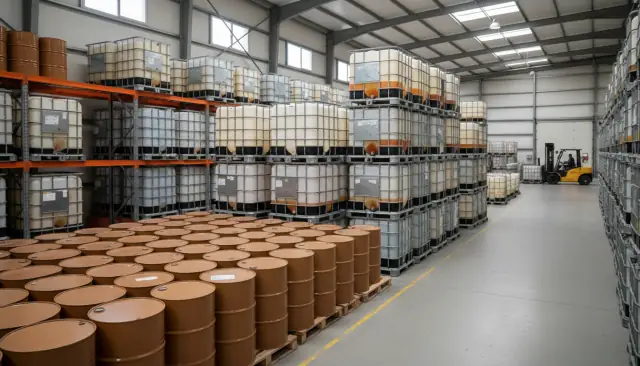
- packaging (bulk, drums, bags) and destination port;
- whether pre-shipment inspection by a third party is required and who nominates it;
- the certificate of analysis parameters you want to see.
For a complete structure, see our guide to writing an RFQ for bulk petrochemicals. Chemineral offers SGS or Intertek pre-shipment inspection, so you can have the grade verified independently before the cargo leaves Sohar or Salalah.
Frequently asked questions
Is VG-30 the same as 60/70 bitumen?
No, but they are close relatives. VG-30 is defined by viscosity at 60 °C and 60/70 by penetration at 25 °C. Bitumen that meets one will often sit near the other, but a certificate must be issued against the specification named in your contract. Do not accept one in place of the other without written agreement.
What does the "85" in 85/100 mean?
It is the lower limit of the penetration range, in tenths of a millimetre at 25 °C. An 85/100 bitumen must test between 85 and 100 units. It is slightly narrower than 80/100 and still a soft paving grade, suited to cooler or moderate conditions where a softer binder is specified.
Which grade is best for a hot climate?
A harder grade: 60/70 or 40/50 on the penetration scale, or VG-30 or VG-40 on the viscosity scale. These resist rutting at high pavement temperatures. The right choice still depends on traffic, layer type and the governing specification for your project.
Can I use 80/100 where 60/70 is specified?
Only with the written approval of the project engineer or the specification owner. The two grades behave differently in hot weather, and substituting a softer grade can reduce rutting resistance. If substitution is acceptable, record it in the contract documents.
Do PG grades replace penetration grades?
They are alternative systems, used by different specification regimes. Some regions use PG, some use penetration, and some use viscosity. A buyer should specify only the system the project follows, and the supplier should certify against that system.
Is cutback bitumen the same as a soft paving grade?
No. A soft paving grade such as 80/100 is straight-run bitumen applied hot. Cutback is bitumen thinned with solvent so that it can be applied at lower temperatures, and it behaves differently once the solvent has left.
Send us your grade and destination
If you know the grade and the port, the next step is a firm offer. Send your grade, governing standard, quantity, packaging and destination through our contact page. Our trade desk issues firm offers valid for 72 hours and quotes Suez and Cape routing side by side, so you can compare transit options before you commit.
Our trade desk can turn the views in this report into firm offers on today's indicative prices — valid 72 hours, with complete documentation.
Request a quote