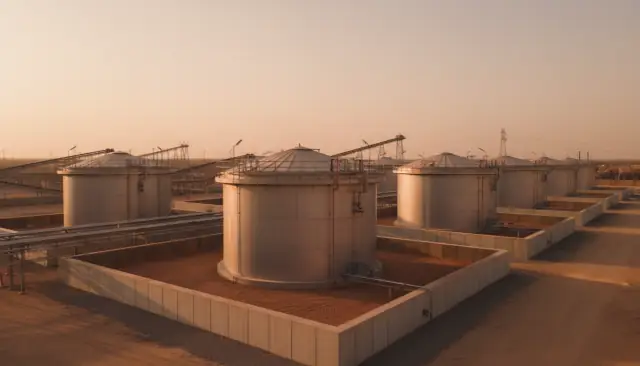
Base Oil Storage and Contamination Control: Drums, IBCs and Bulk Tanks
How base oil gets contaminated and degrades in storage, and the practical controls for drums, IBCs and tanks: dedicated lines, breathers, sampling at receipt, retained samples and what to specify.
Base oil that leaves the refinery on specification can still fail at the blender, and when it does the cause is usually water, dirt, another product or a dirty container, not the oil itself. Contamination is far easier to prevent than to remove, so the controls that matter are cheap ones: clean and dedicated equipment, sealed or filtered breathing, sampling before you accept a delivery, and a retained sample you can point to if something goes wrong.
This guide is for buyers and blenders who receive and store base oil in drums, intermediate bulk containers (IBCs) and tanks. It describes how problems arise and how experienced operators control them. It is general information. Limits, test methods, shelf life and handling temperatures depend on the grade, the supplier and your own process, so confirm them against the product specification, the safety data sheet (SDS) and your site procedures. If you are still choosing a grade, read our guide to base oil groups first.
What you are protecting
Finished lubricant quality starts with base oil quality, and base oil makes up most of a typical blend. Storage can damage three properties in particular:
- Cleanliness: the oil should be free of visible dirt, sediment and free water.
- Composition: the oil should be the grade you ordered, not mixed with another grade or product.
- Condition: the oil should not have begun to oxidise or darken, which can shorten the life of the finished product.
Each of these can be checked, but only if you know what "good" looked like at receipt. That is why sampling and records matter as much as the storage itself.
How contamination happens
Most contamination routes are mundane. It helps to name them, so you can look for each at your own site.
Water
Water is the most common contaminant. It gets in through:
- Rain and condensation on drum tops and bungs, especially where drums are stored outdoors or on their sides.
- Breathing: as a tank cools, it draws in humid air, and the moisture can condense inside it. Daily and seasonal temperature swings make this worse.
- Leaking steam or heating coils, where a tank is heated.
- Tank bottoms: water, being denser than base oil, settles at the bottom and is drawn into the next transfer.
Water causes haze, can promote corrosion and microbial growth, and shows up as defects in finished lubricants.
Dirt and particles
Dust, rust, scale, fibres, gasket debris and sand arrive through open bungs, dirty hoses, open hatches, unfiltered breathing, corroded tank internals and unwashed containers. Particles are hard to spot by eye at low levels and are abrasive in service.
Other products
Cross-contamination happens when:
- A tank, line or hose previously held another product and was not cleaned or drained properly.
- Valves leak through so that one product seeps into another.
- The wrong tank is filled because of unclear labels or shared connections.
- Drums or IBCs are reused without proper cleaning or confirmation of what they held.
Even a small percentage of the wrong oil can change viscosity, colour, flash point or additive response.
Wrong containers
Containers not meant for the oil introduce trouble. Unlined or corroded steel drums shed rust. Containers that held food, solvents or chemicals leave residues. Some plastics and rubbers can be attacked by oil or by the temperature at which it is handled. Use containers that were designed for the product, in good condition, and be wary of anything reconditioned unless you know its history.
Oxidation and ageing
Base oil reacts slowly with oxygen, and heat, light, air exposure and metal contaminants speed it up. The result is oxidation: darker colour, a change in odour, a rise in acidity and viscosity, and in time sediment or sludge. Base oils differ in how well they resist this; more highly refined grades are generally more stable, but no base oil is immune, and a base oil without additives has no extra protection.
Practical points:
- Keep the oil cool and out of direct sunlight. Heat is the main accelerator.
- Do not hold oil hot for longer than needed. Heated storage is sometimes necessary for viscous grades to pump, but prolonged high temperatures accelerate ageing. Heat only to the temperature the supplier recommends and keep heating surfaces clean and controlled.
- Limit air exposure. Keep containers closed, avoid splash filling and minimise headspace changes.
- Avoid catalysts. Copper and some other metals can speed oxidation.
- Watch for change. A progressive darkening of colour in stored stock, or a change in smell, is a reason to test.
Temperature
Temperature affects three things.
- Pumpability. Viscous grades thicken in the cold. Check the supplier's pour point and handling guidance, and plan heating or ambient storage accordingly. Cold oil may be difficult to unload and to sample.
- Ageing. As above, high temperatures speed oxidation.
- Water behaviour. Large temperature swings cause breathing and condensation.
Aim for stable, moderate storage temperatures, with heat applied gently and only where needed. Avoid localised overheating, which degrades oil in contact with hot surfaces. Never exceed the temperatures set out in the SDS and the supplier's handling instructions.
Drums, IBCs and bulk tanks
Drums
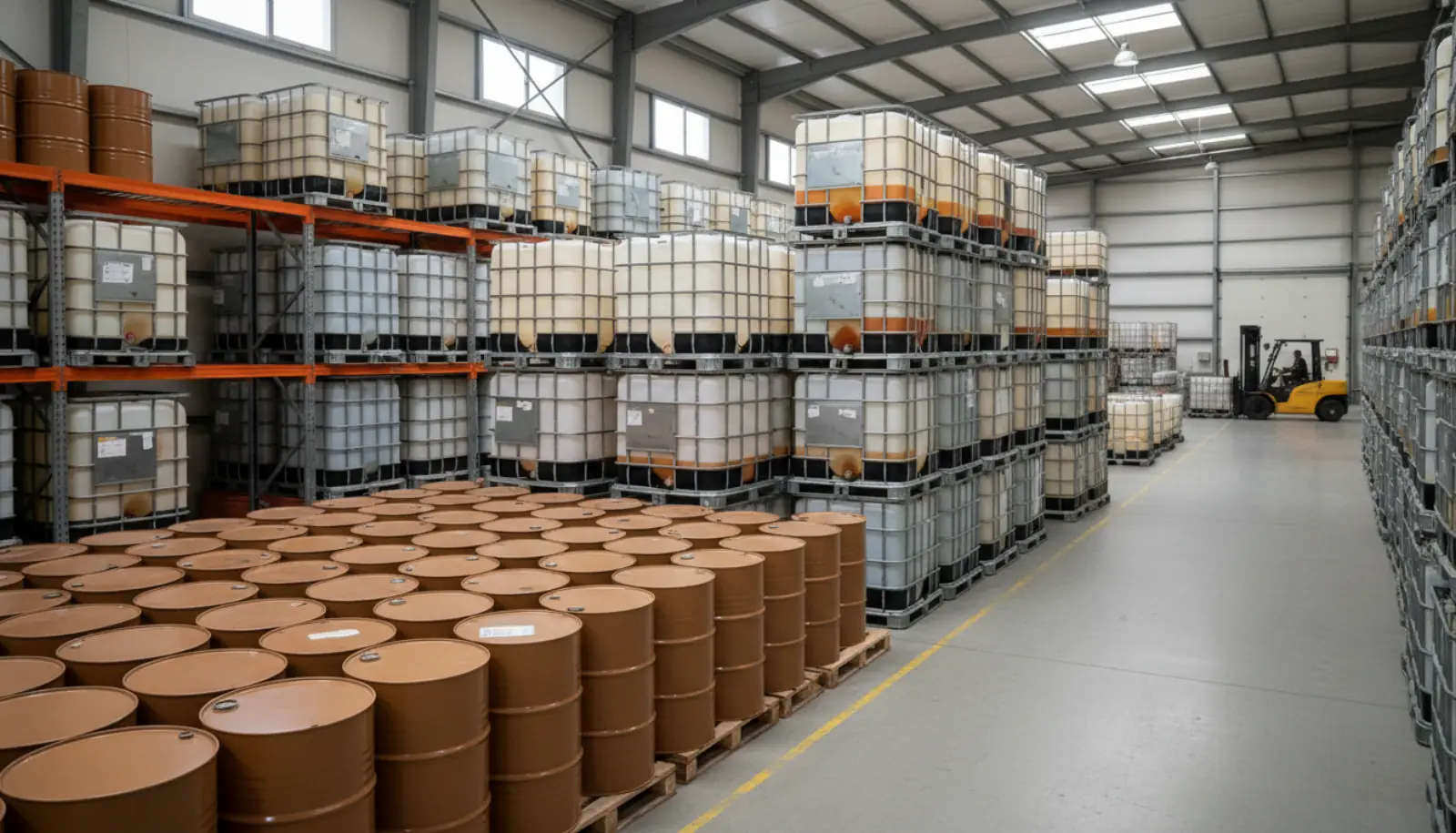
Drums are flexible and suit small volumes, but they are the most exposed to contamination because there are so many openings, and they are labour-intensive to handle.
- Store indoors if possible. If outdoors, store them under cover, on their ends with bungs at the side or at the top and sealed, and not lying in puddles. Water can collect on a drum lid and be drawn past the bung when the drum cools. Stand drums in a way that stops water pooling on top, and wipe tops clean before opening.
- Clean before opening. Wipe the bung area before removing the bung or seal.
- Use clean, dedicated pumps, hoses and funnels for each product.
- Reseal after use. Never leave partly used drums open.
- Check seals and labels on receipt. Look for damaged, dented or leaking drums, damaged seals and unclear marks.
- FIFO and date-mark.
Intermediate bulk containers (IBCs)
IBCs reduce handling but bring their own risks: plastic bottles can be hard to clean, and cages and pallets can be damaged in transit.
- Use IBCs designed for the product and in good condition, with compatible valves and seals.
- Look at the condition of the inner bottle, cap, valve and gasket on receipt. A cloudy, scratched or stained bottle is a contamination risk.
- Treat reconditioned or re-bottled IBCs with caution; they need documented cleaning and a confirmed history.
- Use clean, dedicated discharge hoses and fittings.
Bulk tanks
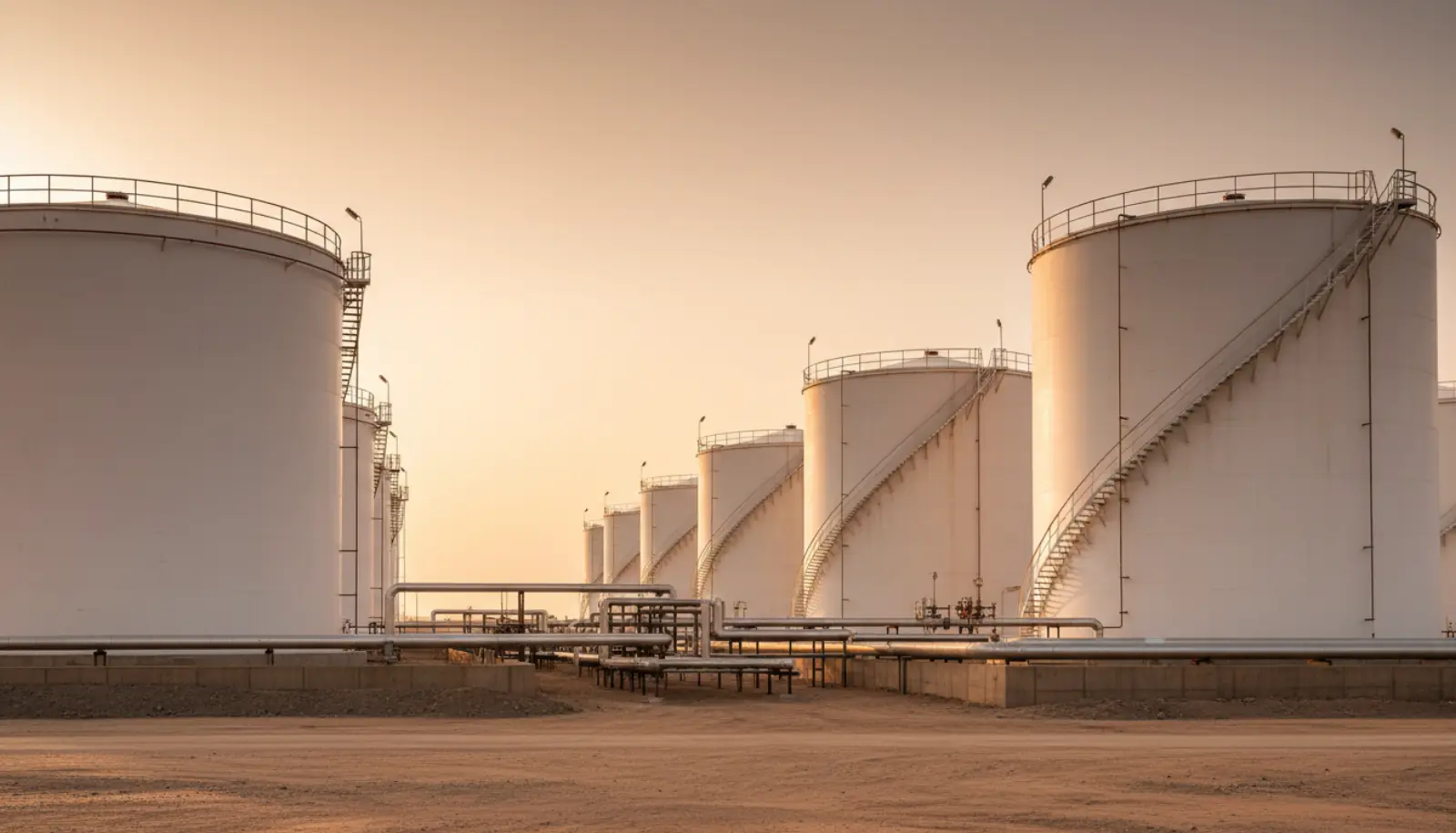
Bulk storage is the most economical for steady volumes and offers the best control if designed and run well, but it concentrates risk: a problem in one tank affects the whole inventory.
- Dedicate tanks and lines to a base oil grade, or to a defined group, wherever possible.
- Label tanks, lines and connection points clearly, and use keyed, colour-coded or locked connections where practical to prevent wrong-tank filling.
- Design for drainage. Sloping floors or a sump allow water and sediment to be drained from the bottom.
- Drain tank bottoms regularly according to procedure, and check what comes out.
- Use breathers fitted with desiccant or filters (see below).
Tank cleaning and dedicated lines
The safest policy is to avoid changing grade in a tank or line. If you must, the cleaning standard should be written down and verified, not assumed.
A sound approach has these steps:
- Empty and drain the tank and line as completely as possible, including low points and dead legs.
- Remove sludge and residue, using procedures that suit the previous product. Confined-space entry has its own safety rules and permits; follow them.
- Flush or clean with an agreed method, and dry the tank and line.
- Inspect the interior and, where possible, test a rinse or a sample before refilling.
- Check valves and seals for leaks.
- Document the previous product, the cleaning method, who inspected and when, and treat the first fill as suspect until tested.
Shared lines, manifolds and loading arms are frequent sources of cross-contamination. If lines must be shared, use positive isolation such as blanks or double block and bleed, and flush between grades according to a procedure. Dead legs trap old product and water, so design them out or flush them.
Ask your carrier or terminal about the previous cargo and how tanks, lines and hoses were cleaned before loading, and ask for cleaning records for road tankers, ISO tanks and flexitanks. Our guide to bitumen packaging options compares drums, flexitanks, ISO tanks and bulk for another heavy product, and many of the same inspection questions carry over.
Breathing: desiccant and filter breathers
A tank or drum "breathes" as temperature and level change. Breathing in humid, dusty air is a main way that water and particles enter tanks.
- Desiccant breathers dry the incoming air. They contain a drying agent, often a silica gel type, that usually changes colour as it saturates. Replace or regenerate it according to the manufacturer's guidance and keep a record.
- Particulate filters remove dust. They need periodic replacement too, or they may restrict flow.
- Check that the breather is sized for the tank's maximum filling and emptying rates, so it does not restrict venting or create pressure or vacuum problems. Never block a vent.
Sampling at receipt
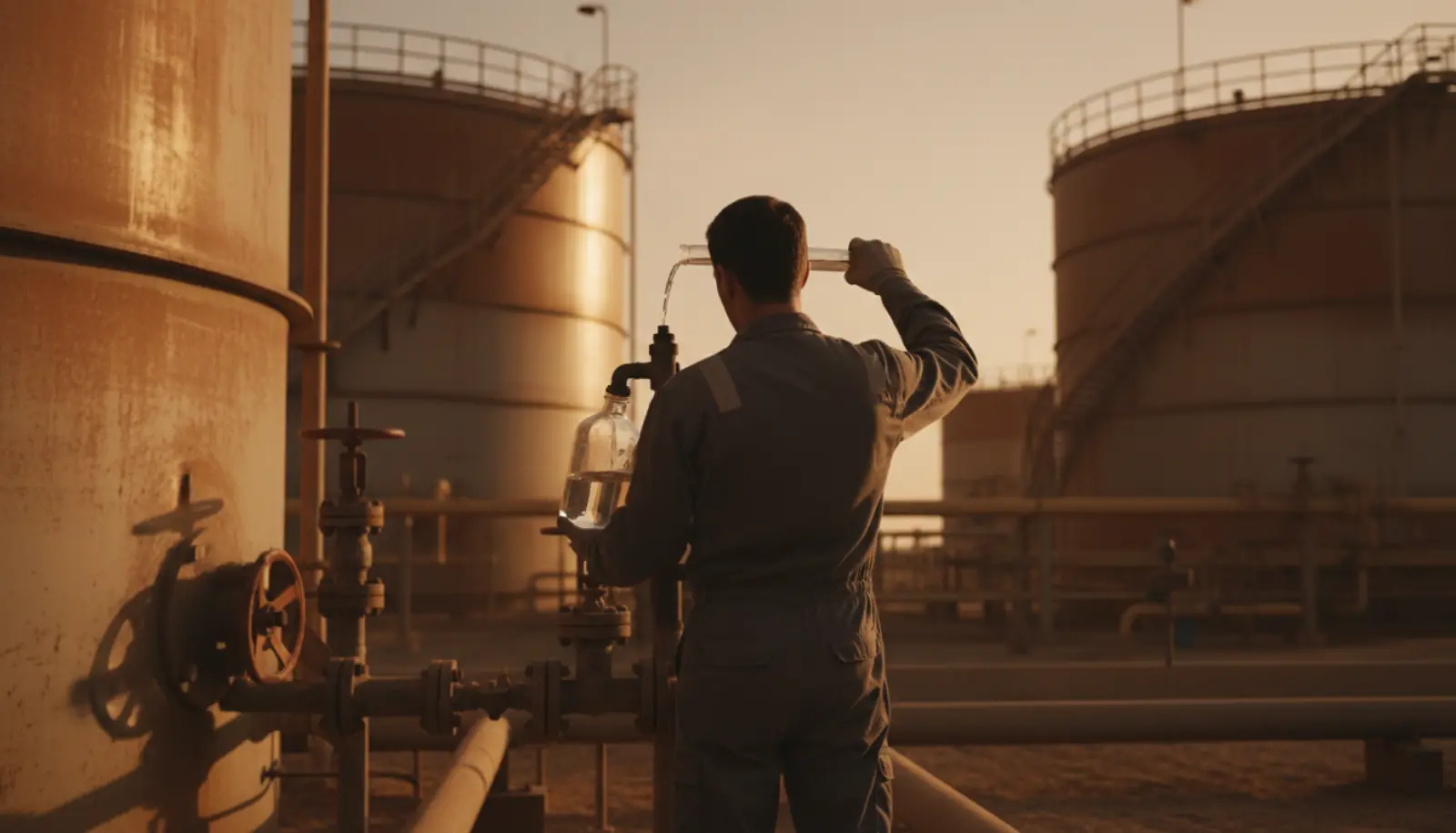
Sampling is how you turn "the supplier says it's right" into "we saw that it was right". Do it at the point you take delivery, before you transfer the cargo into your own storage if you can.
- Agree the method with the supplier in the contract. Industry practice for manual sampling of petroleum products exists (ASTM D4057 and the equivalent API chapter are commonly cited), and the right sampling method depends on the container and the product. Confirm which applies.
- Use clean sample containers suited to oil, labelled and sealed. A dirty bottle can make a good oil look bad.
- Sample each container or compartment according to the agreed scheme. For tankers and tanks, samples at different levels give a more representative picture than one sample from the top.
- Take the samples yourself, or witness them. Where a dispute is possible, an independent inspector's sampling adds weight. Chemineral can arrange SGS or Intertek pre-shipment inspection; agree the sampling scope with the inspector in advance.
- Label with date, product, batch, container or tank, and the sampler's name, and seal.
- Test before transfer where practical. Once oil is in your tank, you may not be able to separate good from bad.
Retaining samples
Keep a retained sample from every delivery. It is your reference if a lubricant batch fails, a customer complains or the supplier disputes your findings.
- Keep a sealed, labelled sample for a period set by your policy and by the contract (at least long enough to cover your finished product's shelf life and any claims period).
- Store it cool, dark and sealed, away from the production area.
- Record the batch number, the delivery, and where it was used.
If a problem emerges, a retained sample lets you test the oil as delivered, rather than the oil as it is now. Our guide to quality claims and disputes explains why contemporaneous evidence carries the most weight.
Checks you can do: colour, appearance, water and particles
You do not need a laboratory to catch many problems. Simple checks at receipt and before use catch gross contamination, and laboratory tests then confirm. The following is orientation only; the checks that apply, and their acceptance limits, come from the product specification and the agreed test methods.
Colour and appearance
- Look at it. Compare the sample with the retained sample from a previous good delivery, in the same light. Check for haze or cloudiness (often water), visible particles, sediment, a different colour, or an unusual odour.
- Colour measurement. Laboratories commonly report colour by a standard scale; ASTM D1500 and Saybolt colour (ASTM D156) are the usual references, and which one applies depends on the grade. Use the scale named in the specification, and compare like with like.
Water
- Visual haze or free water at the bottom of a sample is a warning.
- A simple hot-plate "crackle" test is sometimes used as a rough field indicator for dispersed water: crackling or spitting on a hot surface suggests water. It is qualitative, not a measurement, and it should be done with care and in line with site safety rules.
- Laboratory measurement of water content by Karl Fischer titration (for example ASTM D6304) is the usual quantitative method. Check what the specification calls for.
Particles and cleanliness
- Visual check in a clear container against light.
- Cleanliness codes such as ISO 4406 are widely used for lubricants and hydraulic oils. Ask whether your specification includes a cleanliness requirement for the base oil, since it is not universal.
Properties to confirm in a laboratory
Viscosity, density, flash point, pour point, colour and other properties come from the certificate of analysis and, where you need independent confirmation, from an independent laboratory using the methods in the specification (for example ASTM D445 for kinematic viscosity). A change from the previous batch, or from the certificate, is a reason to look closer.
FIFO and shelf life
Use a first in, first out system: date every delivery, store older stock where it will be used first, and do not top up one lot with another without recording it.
Shelf life for base oil depends on the grade, packaging, storage temperature, exposure to air and moisture, and whether the oil has been opened. Properly sealed, in suitable packaging, and stored cool and dry, base oil is generally regarded as a stable product, and many suppliers quote a period for their products. But there is no single industry figure, and it will be shorter if the container is opened or stored badly. Ask the supplier for its stated shelf life or recommended retest period for your grade and packaging, and put it in the contract. After the retest period, or after any suspected exposure, test before use.
What to specify with the supplier
Put the following in the purchase agreement or order, not just in conversation.
- Grade and specification, with the test methods for each property, and the certificate of analysis required with each lot.
- Packaging type and condition: new drums or IBCs, or the agreed standard for reconditioned containers; closures and seals; marking and labelling.
- Cleanliness and water limits where relevant, with the method.
- Previous cargo and cleaning requirements for tankers, ISO tanks and flexitanks, with the right to refuse an inadequately cleaned unit.
- Sampling and inspection: who samples, how, when, and who keeps which sample; independent inspection by SGS or Intertek if you want it.
- Loading temperature and delivery condition where heated product is involved.
- Retest period or shelf life, and the terms for product that falls outside it.
- Claim terms: the time limit for notifying a quality complaint, what evidence is required, and how disputes will be resolved.
A receiving checklist
- Check documents against the order: grade, quantity, batch, certificate of analysis.
- Inspect containers and seals for damage, leaks and contamination.
- Confirm tanker or ISO tank cleanliness records and the previous cargo.
- Sample, label and seal; keep a retained sample.
- Check appearance, colour and water, and compare with the reference.
- Confirm the right tank, line and connection before discharge.
Frequently asked questions
What is the biggest threat to stored base oil?
Water is usually the most common problem, followed by particles and cross-contamination from shared equipment. All three are largely prevented by sealed storage, desiccant and filter breathers, and dedicated, clean equipment.
How can I tell if base oil has gone off?
Look for darker colour than the retained sample, a change in odour, haze or sediment. Then confirm with laboratory tests on the properties in the specification. A visual check can suggest a problem but cannot clear the oil.
Do I need desiccant breathers on every tank?
They are widely used on tanks and drums where humid air or temperature swings make water pick-up likely, and they are low cost compared with the cost of water in finished product. Whether they are needed at your site depends on climate, tank use and your product limits.
How long should I keep retained samples?
Long enough to cover the shelf life of the products made from the oil and any claims period in the contract. Your policy and contract set the figure, not a universal rule.
Can I switch a tank from one base oil grade to another?
It is possible, but avoid it if you can. If you must, drain, clean and verify to a written standard, and test the first fill. Residues of the earlier grade are a common cause of off-specification product.
Next step
If you are planning purchases of base oil from Sohar or Salalah and want to settle grade, packaging, sampling and inspection before you place an order, view the base oil product page and send an RFQ to the Chemineral trade desk. Firm offers are valid for 72 hours.
Our trade desk can turn the views in this report into firm offers on today's indicative prices — valid 72 hours, with complete documentation.
Request a quote