Granular Sulphur Buyers' Guide: Forms, Purity, Uses and Safe Handling
How to choose between granular, lump, prilled, flake and powder sulphur, read purity, ash, acidity and moisture figures, and handle a flammable, dust-explosive cargo safely.
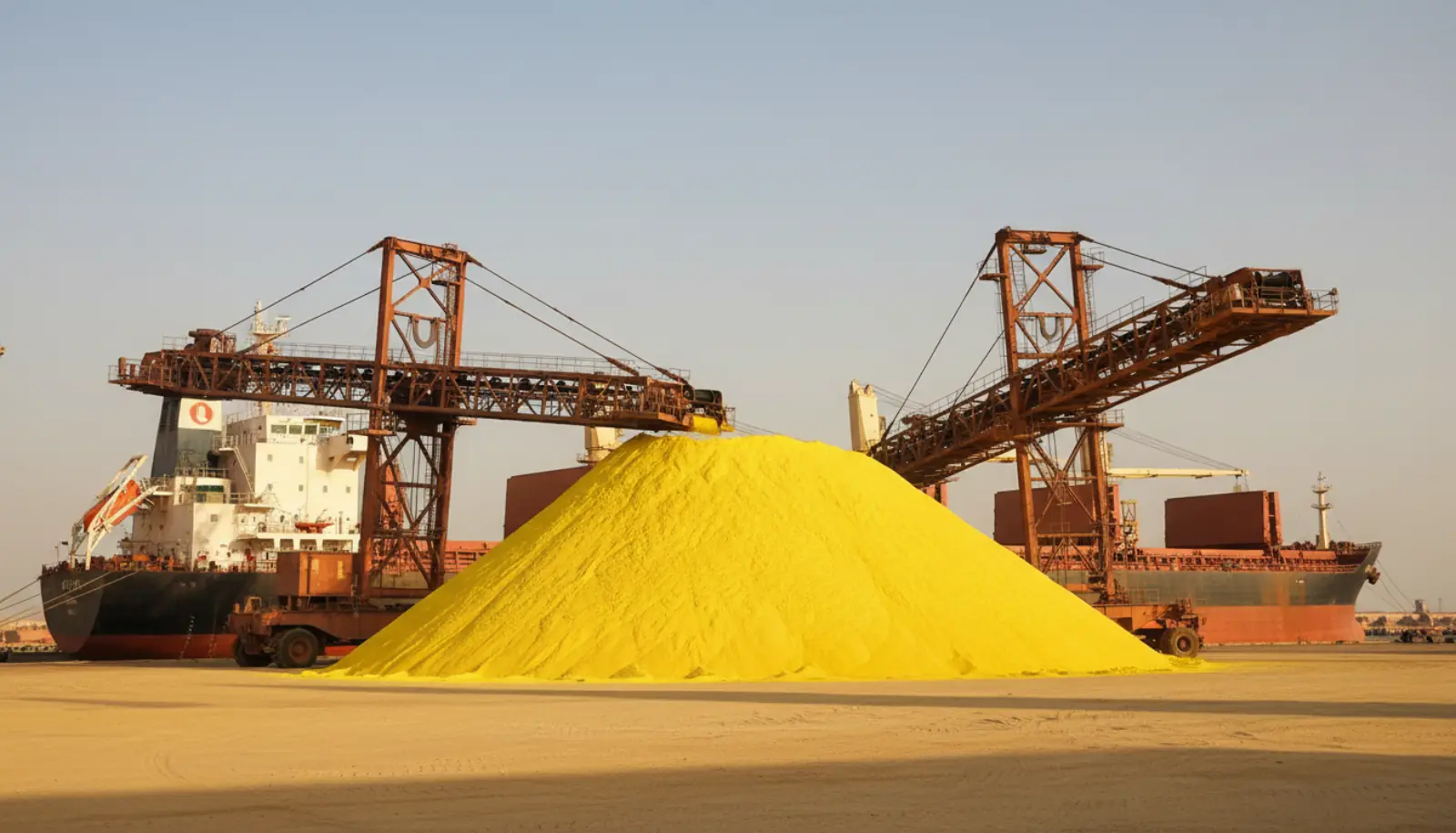
Granular sulphur is the most practical form for most bulk buyers: it handles cleanly, makes less dust than flakes or powder, and suits sulphuric acid plants, fertiliser manufacturers and many industrial users. The three numbers to check first are purity, ash and moisture, and the first safety fact to respect is that sulphur is a flammable solid whose dust can explode. Most problems on sulphur cargoes come from the wrong form for the end use, a vague specification, or handling that ignores the fire and dust hazards.
This guide covers the commercial forms of sulphur, the specification lines that matter, the main uses, and the handling basics for a dangerous goods cargo. It is written for buyers who need to specify, order and receive sulphur, not for plant operators, and it does not replace the safety data sheet or local regulation. See our sulphur product page for details.
What sulphur is and where it comes from
Most of the world's commercial sulphur is not mined in the old sense. It is recovered as a by-product of processing sour natural gas and crude oil, where hydrogen sulphide is removed and converted to elemental sulphur. The recovered sulphur leaves the recovery unit as a hot liquid, and the way that liquid is then handled decides the form in which you buy it.
That origin explains two things about the market. Sulphur is a by-product, so supply follows oil and gas processing rather than demand for sulphur itself. And the quality of recovered sulphur is generally high, but depends on the plant and on how it is stored and handled after recovery.
The commercial forms
Granular (formed) sulphur
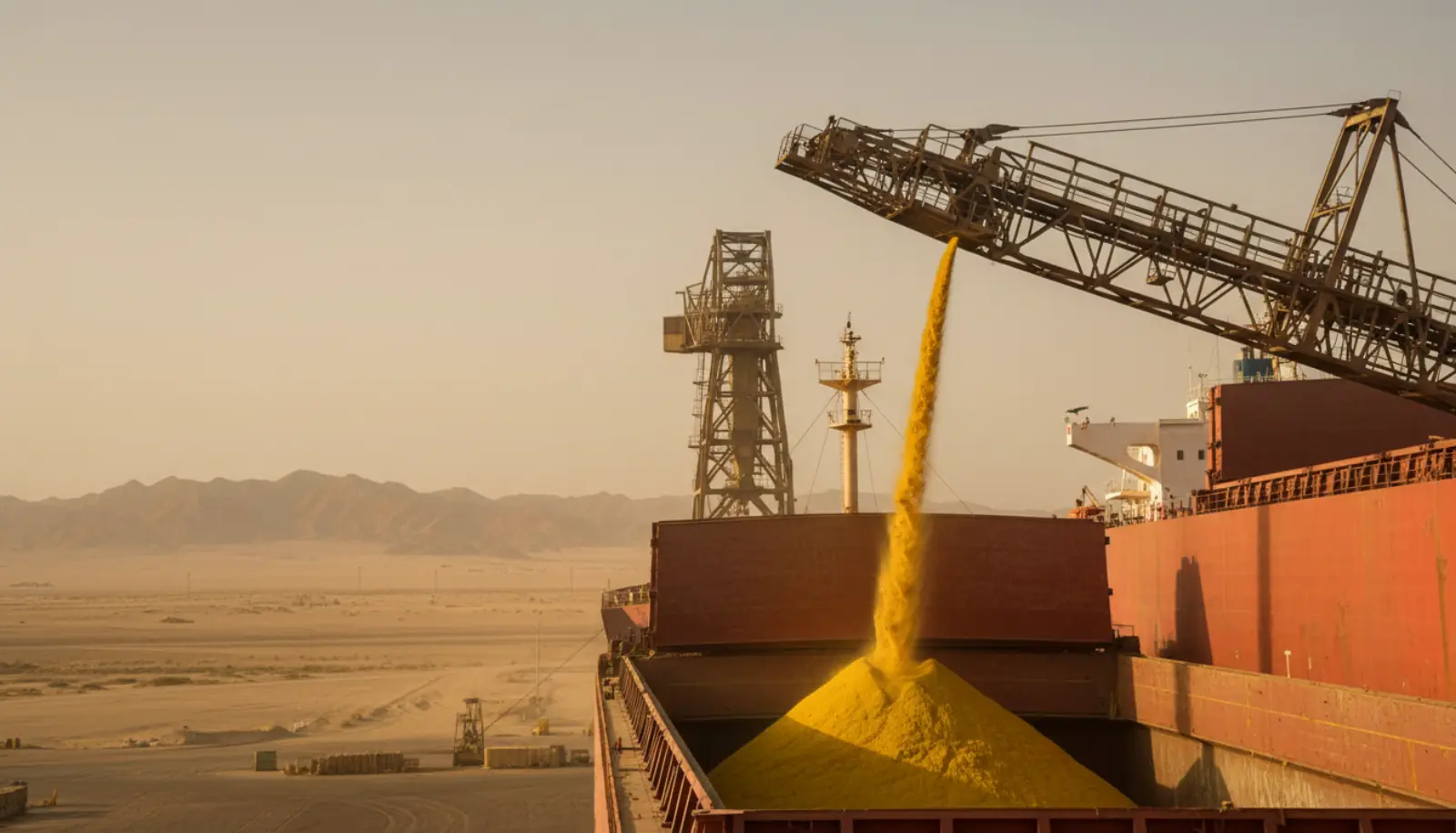
Molten sulphur is formed into granules by spraying or dropping it into a cooling medium or onto a bed of seed particles. The product is hard, roughly round, and typically a few millimetres across. It is the common form for ocean shipment in bulk and for direct feed to many processing plants.
Strengths. Lower dust than flakes or powder, good flow, reasonable abrasion resistance, easy to melt in a receiving plant. Limits. Still generates some fines through handling, and granules can degrade if wet or roughly handled.
Lump (block) sulphur
Molten sulphur is poured into blocks or pits, solidified, then broken into lumps. This is the traditional form for stockpile-based supply.
Strengths. Simple production, little processing cost. Limits. Irregular size, more dust and fines once broken up, harder to handle with automated equipment, and more variable quality at the surface of the block. Often needs crushing before use.
Prilled sulphur
Molten sulphur is solidified into small, hard, near-spherical particles. The product is uniform and free-flowing.
Strengths. Uniform size, clean handling. Limits. Smaller particles produce more fine dust than larger granules. Availability varies by supplier.
Flake (slate or pastille) sulphur
The melt is cooled on a belt or drum and solidified into thin flakes, or dropped as pastilles.
Strengths. Dissolves or melts quickly, convenient for some chemical processes. Limits. Flakes are friable and make more dust. They need careful handling and dust control.
Powder (ground) sulphur
Sulphur is ground and sometimes screened to a defined fineness. Fine grades are used where surface area matters, for example in agrochemical formulations, certain rubber compounds and pharmaceutical or cosmetic intermediates.
Strengths. High reactivity per unit mass, easy to disperse. Limits. The highest dust and explosion risk of any form, and the strictest handling requirements. Ground sulphur packed in bags or drums needs specific controls.
Choosing the form
| Use | Usual preferred form |
|---|---|
| Sulphuric acid plant feed | Granular, or liquid by tanker where available |
| Fertiliser manufacture | Granular or prilled |
| Direct soil application | Fine granular or specially formulated products |
| Rubber vulcanisation | Fine powder (grade-specific) |
| Chemical intermediates | Granular, flake or powder by process |
| Long-distance bulk shipping | Granular |
State the end use when you enquire. The wrong form may work, but it will cost you in handling losses, dust control or processing time.
Reading the specification
Specifications vary by producer and by the end use, so treat the figures below as typical lines and not guarantees. Always read the contract specification.
Purity (sulphur content)
Commercial sulphur is generally very pure. A minimum in the high 99s per cent is common for bright yellow industrial and fertiliser-grade product. The remainder is mainly ash, moisture and small amounts of organic matter.
For a sulphuric acid plant, purity affects acid quality and catalyst life, so the impurity profile matters more than the headline sulphur figure. For a fertiliser plant, the same logic applies. Ask which test method was used and make sure the figure is on a dry basis or a stated basis.
Ash
Ash is the non-combustible residue left after burning. It is made up of mineral matter, and it matters because it ends up in the furnace and the downstream equipment. In acid plants it can foul filters and equipment and reduce throughput. A lower ash content generally means less filter work and less residue to dispose of. Typical limits are a fraction of a percent, but plants vary in what they can tolerate.
Acidity
Acidity is usually expressed as residual sulphuric acid. It reflects incomplete removal of acid compounds during recovery or storage. Higher acidity increases corrosion of equipment, particularly in the presence of moisture. A low limit protects conveyors, hoppers and storage. Check how the test is done and on what basis.
Moisture
Moisture matters more than its small numerical limit suggests. Wet sulphur is harder to handle, can stick in chutes, can freeze or cake in cold conditions, and in combination with acidity increases corrosion. A moisture content of a fraction of a percent is typical for specifications. For a plant that melts the sulphur, extra water also means extra energy and foaming in melters, so tight control is worthwhile.
Organic carbon and colour
Bright yellow is the normal colour of clean sulphur. A darker colour suggests organic contamination, often from hydrocarbons carried over from the recovery process. Some users specify a maximum for organic matter or carbon, since it affects the quality of the melt and the downstream product.
Other impurities
Depending on use, buyers may also specify limits on:
- Arsenic, selenium and other trace elements, relevant to catalysts and product quality in acid plants.
- Hydrogen sulphide content, because dissolved hydrogen sulphide in the product can be released during handling and is toxic.
- Particle size distribution, for granular and prilled product, with limits on fines and oversize.
- Bulk density, which affects stowage and storage.
Particle size and fines
For granular product, ask for the minimum percentage within the nominal size range and the maximum fines. Fines drive dust, losses and explosion risk. A product that is nominally granular but has a high proportion of fines behaves more like a powder in the hold and at the discharge hopper.
Main uses
Sulphuric acid
The largest single use of sulphur is the manufacture of sulphuric acid. Sulphur is melted, filtered, burned in air to make sulphur dioxide, converted catalytically to sulphur trioxide and absorbed to make acid. Sulphuric acid in turn underpins phosphate fertiliser production, metals processing and many industrial chemicals. Acid plants are sensitive to ash and moisture, and they generally prefer a dependable supply of uniform product.
Fertilisers
Sulphur is both a feedstock and a nutrient. It is the feedstock for the sulphuric acid used in making phosphate fertilisers, and elemental sulphur is also used directly, in sulphur-enhanced fertilisers and as a soil amendment. Crops need sulphur as a plant nutrient, and elemental sulphur must be oxidised by soil microorganisms before plants can take it up, which means particle size and distribution affect how quickly it becomes available. Agronomic specifications therefore often include particle size and dispersibility, so ask what the end product requires.
Rubber and industrial chemicals
Sulphur is the classic vulcanising agent for rubber, forming cross-links between polymer chains. Rubber compounders typically require specific grades, often finely divided and sometimes a specially treated form, and the supplier's specification for rubber-grade product is distinct from bulk fertiliser or acid-plant grades. Do not assume a bulk industrial grade is suitable. Other industrial uses include the manufacture of carbon disulphide, pigments, pesticides, and a range of intermediates. Each has its own purity and form requirements.
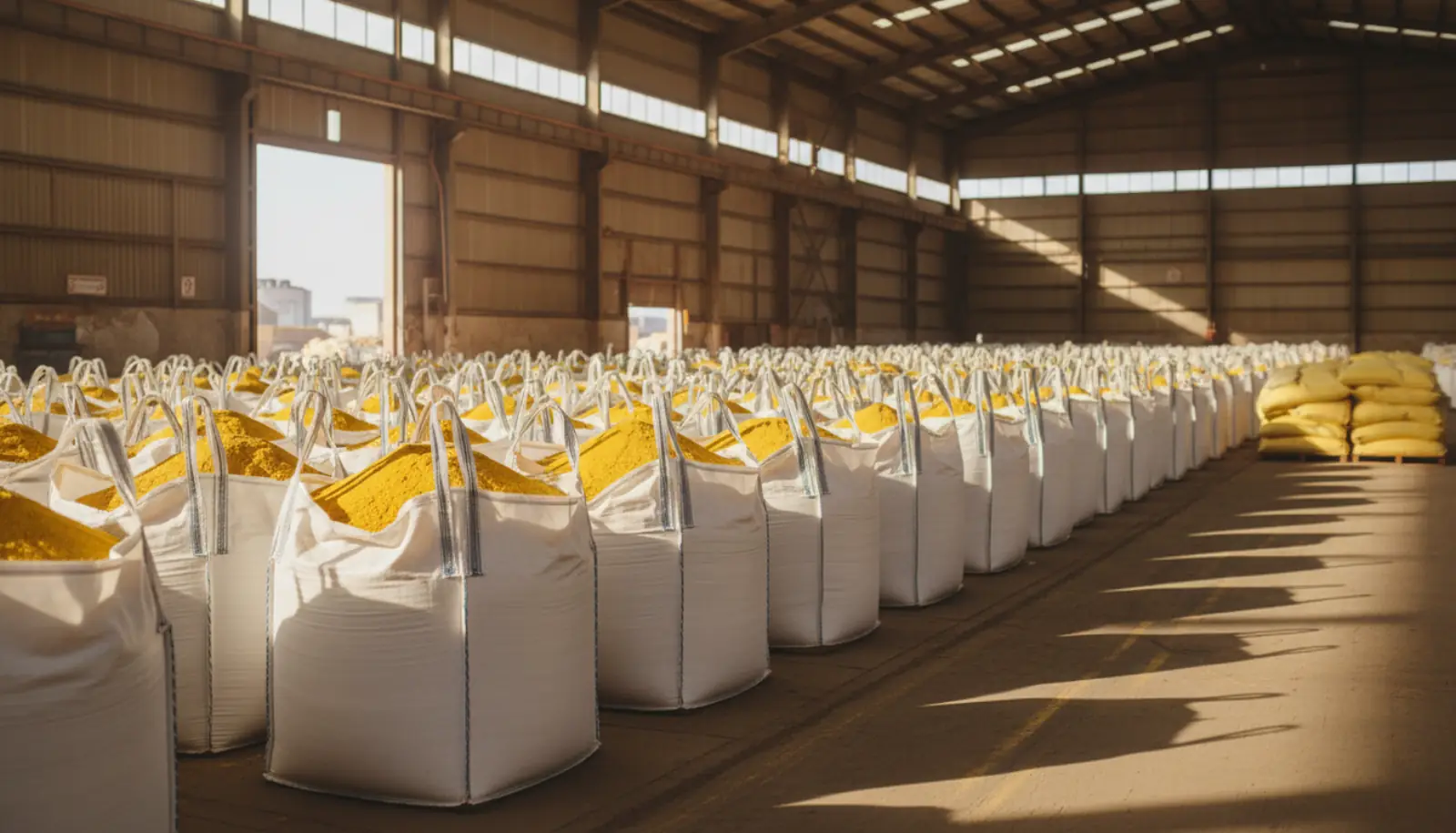
Dangerous goods classification and the basics
Sulphur is a regulated dangerous good in most transport frameworks. Under the international maritime dangerous goods framework, solid sulphur is classified as a flammable solid (Class 4.1) with the UN number 1350. Molten sulphur has a separate entry. Bulk sulphur may also fall under the international code for solid bulk cargoes, which sets requirements for loading, stowage, ventilation and monitoring. The exact classification and conditions depend on the form, the mode of transport and the regulation in force, so check the current edition of the code and the safety data sheet for your cargo.
The main hazards are fire, dust explosion, toxic gases and corrosion.
Fire
Sulphur burns readily once ignited, producing sulphur dioxide, a toxic and irritating gas. A sulphur fire can burn with a pale blue flame that is hard to see in daylight, so it can go unnoticed. Burning sulphur can also melt and flow, spreading the fire.
Key points:
- Keep ignition sources away. No smoking, no hot work, no unprotected electrical equipment near stockpiles, holds or conveyors.
- Know the response plan. Fire-fighting generally uses water in spray or fog form to cool and smother, and personnel need breathing apparatus because of sulphur dioxide. Follow the cargo information and the ship's or terminal's emergency procedure.
- Watch for hot spots. Contamination with organic materials, such as oils, wood, rags or coal dust, can lower the ignition threshold.
Dust explosion
Sulphur dust suspended in air can ignite and explode, and ignition energy can be low. The risk rises with finer particles and higher dust concentrations. It is greatest with powder and flake, but even granular sulphur generates fines through abrasion and handling.
Basic controls:
- Minimise dust generation. Limit drop heights, use enclosed conveyors, and avoid unnecessary transfers.
- Control dust clouds. Use extraction and suppression at transfer points, and keep dust from accumulating on surfaces.
- Eliminate ignition sources. Earth and bond equipment to prevent static discharge, use appropriately rated electrical equipment, and exclude hot work.
- Housekeeping. Remove accumulated dust regularly, because settled dust can be stirred up by an initial small event into a larger explosion.
- Design for relief. Plant owners should consult explosion-protection specialists on venting, suppression or isolation.
Hydrogen sulphide and sulphur dioxide
Sulphur may carry traces of dissolved hydrogen sulphide, which can be released during handling, especially from molten sulphur or from product that is disturbed. Hydrogen sulphide is toxic and can dull the sense of smell at higher concentrations, so smell is not a reliable warning. Sulphur dioxide is produced by any combustion. Enclosed spaces, such as holds, silos and tanks, need gas monitoring and entry controls.
Corrosion
In the presence of moisture, residual acid and sulphur oxides attack steel and concrete. Wet sulphur can corrode hold structures, conveyors and hoppers. Protective coatings, dry storage and prompt cleaning reduce the damage.
Storage basics
- Keep it dry. Covered storage or sealed containers reduce moisture, caking and corrosion.
- Segregate it. Store away from oxidising agents, such as nitrates and chlorates, which can react dangerously with sulphur, and away from fuels, oils and combustible material.
- Control ignition sources in the whole storage area, including vehicles and portable electrical equipment.
- Manage stockpile height and ventilation to avoid heat build-up and to disperse any gases.
- Provide fire-fighting capability suited to the site, with water supply and trained personnel.
- Keep dust under control with housekeeping, wind screens and, where needed, dust suppression.
- Label and sign the area according to local requirements.
Shipping and receiving checklist
For ocean shipment, the cargo is often carried in bulk. The following points deserve attention.
- Documentation. Obtain the safety data sheet, the dangerous goods declaration, the certificate of analysis and any cargo information required for solid bulk cargoes.
- Hold condition. Holds should be clean, dry and free of residues from previous cargoes, especially combustible or oxidising residues. Arrange a hold inspection before loading.
- Loading and weather. Avoid loading in rain, since moisture damages quality and increases corrosion. Keep hatches closed when not loading.
- Ventilation and monitoring. Follow the cargo information for ventilation, gas monitoring and entry rules.
- Independent inspection. Chemineral can arrange SGS or Intertek pre-shipment inspection, including sampling and a draft survey for weight.
- Discharge planning. Confirm that the receiving terminal is permitted and equipped to handle sulphur, including dust control, fire protection and covered storage. Some ports restrict or specifically license sulphur handling, so confirm early.
- Route and transit time. Longer voyages mean more time for moisture or heat to affect the cargo. Chemineral quotes Suez and Cape routing side by side so that you can compare them.
Common buyer mistakes
Buying the wrong form. Powder where granular would do multiplies dust and explosion risk. Granular where a fine rubber grade is needed will not perform.
Ignoring ash and moisture. A headline purity figure can hide an ash or moisture level that causes real problems at the plant.
Underestimating dust. Fines accumulate where they are not seen, and the risk is cumulative, not occasional.
Treating the cargo as ordinary bulk. Dangerous goods rules apply to documentation, stowage, and the people who handle it. Skipping steps exposes the shipper, the vessel, the terminal and the buyer.
Overlooking port rules. Some terminals will not accept sulphur, or require specific storage and fire protection. A cargo that cannot discharge is an expensive problem.
Accepting an incomplete specification. If the specification leaves out acidity, ash or the test method, you cannot hold the seller to a standard you did not write down.
Frequently asked questions
Which form of sulphur is best for bulk shipping?
Granular is usually the practical choice because it flows well, creates less dust than flake or powder, and suits bulk handling. Lump needs crushing and creates more fines. The best form still depends on what your plant needs, so state the end use in your enquiry.
Is sulphur a dangerous good?
Yes. Solid sulphur is generally carried as a flammable solid (Class 4.1, UN 1350) under the international maritime dangerous goods framework, and bulk carriage follows the solid bulk cargo code. Check the current regulations and the safety data sheet for the exact requirements.
Why does ash matter so much for acid plants?
Ash is the non-combustible residue that does not burn in the furnace. It builds up in filters and equipment, reduces throughput and raises maintenance costs. Plants that use sulphur as a feedstock therefore set limits on it.
Can sulphur dust really explode?
Yes. Fine sulphur dust suspended in air can ignite and explode, and static discharge may be enough. The risk is highest with powder and flake, but granular product also creates fines. Dust control, earthing and housekeeping are the key controls.
Is rubber-grade sulphur the same as industrial bulk sulphur?
No. Rubber vulcanisation typically requires a specific fine, sometimes treated, grade with its own specification. Bulk industrial and fertiliser grades are not automatically suitable. Give the grade requirement to the supplier at enquiry.
What should I check at the receiving port?
Confirm that the terminal is permitted to handle sulphur, that it has covered storage, dust control and fire protection, and that it accepts the dangerous goods documentation. Resolve this before you fix a vessel.
Send us your requirement
If you are sourcing granular sulphur, send your required form, specification limits, quantity range, destination port and packing or bulk preference to Chemineral's trade desk through the contact page. We ship from Sohar and Salalah, our firm offers are valid for 72 hours, and SGS or Intertek pre-shipment inspection can be arranged. Details of the grade are on the sulphur product page.
Our trade desk can turn the views in this report into firm offers on today's indicative prices — valid 72 hours, with complete documentation.
Request a quote