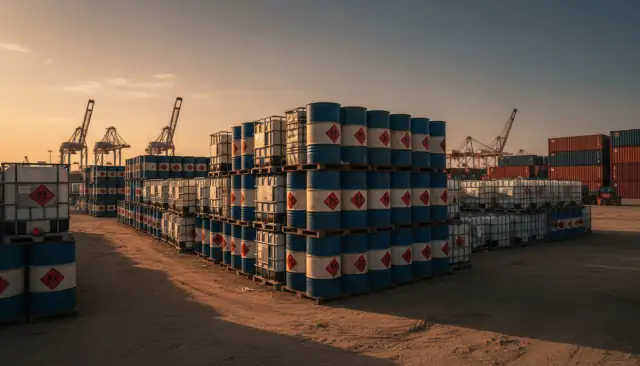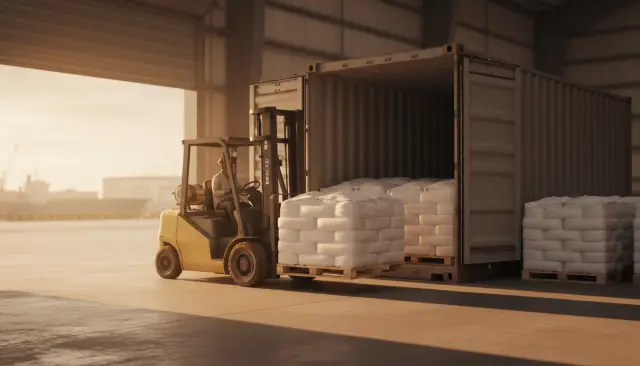
Bagged vs Bulk Fertiliser Shipping: Costs, Risks and Port Realities
Should you ship fertiliser in 50 kg bags, jumbo bags or bulk? A buyer's guide to moisture and caking risk, hold cleanliness, discharge rates, port infrastructure and cost trade-offs.
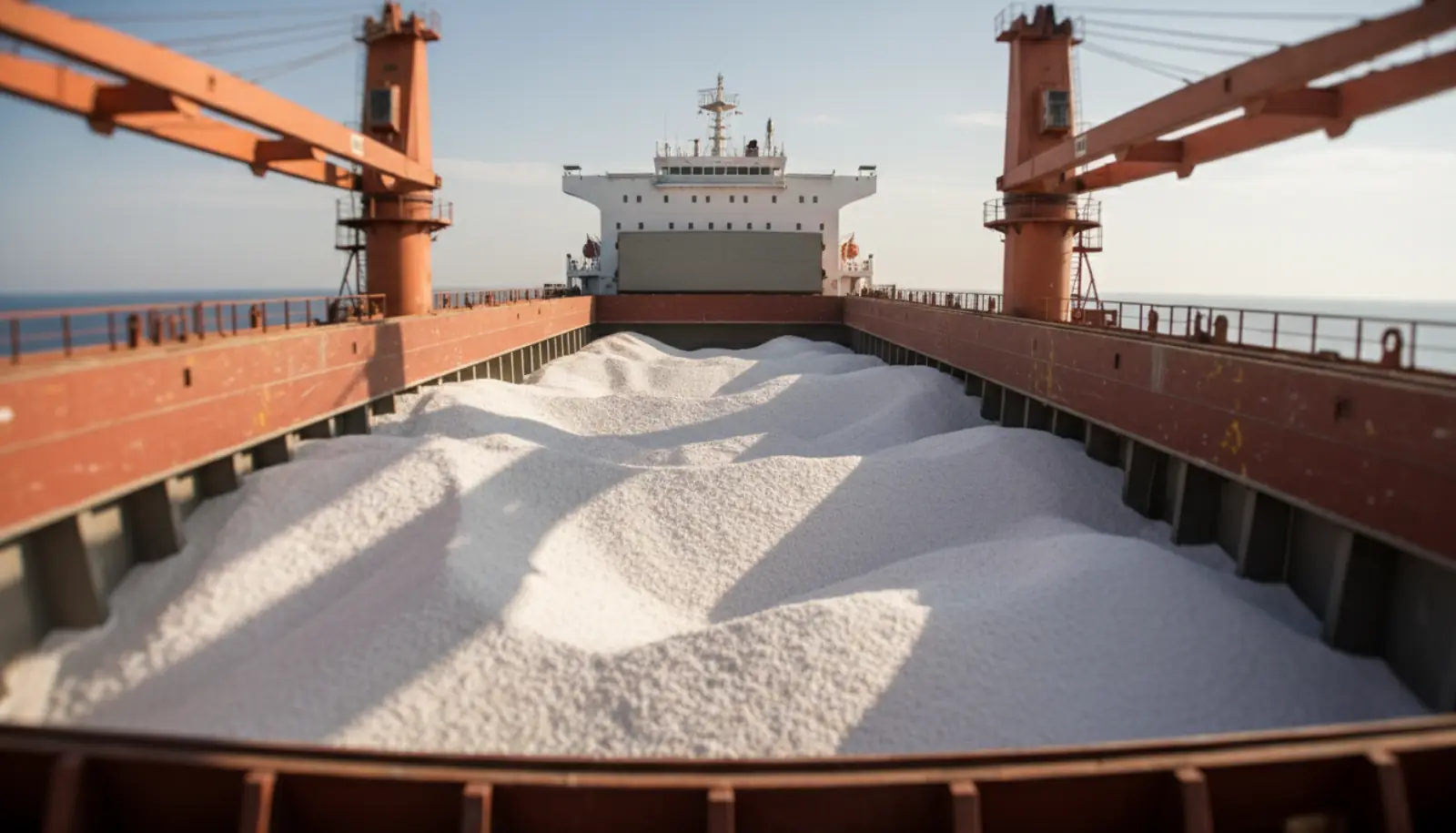
Ship in bulk when your destination port can discharge, store and bag the cargo efficiently and your volume justifies a full vessel; ship in 50 kg bags or jumbo bags when the port is shallow or poorly equipped, when you need to split the cargo between buyers, or when you want the product ready to sell on arrival. The cheapest freight rate per tonne is rarely the cheapest delivered cost, because the cost that decides the outcome is usually at the receiving end: discharge speed, shortage, bagging labour, storage and claims.
This guide compares the three main ways to move fertiliser by sea: standard 50 kg bags, jumbo bags (flexible intermediate bulk containers) and bulk in a vessel's holds. It focuses on urea and similar hygroscopic products, because moisture is the central risk. It does not give freight rates or forecasts, because those change constantly. It gives the decision rules that stay true.
The three options at a glance
| Factor | 50 kg bags | Jumbo bags | Bulk |
|---|---|---|---|
| Typical unit | Small woven polypropylene bag, often with a liner | Large flexible bag, commonly around a tonne | Loose cargo in the vessel's holds |
| Handling at load | Slings, pallets or manual stowage | Crane or forklift, one lift per bag | Conveyor or grab, high rate |
| Handling at discharge | Slow, labour-intensive | Moderate, one lift per bag | Fast with proper equipment |
| Port requirement | Basic, works at modest ports | Basic to moderate | Hoppers, conveyors or grabs, storage |
| Moisture protection | Good, if bags and liners are intact | Good, if the bag is sealed and covered | Depends on holds, hatches and weather |
| Packaging cost | Highest per tonne | Moderate | None, but bagging may follow |
| Flexibility on parcel size | High | High | Low, needs a full or part vessel |
| Retail-ready on arrival | Yes | Not usually | No |
The categories overlap in practice, and many cargoes mix them, such as bulk shipment followed by bagging at destination. The best choice depends on your specific chain.
50 kg bags
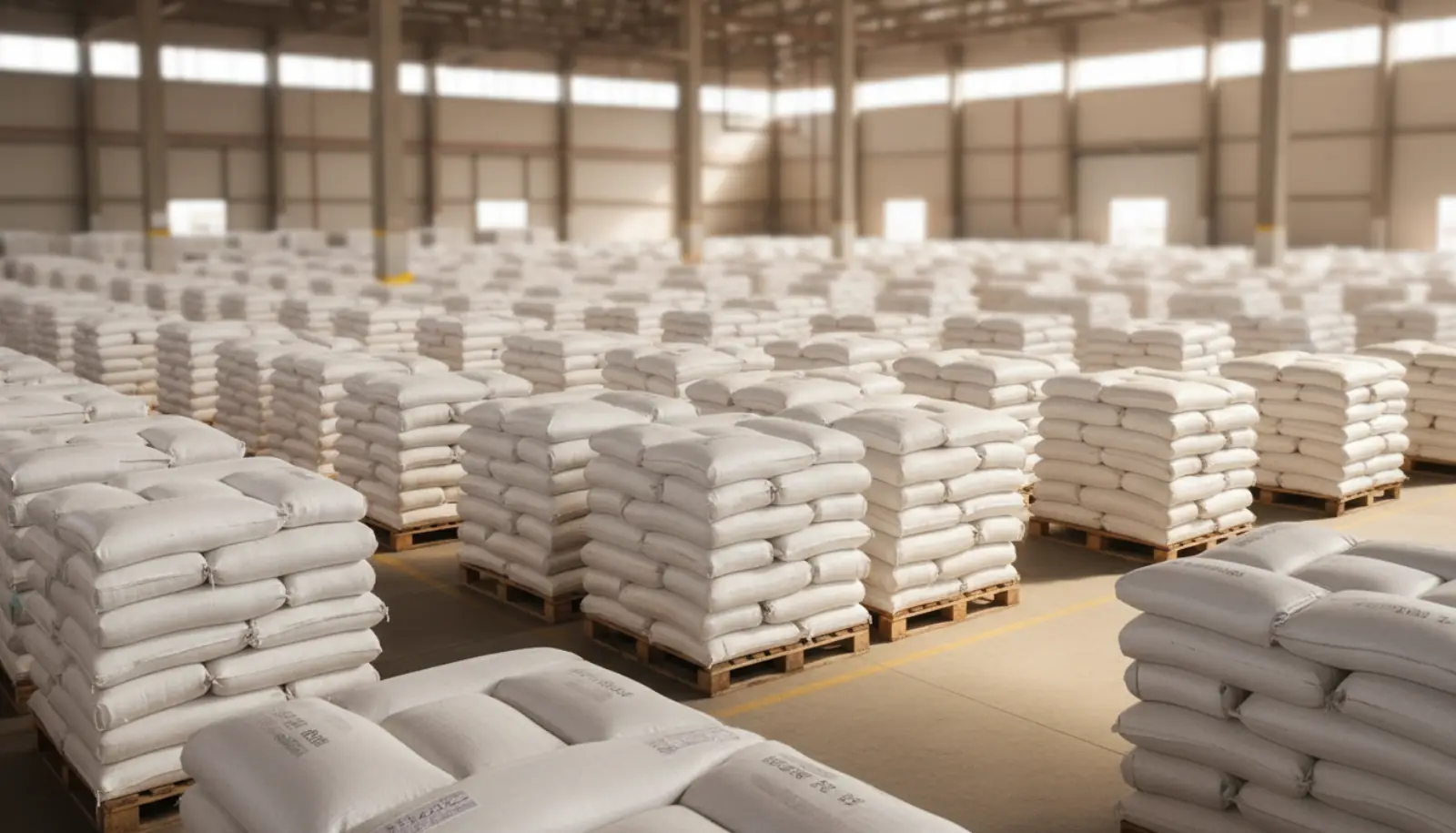
The standard retail unit for fertiliser in many markets is the bag of around 50 kg, made of woven polypropylene, often with a polyethylene liner or laminate to resist moisture. Bags are loaded onto the vessel on pallets, in slings or stowed by hand, and are discharged by similar means.
Advantages
- Ready for the market. Bags arrive in the unit your customers expect. Branding, marking and lot identification are done before shipment.
- Works at modest ports. Bagged cargo does not need specialised bulk equipment. General cargo berths and ordinary cranes can handle it.
- Easy to split. You can allocate the cargo among several buyers or consignees, and discharge parcels at different ports.
- Better moisture protection when the bag and liner are intact, since each bag is a small sealed unit.
- Cleaner holds are less critical for the product, though still important for the vessel and for the bags.
Disadvantages
- Cost. Bags, liners, filling, stitching, stowage and labour all add cost. Bagging is a significant element of the delivered price.
- Slow discharge. Handling bags in slings or by hand takes longer than moving bulk, which lengthens port time and demurrage exposure.
- Damage and spillage. Bags are torn by hooks, forklift tines and rough handling. A few torn bags per pallet adds up to a shortage claim.
- Weight discrepancies. Individual bag weights vary. Over a large consignment, short-weight bags create commercial disputes.
- Stack pressure. Tall stacks compress the bottom layers, which promotes caking in hygroscopic products.
Practical points on bags
Specify the bag material, weight, dimensions, printing, liner and stitching in the contract. Specify whether the cargo is palletised and how the pallets are wrapped. Ask for lot marking that links each bag to the certificate of analysis. Require that bags be filled and sealed when the product is dry and not hot, since warm product bagged in a closed liner cools and can condense moisture inside.
Jumbo bags
Jumbo bags, also called flexible intermediate bulk containers or big bags, hold a much larger quantity per unit, commonly around a tonne, and are lifted by loops with a crane or forklift. They are used where buyers want a compromise between bulk and small bags.
Advantages
- Faster than 50 kg bags because each lift moves far more product.
- Lower packaging cost per tonne than 50 kg bags in most cases.
- Good for repacking. The buyer can discharge the jumbo bag into a bagging line at destination, or sell it directly to larger customers, such as blenders and estates.
- Moderate port requirement. Needs lifting capacity but not a bulk terminal.
Disadvantages
- Not retail-ready. Smallholders rarely buy by the tonne, so someone must repack.
- Higher stack and puncture risk if handled with forklift tines or stacked unevenly.
- Moisture exposure if the top closure is not sealed or if bags stand uncovered.
- Specification matters. Bag quality, safe working load, liner, loops and ultraviolet stabilisation vary widely. A bag that fails under load is a safety incident as well as a cargo loss.
Practical points on jumbo bags
Ask for the safe working load and safety factor of the bag, and check that it is suitable for the product density. Insist on a liner for hygroscopic products. Do not stack beyond the stated limit. Keep bags off wet floors and cover them against rain and sun during storage.
Bulk in vessel holds
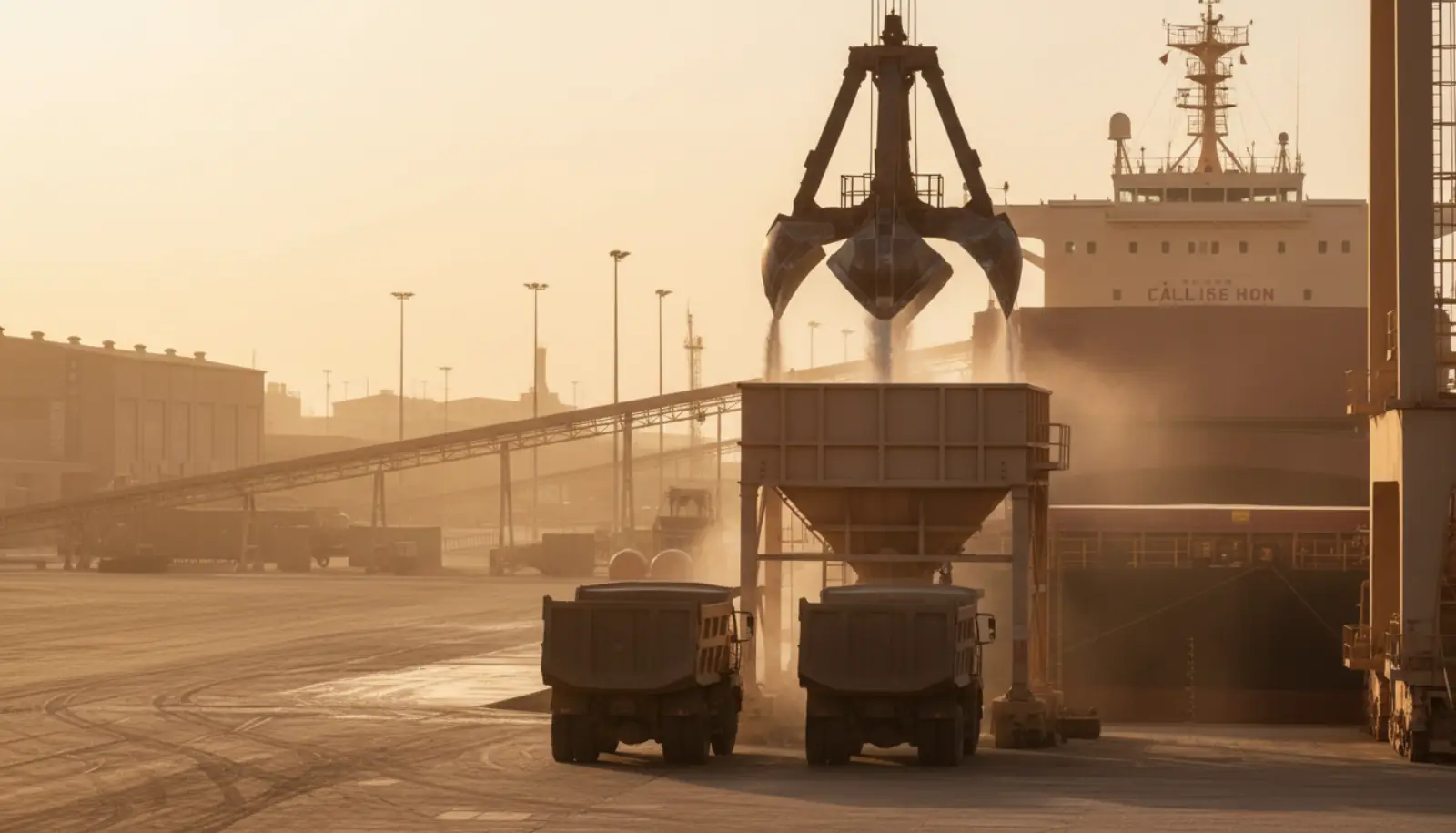
Bulk shipment loads loose product directly into the holds of a bulk carrier. It is the dominant way of moving large volumes of commodity fertilisers, because it avoids packaging cost and allows high loading and discharge rates at suitably equipped ports.
Advantages
- Lowest cost per tonne for freight and handling at scale, because there is no bag cost and loading rates are high.
- Fast loading and discharge when equipment is in place, which reduces port time.
- Flexibility to bag at destination into the sizes and brands your market wants.
Disadvantages
- Needs scale. A vessel of a useful size means a large parcel, and the buyer needs storage and onward distribution for it.
- Needs infrastructure. Discharge requires grabs, hoppers, conveyors, covered storage and weighing. Without these, the port can become the bottleneck.
- Moisture and contamination exposure. The whole cargo sits in contact with the hold structure. If the hold is damp, dirty or leaks, the product is affected.
- Dust and spillage losses during transfer, particularly with weak particles.
- Shortage risk from weighing differences between the load port draft survey and the receiving weighbridge, plus spillage.
Moisture and caking risk
Urea and some other fertilisers are hygroscopic. They absorb water from humid air, then cake when conditions change. The risk applies to every form of shipment, but it shows up differently.
In bulk. The main exposure is at loading and discharge, when hatches are open and the product is exposed to air and rain, and in the hold if humid air is allowed to condense on cool surfaces. Careful hatch management and ventilation practice matter. The product in the centre of the pile is relatively protected, while the surface layers, and any material in contact with damp steel, are most at risk.
In bags. The liner and bag fabric protect the product, but stacks under pressure, torn bags and damp stowage areas create local caking. A pallet that stood in rain at the quayside is a typical problem.
In jumbo bags. The risk centres on the closure and the liner. An open or damaged top lets humid air in and a large mass of product caked together is hard to break.
Reducing moisture risk
- Check moisture content at loading and compare it with the contract specification.
- Load only in dry weather. Stop and close hatches when it rains.
- Keep hatches closed between loading operations and during discharge pauses.
- Use ventilation properly, following the vessel's cargo plan and the advice of the carrier, since ventilating in the wrong conditions can bring in moist air.
- Cover quayside stacks and keep bags and jumbo bags off wet ground.
- Avoid loading hot product. Cool before bagging or loading.
- Limit voyage exposure. Longer routing through humid waters increases time for moisture to work. We quote Suez and Cape routing side by side, so you can see the time difference.
Hold cleanliness and inspection
For bulk shipments, the hold is the container, and a dirty or damp hold is the most common source of avoidable cargo damage.
A hold is ready for fertiliser when it is:
- Clean, free of residues from the previous cargo. Residues of coal, cement, grain, sulphur or chemicals can contaminate or react with fertiliser.
- Dry, with no standing water, damp patches, or condensation on the hold surfaces.
- Free from odours, which can taint the cargo.
- Free from loose rust and paint flakes that could contaminate the product.
- Weathertight, with hatch covers and seals tested, not assumed.
Arrange an independent hold inspection before loading and make acceptance by the surveyor a condition of the loading. Photograph the holds. If the vessel fails, the cost and delay of re-cleaning falls where the charter terms put it, so understand your chartering position before the vessel arrives.
Cargo compatibility matters too. Urea and ammonium nitrate-based fertilisers, in particular, should not be mixed or stored in contact, because the mixture becomes strongly hygroscopic. Follow the segregation requirements in the cargo documentation.
Chemineral can arrange SGS or Intertek pre-shipment inspection, which can include hold inspection, sampling and draft survey.
Discharge rates and port infrastructure
The rate at which a vessel can be discharged affects demurrage, berth availability and the exposure of the cargo to weather. It depends on the equipment, the cargo form and the port's practices.
Bulk. Discharge uses ship's cranes with grabs, shore cranes, or continuous unloaders feeding conveyors to storage. The rate depends on the number of grabs working, the hopper capacity, the transfer system and the ability of trucks or conveyors to clear the quay. A fast crane is useless if the trucks cannot take the cargo away.
Bags and jumbo bags. Discharge depends on the sling or pallet lift, labour availability, and the space to stack and sort. Rates are lower, and they can vary widely with labour practice.
Questions to ask about the discharge port
- What are the berth draft limits and what size of vessel can enter?
- Is there a grab or conveyor system suitable for fertiliser, and a hopper with dust control?
- What is the guaranteed or typical discharge rate, and who is responsible for providing the equipment?
- Is there covered storage, and is it allowed for fertiliser?
- How is cargo weighed, and is the weighing system reliable and accepted by all parties?
- What are the working hours, holiday restrictions and weather stoppage practices?
- Are there restrictions on dust, noise or night working?
- Is there a bagging line or contractor for bagging at the port?
- If the vessel must anchor out, is lighterage available, and at what extra cost and moisture risk?
Where the answers are poor, bagged or jumbo shipment may be cheaper overall, even though the packaging cost is higher.
Bagging at destination
A common compromise is to ship in bulk and bag at the receiving port or at a nearby warehouse. It captures the freight advantage of bulk and delivers retail-ready product.
What it requires
- Storage large enough for the cargo, kept dry and ventilated.
- A bagging line with weighing and stitching or sealing equipment, and enough capacity to keep pace with sales.
- Bags and liners sourced locally or imported, with consistent quality.
- Labour and power for the line, plus maintenance and spare parts.
- Quality control to maintain bag weight and closure, and keep lot traceability.
- Regulatory compliance with local rules on fertiliser labelling, registration and weights.
Risks
- Losses in the chain from spillage, dust and weighing differences between receipt and bagged output.
- Moisture exposure while the product waits in the store before bagging.
- Dependence on a third party, if bagging is contracted out, for timing and quality.
- Brand and registration issues, since the bag becomes your product from a regulatory standpoint.
Bagging at destination suits importers with their own facilities and a regular flow. It is less suitable for a one-off consignment or a port with limited capacity.
Cost trade-offs
This guide gives no price levels. What follows are the cost elements to compare, so you can build the numbers for your own case.
Costs that favour bulk
- No packaging at origin.
- Lower handling cost per tonne at both ends where equipment is available.
- Faster loading and discharge, so lower time-related costs.
Costs that favour bags or jumbo bags
- Lower reliance on port infrastructure.
- Smaller parcels, so less working capital tied up and less storage required.
- Lower shortage and spillage exposure in poor ports, since each unit is sealed.
- Retail-ready product without a bagging operation.
Hidden costs to include
- Demurrage and despatch under the charter, driven by discharge rate.
- Shortages and claims from weight differences and damage.
- Storage and re-handling between the quay and the final customer.
- Quality loss from caking, and the cost of reprocessing or discounting caked product.
- Bag-related costs such as pallets, wrapping, labelling and disposal.
- Financing cost of holding a large parcel for longer.
- Inspection costs for hold surveys, draft survey, sampling and analysis.
A simple decision rule
Build a delivered cost per tonne to your customer under each option, from loading to final sale, including losses and time. Then stress-test it. Re-run the numbers assuming discharge takes twice as long as planned, a few per cent of the cargo is lost or damaged, and the weather costs you days. The option that remains acceptable under stress is usually the right one.
Choosing by situation
Large importer with a deep-water port and storage
Bulk is normally the efficient option, with bagging at destination if your market buys in bags.
Distributor with a shallow or congested port
Bags or jumbo bags avoid dependence on bulk infrastructure and reduce the risk of long waits.
Trader splitting a cargo among several buyers
Bags, jumbo bags or separate bulk parcels allow allocation without a vessel per buyer. Confirm segregation and sampling arrangements.
Buyer selling quickly into retail
Bagged product avoids a bagging step and gets to market faster.
Buyer serving blenders and large estates
Jumbo bags or bulk normally suffice.
A pre-shipment checklist
- Define the packing in the contract: bag type, weight, liner, printing, palletisation, and tolerances.
- Agree the quantity basis and weighing method: load port draft survey, shore scale, or bag count, and who bears the shortage.
- Agree the inspection: hold inspection, sampling, analysis and draft survey by an independent company.
- Confirm the discharge port capability against the cargo form and vessel size.
- Confirm storage and onward transport before the vessel sails.
- Compare routing options and understand how transit time affects moisture exposure.
- Agree claims procedures, including sample retention and notice periods.
Frequently asked questions
Is bulk always cheaper than bagged?
Not always. Bulk usually has a lower cost per tonne for packaging and handling when the port is equipped for it, but poor discharge rates, spillage, shortages and bagging costs at destination can erase the saving. Compare delivered cost per tonne for your case, not freight alone.
What size are jumbo bags?
They commonly hold around a tonne, although sizes vary by manufacturer and specification. Confirm the capacity, safe working load and liner with the supplier and check the bag is suitable for the product density.
How do I reduce caking during shipment?
Start with a dry, cool product within the moisture limit, ship in a clean, dry, weathertight hold or intact liners, keep hatches closed in rain, and keep stacks to safe heights. Avoid exposing the product to humid air or standing water at the port.
What should I check on the hold before loading bulk fertiliser?
That it is clean, dry, odour-free, free of loose rust and paint, and weathertight. Arrange an independent surveyor to inspect it before loading and keep photographic records.
Can I bag at destination?
Yes, and it is common. You need dry storage, a bagging line, a supply of bags, labour and quality control, and you need to account for losses in handling. It works best for regular flows to an importer with its own facilities.
Who bears the risk of shortages?
That depends on the contract terms and the weighing basis. Agree the weighing method, tolerances and claims procedure before shipment.
Send us your requirement
Tell us your product, quantity, preferred packing, discharge port and timing, and Chemineral's trade desk will come back with options. Send your RFQ through the contact page. We load from Sohar and Salalah, quote Suez and Cape routing side by side, can arrange SGS or Intertek pre-shipment inspection, and our firm offers are valid for 72 hours. For product detail, see the prilled urea and granular urea pages.
Our trade desk can turn the views in this report into firm offers on today's indicative prices — valid 72 hours, with complete documentation.
Request a quote