Shipping Polymer Resin in Containers: Loading, Moisture and Free Time
How to ship PE and PP resin in 20ft and 40ft containers: bagging, palletising, condensation control, loading plans, seals, FCL versus LCL, detention and demurrage, and documents.
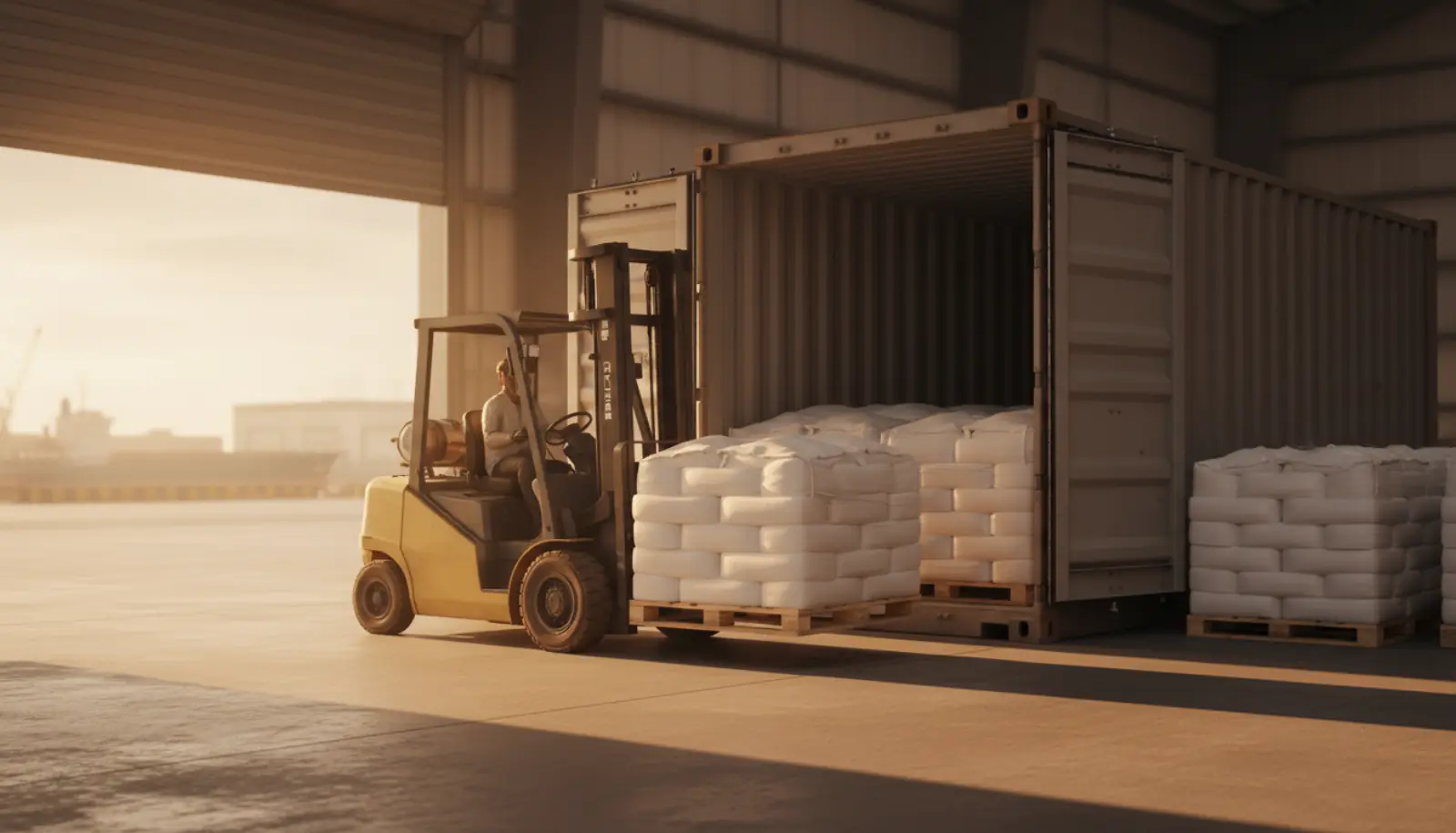
Polymer resin travels well in standard containers, but most container claims come from a handful of avoidable causes: a dirty or damaged box, wet cargo or condensation, an overweight or badly braced load, a seal that does not match the paperwork, and free time that runs out at the destination port. A shipment that gets these five things right usually arrives as it left.
This guide covers polyethylene and polypropylene resin in general-purpose containers: container choice, bagging and palletising, moisture control, inspection, loading plans, seals, FCL versus LCL, port charges and documents. It is general guidance. The shipping line, the terminal and your customs authority set the rules that bind you, and container specifications vary, so confirm figures with your line before you plan a load.
20ft or 40ft: which container
Both sizes have a maximum gross weight, a tare weight and a payload, shown on the container's safety plate and in the line's specifications. Published payloads for standard boxes are in the high twenties of tonnes, but the limit that governs your load is the lowest of the container rating, the shipping line's limit, and the limits on the roads and rail the box will travel. Treat brochure figures as a starting point and ask your line and haulier for the real ones.
Bagged resin is light for its volume. In a 20ft box, pallet count and stacking height often decide the tonnage before the payload is reached, while a 40ft box can approach its weight limits. A 20ft box is easier to haul and suits smaller parcels; a 40ft box often gives a lower cost per tonne when the load is heavy enough to justify it.
Decision rule. Start from the road weight limit at the destination, not from the container's rating. If the receiving end cannot haul a full box, extra payload is useless.

Bagging: 25 kg bags and bulk bags
25 kg bags
The standard format for PE and PP resin, such as HDPE and polypropylene, is the 25 kg bag, often a polyethylene film or woven bag with an inner liner. They are easy to handle, can be palletised, and suit mixed grades and small lots. The main weaknesses are the cost of labour at both ends and the risk of punctured or torn bags.
What to specify:
- Bag construction. Film or woven, with an inner liner where moisture protection matters, and a heat-sealed or stitched closure that stays shut.
- Marking. Product, grade, lot or batch number, net weight and manufacturer on every bag, in line with the packing list. Mismatched marking is a common starting point for quality disputes (see our resin quality checks guide).
Bulk bags (FIBC)
A flexible intermediate bulk container, also called a jumbo bag or big bag, holds typically several hundred kilograms to a tonne or more of resin. It cuts handling labour and speeds loading and unloading, but it needs a forklift or hoist at both ends. Check the bag's rated safe working load and its design safety factor, and confirm that the receiving site can discharge it. Bulk bags stack less well than palletised small bags, and a sagging stack in a container needs bracing.
Bulk in a liner
Some shippers load loose resin in a container fitted with a bulk liner, blown in and later discharged pneumatically or by tipping the container. It avoids bagging costs and can carry more resin per box, but it requires matching equipment at both ends and raises contamination risk if the liner or loading line is not clean. Use it only if the receiver has the equipment and has agreed to the method.
Palletising and wrapping
Palletising protects bags and speeds loading and discharge. Floor-loading unpalletised bags can fit more weight into a box, but discharge is slow, hand-handled and prone to torn bags.
For palletised loads:
- Use sound, clean pallets that fit the container floor in an efficient layout. Check the dimensions against the container's internal width and length.
- Check wood treatment. Wooden pallets and dunnage used in international shipping are generally expected to meet the international standard for treating wood packaging (ISPM 15) and carry the mark. Customs at the destination can reject untreated or unmarked wood. Plastic pallets avoid the issue.
- Stack in a stable pattern, such as interlocking layers, so that the pallet does not lean.
- Wrap the pallet with stretch film to hold the bags together. Where moisture is a concern, add a top sheet and consider a shrink hood that seals the pallet.
- Use corner boards or strapping if the load will otherwise shift.
- Label each pallet with product, grade, lot and weight.
Moisture, condensation and desiccants
Polyethylene and polypropylene do not absorb much water inside the pellet. Most moisture problems are on the surface: wet bags, wet pallets or condensation that drips onto the cargo. They still matter, because water on pellets can affect film, fibre and thin-wall processing, and wet or mouldy packaging causes disputes. Hygroscopic resins such as PET and nylon need much more care, and this guide does not cover them.
How condensation forms
Air inside a closed container carries moisture. When the container cools, for example at night or when it moves into a colder region, that air can reach its dew point, and moisture condenses on the cold steel roof and walls and drips onto the load. This is often called container rain. Cargo that is itself damp, wet pallets or timber, or loading during humid weather puts more moisture into the box in the first place. Long voyages through changing climates give condensation more opportunities, which is one reason to compare Suez and Cape transit times, as Chemineral quotes both side by side.
Controls that work
- Load dry. Reject wet bags, wet pallets and wet dunnage. Do not load during rain without cover.
- Dry the container. Wipe or air a damp floor and walls, and check for leaks.
- Protect the cargo. Pallet top sheets, shrink hoods or a polyethylene sheet over the load keep drips off the bags.
- Use desiccants. Desiccant bags, strips or rods absorb moisture from the air inside. The quantity depends on container size, voyage length and climate, so use the desiccant supplier's calculation, not a rule of thumb. Fix them as the supplier directs. Some types, such as calcium chloride products, can leak liquid if they are overloaded or hung incorrectly, so keep them away from the cargo.
- Ask for care in stowage. Containers on deck, in direct sun or near heat sources get hotter than those stowed below deck. Resin that sits hot for long periods can cake or the pellets can stick together. You can request stowage away from heat, but the line may not guarantee it.
If bags arrive wet or with visible condensation, photograph them before opening, note it on the delivery receipt, and follow the claims steps in our quality claims guide.
Container inspection and cleanliness
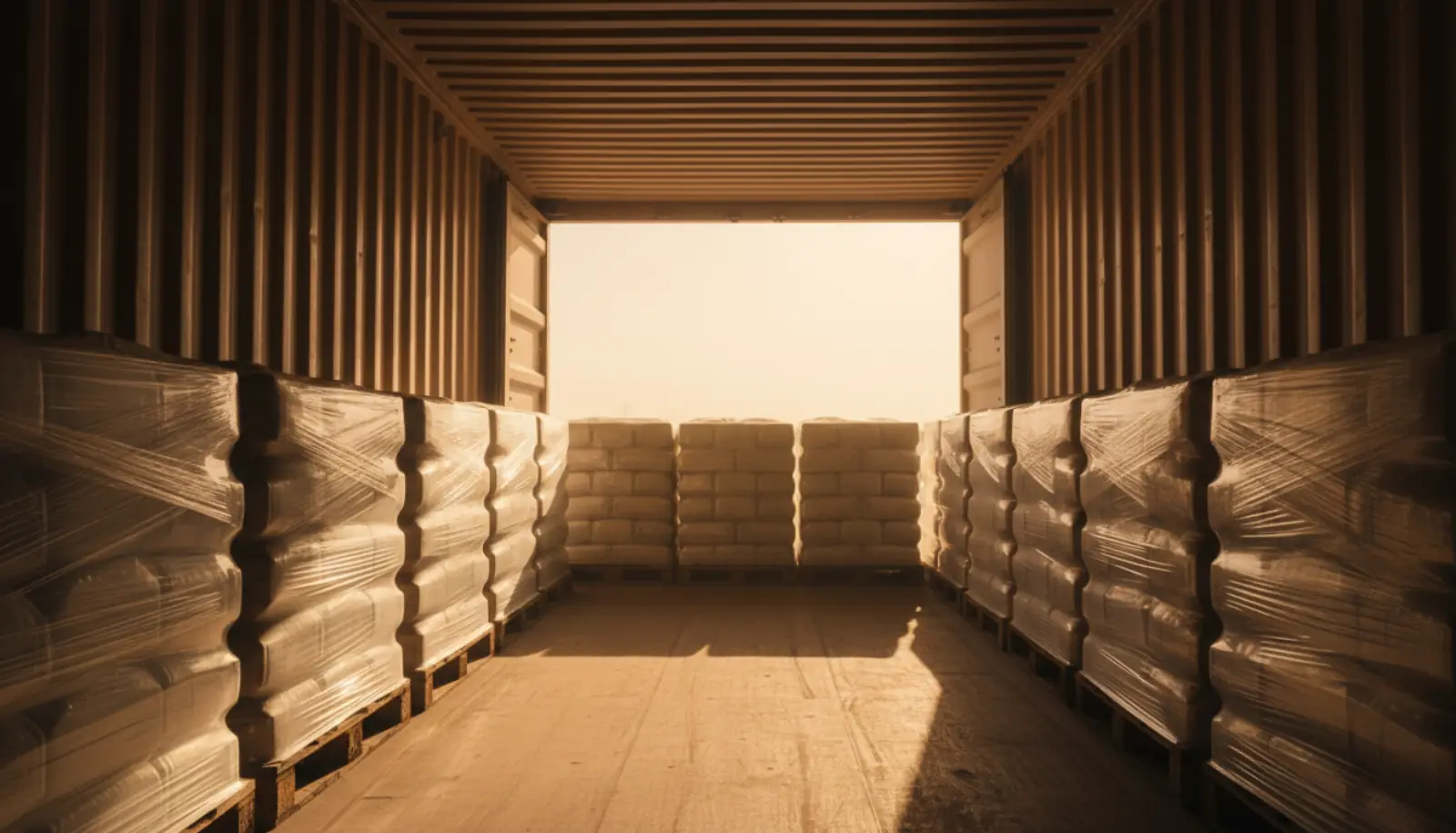
A container is packaging. A poor one can ruin a good product. Inspect each box before loading, ideally with an independent inspector present.
- Exterior and structure. No holes, cracks or bad dents; doors close properly; a valid safety approval plate under the container safety convention is fitted.
- Light test. From inside with the doors closed, check for daylight through walls, roof or door seals.
- Floor. Dry, clean, sound, with no protruding nails, splinters or oil.
- Interior. Free of residue from a previous cargo, such as fertiliser, chemicals, food, plastics or rubbish, and free of odours.
- Roof, corners and doors. No flaking rust that can fall on the cargo; gaskets and locking bars in working order.
Reject a box that fails and ask for another. Photograph the empty container with its number, the interior, the floor and the door seals. Chemineral can arrange SGS or Intertek pre-shipment inspection, and a loading supervision can include container condition, count of bags and pallets, photographs and witnessed sealing. Keep those photographs: they are your best evidence if a dispute starts (see our prime versus off-grade polymers guide for why contamination and substitution claims need proof).
Loading plans and weight limits
A loading plan decides how many pallets or bags go where, how they are braced, and what the total weight will be.
- Distribute weight evenly along the floor and across the width. Avoid concentrating weight at one end or on one side.
- Stay within every limit. Check the container payload, the line's maximum, and the road and rail limits for the full route. Remember that gross weight includes the container's tare, pallets, wrap and dunnage.
- Fill voids. Gaps let cargo shift. Use inflatable dunnage bags, timber battens, boards or straps, and place anti-slip sheets between layers where needed. Brace the door end so cargo does not press on the doors.
- Load tight and stable. Stacked pallets should not lean, and the top layer should clear the roof.
- Declare the verified gross mass. International safety rules require the shipper to give the carrier a verified gross mass for each loaded container, and lines will not load without it. Allow time to weigh the container or calculate it by an accepted method.
- Follow recognised packing guidance such as the international code of practice for packing cargo transport units.
A hypothetical weight check
The figures below are invented to show the method. They are not recommended loads, and your container and road limits will differ.
Assume a hypothetical 20ft container with a tare weight of 2,300 kg, loaded with 20 pallets of 40 bags at 25 kg each. Each pallet carries 1,000 kg of resin and weighs 20 kg itself. Dunnage, strapping and sheets weigh 80 kg in all.
Full load. Resin is 20 × 1,000 = 20,000 kg. Pallets add 400 kg. Gross weight is 20,000 + 400 + 80 + 2,300 = 22,780 kg. This is the figure the verified gross mass declaration must reflect.
Now suppose the haulier at destination cannot legally move more than 21,500 kg total gross on the route. The full load is 1,280 kg over. Each loaded pallet adds 1,020 kg, so removing one pallet leaves the box at 21,760 kg, still 260 kg over. Removing two gives 18 pallets and a gross of 18 × 1,020 + 80 + 2,300 = 20,740 kg, which is legal with 760 kg to spare.
The container could carry the full load on paper, but the lowest limit on the route decides the real load. The best load is the one that is legal at every point, not the one that fills the box.
Seals
A seal shows the container has not been opened since loading. It is a record, not a lock, and it matters most when something goes wrong.
- Use a numbered, high-security seal that meets recognised standards for mechanical container seals, applied to the door after the inspection is complete.
- Record the number everywhere: packing list, bill of lading, inspector's report, and photographs of the sealed door.
- Apply the shipper's seal yourself or have it witnessed. If the carrier or customs adds a seal, make sure the replacement is documented.
- On arrival, check the seal before opening, compare it with the documents and photograph it.
- If the seal is missing, broken or different, do not open the box until the carrier or customs has recorded it, if possible. Note it on the delivery receipt and tell the seller, the line and your insurer.
A mismatch between the seal number on the bill of lading and on the container is a documentary discrepancy that can also cause delay under a letter of credit.
FCL versus LCL
FCL (full container load) means one shipper uses the whole box. The container is loaded and sealed by the shipper and not opened until the consignee receives it, apart from customs inspections. For resin this is the normal choice, because handling is minimal and there is no mixing with other cargo.
LCL (less than container load) means cargo is consolidated with other shippers' goods at a container freight station. It suits small quantities, such as samples or trial lots, but it brings extra handling, more chances of damage, moisture and contamination, extra documentation and often slower transit. For resin in bags, keep LCL for small test lots and add extra wrap.
Bill of lading wording such as "shipper's load, stow and count" means the carrier did not verify the contents. It protects the carrier, so the buyer's protection is independent inspection at loading.
Free time, detention and demurrage at the port
Container delay is not charged as vessel laytime. It is charged under the carrier's or terminal's tariff. Our laytime and demurrage guide covers vessels; containers work differently.
- Demurrage is normally the charge for a container staying in the terminal beyond its free time.
- Detention is normally the charge for keeping the line's container outside the terminal beyond its free time, until it is returned empty.
The definitions and the way free time is counted vary between lines and ports. Some tariffs combine the two, some separate them, some count calendar days and some working days. Charges commonly rise in steps the longer the delay lasts. Never assume a number of free days. Get it in writing for the specific line, port and box type, and ask whether the clock includes weekends and holidays.
Who pays depends on the Incoterm. Under FOB, CFR and CIF, destination charges and delay are normally for the buyer's account unless the contracts say otherwise, and the seller pays the main freight to the port at most. Under delivered terms, the seller may pay more of the chain, but delays caused by the buyer are normally still the buyer's. The sale contract should say. See our Incoterms 2020 guide.
Practical steps for the buyer:
- Ask for the free time on the quotation and negotiate extra days if your clearance process is slow.
- Have documents ready before the ship arrives. The line will not release a container without the bill of lading (or an agreed release) and its charges paid.
- Pre-lodge customs entries and arrange duty payment in advance.
- Book the truck and the empty return before arrival, and check the depot is open.
- Track the vessel and allow for inspection. A schedule change alters the free time clock, and a customs examination adds days.
Documents
Documents for container shipments are those in our export shipping documents guide, with container details added throughout:
- Commercial invoice and packing list with pallet and bag counts, net and gross weights, container number and seal number.
- Bill of lading or other transport document showing the container number, seal number, weights and the right consignee. If payment is under a letter of credit, it must match the credit exactly.
- Certificate of analysis by lot or batch, matching the markings on the bags.
- Independent inspection certificate where the contract requires one.
- Certificate of origin and any other certificates the importing country asks for.
- Verified gross mass declaration for the carrier.
- Safety data sheet and the insurance document where the Incoterm or credit requires it.
- HS classification. Polyethylene and polypropylene in primary forms fall under different four-digit headings, and the full code your customs applies must be confirmed with your broker.
Match every figure across documents: bag counts, weights, container and seal numbers, lot numbers, product names. Small differences cause delay at the bank and at customs.
Frequently asked questions
Which is better for resin, a 20ft or 40ft container?
Neither is better in general. Choose by the destination's road weight limit, handling equipment and cost per tonne. A 20ft box is common for bagged resin because payload and pallet count are the limits; a 40ft box can reduce cost per tonne if the load weighs enough.
Do I need desiccants for polypropylene or polyethylene?
They are inexpensive insurance on long voyages or where climate changes are large, because the risk is surface condensation rather than moisture inside the pellet. The amount depends on the container, voyage and packaging, so use the desiccant supplier's guidance.
Can resin be shipped in LCL?
Yes, but it is better kept for small lots. LCL adds handling and risks of damage and contamination. For commercial quantities, FCL is the normal and safer choice.
What is the difference between demurrage and detention?
Demurrage is generally the charge for a container staying in the terminal beyond free time. Detention is generally the charge for the line's container staying outside the terminal beyond free time. Definitions and counting differ by line and port, so check the tariff.
What should I do if the seal number does not match the documents?
Photograph the seal and container before opening, note the mismatch on the delivery receipt, and notify the seller, the carrier and your insurer in writing straight away. Do not open the box until the discrepancy has been recorded, if that is possible.
Next step
If you plan a container shipment of HDPE or polypropylene from Sohar or Salalah, send your grade, quantity, bag or pallet format and destination port through the Chemineral trade desk. Firm offers are valid for 72 hours, and we can quote Suez and Cape routing side by side.
Our trade desk can turn the views in this report into firm offers on today's indicative prices — valid 72 hours, with complete documentation.
Request a quote