Prime vs Off-Grade Polymers: Definitions, Risks and Documents to Demand
Prime, near-prime, off-grade and wide-spec resin explained, with the risks of each, when off-grade makes sense, and the documents that protect you from re-bagged or blended material.
Prime resin is virgin material that meets the producer's published specification; off-grade is virgin material that did not; wide-spec sits in between, sold against a deliberately broader window. None of these terms is regulated, so the label on an offer means only what the seller and buyer have agreed in writing. The practical protection is not a better definition but better paperwork: a written specification, lot-level traceability and an independent check on the cargo.
This guide explains how the terms are used in the trade, what each tier risks, when buying off-grade is a rational decision, how re-bagged and blended material gets into supply chains, and the documents you should demand before you pay.
The short version
- Prime: meets the producer's specification for the grade. Highest price, lowest risk, and the only tier for critical applications such as pressure pipe, food-contact packaging and high-speed fibre and film.
- Near-prime (also "first-grade minus" or "slightly off"): informal term for material very close to prime that missed on one minor parameter. Treat it as off-grade with a narrow miss, and ask which parameter failed.
- Wide-spec: virgin resin sold against a broader specification than prime, with the limits stated. A legitimate, honest category when the limits are written down.
- Off-grade (off-spec): virgin material outside specification, typically produced in grade transitions, start-ups or process upsets. Sold at a discount. Quality varies from lot to lot.
- Recycled or reprocessed: material that has been through a processing cycle. Legitimate if sold as such; fraudulent if sold as virgin.
If you remember one rule: the tier must be written on the contract, with measurable limits. A seller who will not state a specification is not offering a tier; they are offering a story.
Definitions in practice
The trade uses these words loosely, so it is worth being precise about what each can reasonably mean.
Prime
Prime material is produced in a normal run of a defined grade and meets the producer's specification for that grade: the MFI band, density range, additive package and appearance limits on its datasheet. It is packed in the producer's own bags with the producer's markings and traceable to a production lot. It comes with a CoA for the lot showing measured values.
Prime is the right choice when:
- the end product has a safety, regulatory or long-life performance requirement (pressure pipe, food contact, medical-style, outdoor structural);
- the process is sensitive to small variations (high-speed raffia, BOPP film, fine fibre, thin-wall injection);
- your customer's specification names the producer or the grade; or
- the cost of a failure on the line or in the field far exceeds the saving.
Near-prime
"Near-prime" has no formal definition. It usually signals a lot that was close to specification but outside on a single measured property: for example, MFI slightly outside the band, or a marginally elevated gel count. Some sellers use it to mean "not prime but very good", which is a sales description, not a specification.
When you see it, ask three questions: which parameter missed, by how much, and is that stated on the CoA? Near-prime can be excellent value for applications where the failed parameter does not matter. It can also be a way of dressing up material of unknown quality. The test is whether the seller can answer the questions with numbers.
Wide-spec
Wide-spec resin is made as a deliberate commercial category. It is virgin polymer, often from a transition between grades, that falls within a broader window than prime. A producer or trader may sell it with a stated range, for instance a wider MFI band and a looser limit on appearance.
Wide-spec is workable where the user can tolerate variation, such as general-purpose injection moulding, thick-walled products, non-critical film or sacks, and where blending with prime stock is practised. Its defining feature is that the limits are published. If they are not, it is not wide-spec; it is off-grade with a better name.
Off-grade (off-spec)
Off-grade is virgin polymer that did not meet the specification of the grade it was intended to be. Causes include:
- Grade transitions: when a reactor changes from one grade to another, the output in between belongs to neither.
- Start-up and shutdown material: produced while conditions stabilise.
- Process upsets: a catalyst, temperature or feed disturbance that shifts properties.
- Quality failures: MFI, density or colour outside limits, or contamination found at final inspection.
Off-grade is not inherently bad. It is polymer, made in a real reactor, with real properties. The issue is that its properties are not controlled to a published window, so one lot can differ significantly from the next, and a lot may be internally inconsistent. The discount you receive is the market's payment for accepting that uncertainty.
Recycled and reprocessed material
Recycled polymer comes in several forms: post-industrial regrind (factory scrap), reprocessed pellets from production waste, and post-consumer recycled material. It is a legitimate commodity with real uses. What matters is honest labelling. In an enquiry, ask the seller to confirm in writing that the material is virgin, or specify exactly the recycled content you are buying.
The risks, tier by tier
Risks of prime
Prime still needs verification. The risks are:
- Mislabelled material. A bag that says prime is not proof.
- Documentation mismatch. A CoA for a different lot, or typical values presented as measured ones.
- Damage or contamination in storage and transit. Wet bags, torn bags, cross-contamination.
- Substitution by a grade that is "equivalent" on paper. The same family but different processing behaviour.
Risks of near-prime and wide-spec
- Variation between lots. What worked last time may not work this time.
- Variation within a lot. Mixed bags from different parts of a run.
- Hidden parameters. The failed property may interact with something you care about, such as gels affecting film or MFI scatter affecting tape.
- Unclear claim rights. If the specification is loose, it is hard to show a breach.
Risks of off-grade
- Process instability. Line stoppages, tape breaks, film defects, pressure surges and scrap.
- Product failure. Parts that crack, warp, discolour or fail drop tests, sometimes after delivery to your customer.
- Regulatory exposure. Off-grade material with unknown additive history should not go into food-contact, medical or regulated applications unless fully documented and compliant.
- No technical support. The producer has typically disclaimed responsibility for off-grade.
- Reputation cost. A product failure in the market costs far more than the resin discount.
Risks of recycled material sold as virgin
This is the most serious category. It involves misrepresentation, and the usual signs are colour variation, odour, higher ash, higher gel counts, inconsistent MFI and unusual density. The practical response is documentation, traceability and testing, not trust.
When off-grade makes sense
Off-grade is a rational purchase when four conditions hold at once:
- The end product tolerates the variation. Examples include refuse sacks, builders' film, pallet and crate manufacture, garden products, non-structural mouldings, and applications in which the polymer will be blended or compounded.
- You can test and control. You have laboratory capability or a partner who does, and you test every lot before use.
- You can blend or segregate. You can mix off-grade with prime in a known ratio, or dedicate off-grade lots to a dedicated line or product.
- The saving survives the risk. After allowing for extra testing, scrap, downtime and yield loss, you are still better off.
Off-grade is a poor fit when:
- you are making pressure-rated, safety-relevant or regulated products;
- your customer's specification requires prime or a named producer;
- your line has little tolerance for contamination (BOPP, fine fibre, thin film);
- you cannot test; or
- you cannot afford a stoppage or recall.
A simple cost test
Put numbers on this yourself, using your own data. The calculation is:
- Price difference per tonne between prime and the off-grade offer, minus
- extra testing and handling cost per tonne, minus
- expected yield loss and scrap, valued at the resin cost, minus
- expected downtime cost, minus
- a risk allowance for customer claims.
If the result is still comfortably positive, off-grade may be justified. If the saving is small, or if you cannot estimate the yield loss, stay with prime or a defined wide-spec. Do not use someone else's figures for yield loss; use your own line data from trial runs.
How re-bagged and blended material enters the market
Buyers worry about this, and it is worth understanding how it happens so you can design your checks around it. The patterns below are descriptions of known risks in the trade, not allegations about any particular seller.
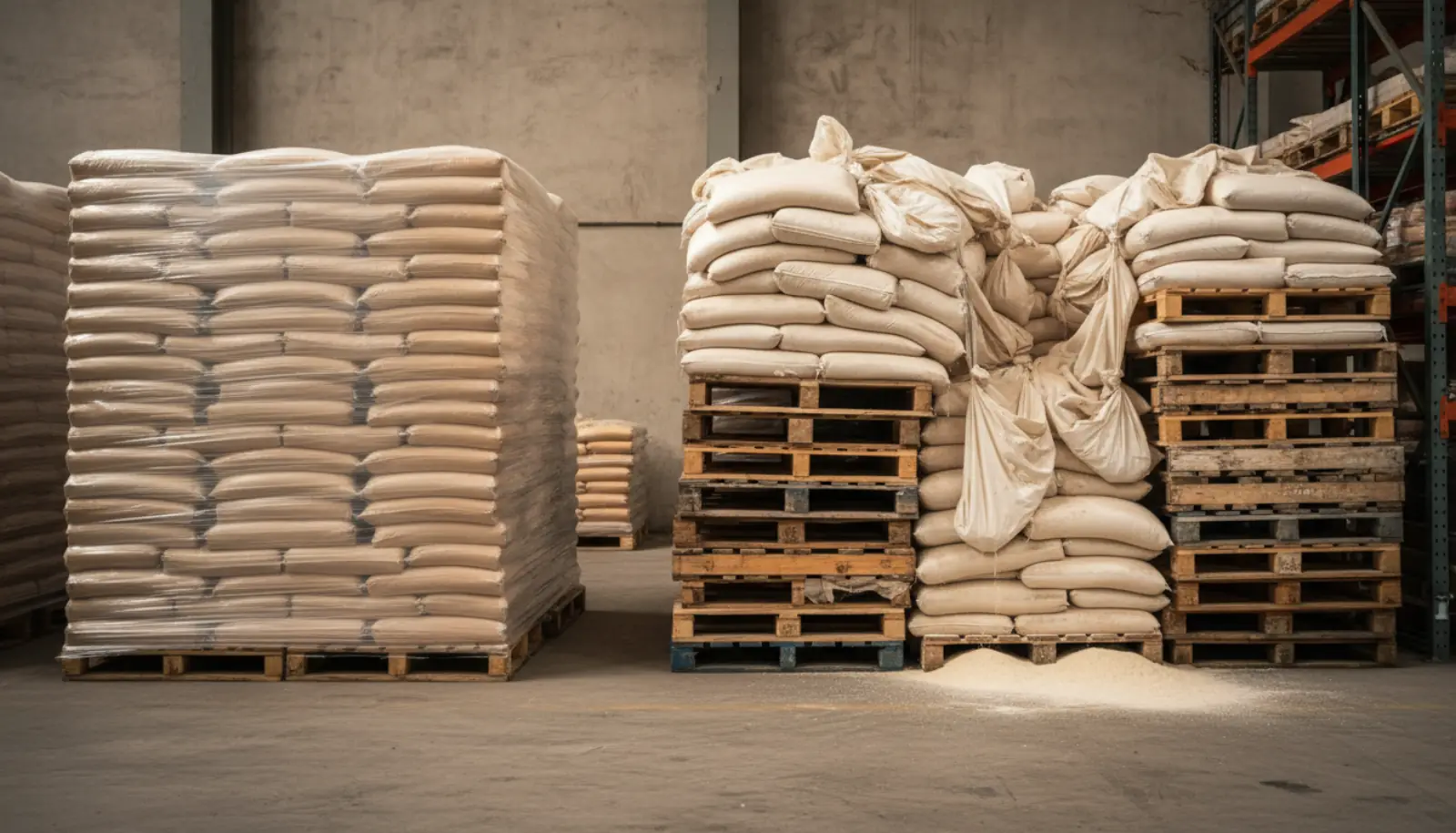
- Re-bagging. Off-grade, recycled or unbranded resin is put into branded or prime-looking bags. The bag looks right; the contents are different.
- Blending. Prime is blended with off-grade or recycled material. The CoA is produced from a sample taken from the prime portion, or from a blend that happens to pass.
- Lot substitution. A genuine prime CoA is attached to cargo from a different lot or grade.
- Mislabelled grade. A related grade (for example a different MFI) is described as the target grade.
- Document recycling. An old CoA is reused for a new shipment.
- Cargo top-up. Part of a container is genuine and the remainder is substituted.
- Filler addition. Undisclosed calcium carbonate or other filler is mixed in, which the ash test would show.
Red flags in the offer
- The price is far below what comparable offers show, with no explanation.
- The seller will not name the origin or the production lot.
- The seller offers "prime" but resists providing a measured CoA for the lot.
- Pressure to pay quickly, or to skip inspection.
- Photographs that look generic or show different packaging from what is offered.
- Reluctance to agree a written specification with measurable limits.
- A CoA with only typical values, missing test methods, or no lot number.
- Refusal to allow independent inspection.
- Inconsistent bag markings between sample photos and the packing list.
No single flag is conclusive, and a good seller may have an innocent explanation for any one. The more of them that appear together, the stronger the case for stepping back.
Documents to demand
Build these into every purchase. They are cheap compared with a rejected container.
Before contract
- Written specification with the tier stated. Prime, near-prime, wide-spec or off-grade, with measurable limits for MFI (with test conditions), density, and any other key parameter such as ash, gel level, moisture and appearance.
- Statement of virgin content. A written declaration that the material is virgin, or the stated recycled content.
- Origin and producer statement, where the tier is prime and the producer's name matters to you.
- Sample. A representative sample tested by you before you commit to a full order. Make sure the sample is drawn from the lot you will receive, not from a "reference" lot.
- Packing description. Bag type and weight, marking, pallet configuration and container loading.
- Inspection terms. Who inspects, what the scope is, who pays, and what happens on a failure.
With the shipment
- Certificate of analysis showing measured values for the shipped lot, with test methods and lot numbers.
- Packing list with lot numbers, bag counts and weights.
- Safety data sheet.
- Independent inspection report, where an inspection has been agreed. Chemineral offers pre-shipment inspection by SGS or Intertek.
- Bill of lading, commercial invoice and certificate of origin, consistent with each other on description, quantity, weight and parties.
- Photographs of loading, bag marking, container number and seal, ideally taken by the inspector.
On arrival
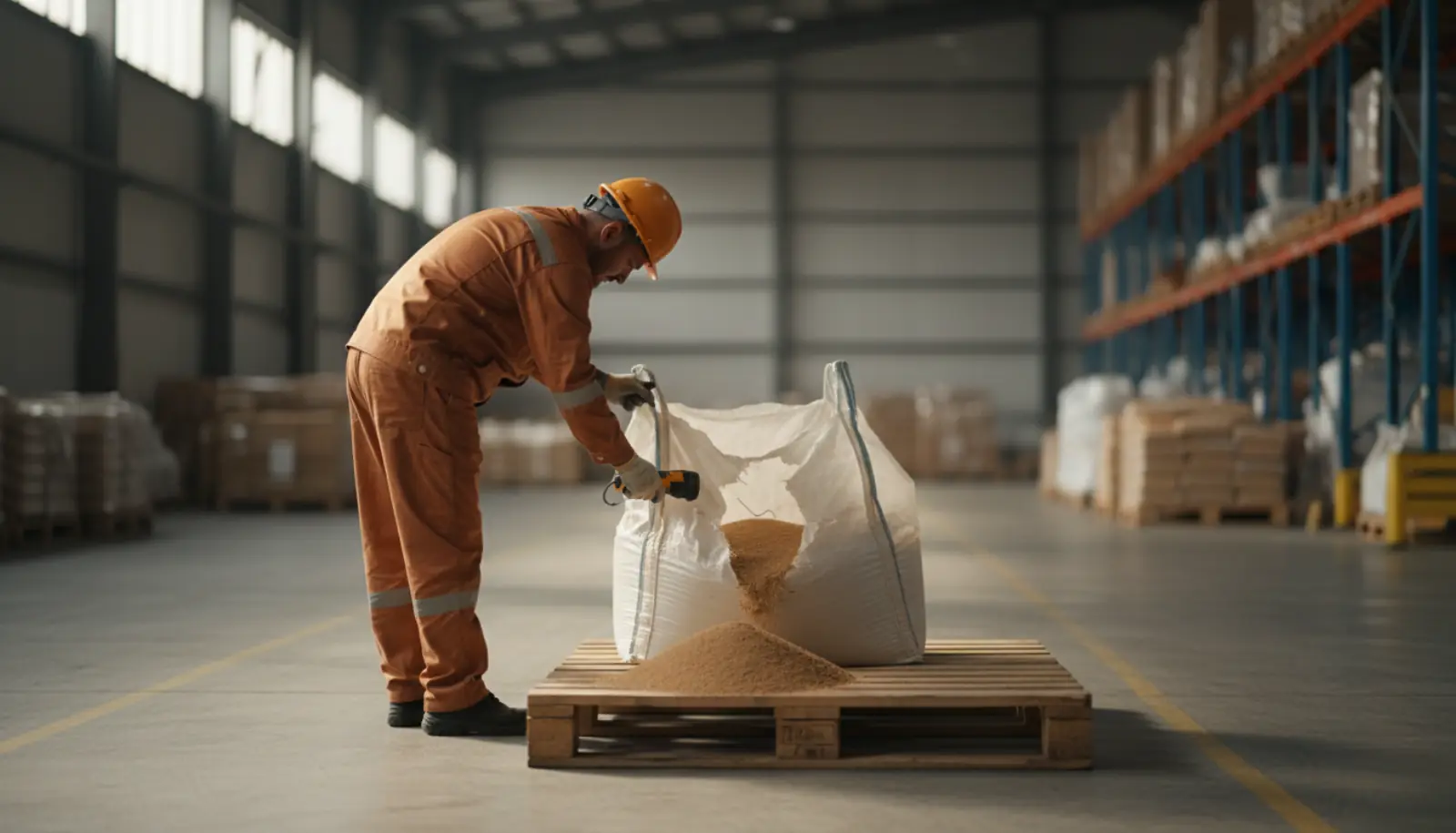
- Photographs of the container on opening, the seal, and pallets.
- Test results against the written specification. Our guide to quality checks for imported polymer resin lists the sequence.
- Retained samples, sealed and labelled.
How to write a specification that protects you
A good specification is short, measurable and unambiguous. Include:
- Product description: polymer type and grade or target type, such as "polypropylene homopolymer, raffia type".
- Tier: "prime, virgin" or "wide-spec, virgin, MFI between X and Y".
- MFI: the band and test conditions (temperature and load).
- Density: the range and the test method.
- Other limits: ash, moisture, gels and specks, colour, as relevant.
- Additives: any required package, such as UV or slip.
- Packing: bag type, weight, marking and lot numbering.
- Tolerance on quantity.
- Inspection and testing: method, laboratory, and who accepts the result.
- Remedy: what happens if the cargo does not conform, such as replacement, price adjustment or rejection, and the time limit for claims.
Without these, an argument about quality becomes an argument about words. With them, it is a comparison of two numbers.
Practical rules for each tier
If buying prime
- Insist on the producer's markings and a lot-specific CoA.
- Add independent inspection for first orders and any order where the price looks unusually favourable.
- Test MFI and density on arrival, every lot.
If buying near-prime or wide-spec
- Ask which parameter is outside prime, and by how much, and get it in writing.
- Test every lot for the parameter that matters to your process, and for MFI scatter between bags.
- Run a trial on your line before committing volume.
- Keep a prime reference sample from a good lot for side-by-side comparison.
If buying off-grade
- Buy small first, then scale.
- Specify what you will accept and what you will reject, in terms of measured values.
- Test every lot, and test several bags per lot.
- Blend with prime only on your own line and in a known ratio.
- Do not use it in regulated, safety-critical or food-contact products unless documentation supports it.
- Keep it physically separate from prime stock.
If recycled content is acceptable
- Buy it as recycled, with declared content and, where available, source information.
- Test for contamination across polymers and for ash.
- Expect more variation in colour and odour than virgin material.
Where Chemineral fits
Chemineral exports polymers from Sohar and Salalah. We offer independent pre-shipment inspection by SGS or Intertek, our firm offers are valid for 72 hours, and we quote the Suez and Cape routings side by side so buyers can compare transit time and freight before committing. Whatever tier you are buying, the approach in this guide is the same: write down the specification, agree the inspection, and test on arrival. You can see what we supply on our product pages for HDPE, LDPE and polypropylene.
Frequently asked questions
Is off-grade the same as recycled?
No. Off-grade is virgin polymer that missed specification. Recycled material has been through a processing cycle and is a different category, though both can show higher variation than prime. Ask the seller to state in writing which one you are buying.
What does "wide-spec" mean on a quote?
It should mean that the material is virgin and is sold against a broader specification window than prime, with those limits stated. If the quote does not state the limits, ask for them. Without published limits, the term has no contractual meaning.
Can off-grade material be used in food packaging?
Only if the specific material can be shown to comply with the food-contact regulations of the destination market, which normally requires full documentation of composition and additives. For off-grade material of uncertain history, that is difficult. As a general rule, do not use off-grade in food contact unless the supplier provides complete, verifiable compliance documentation, and take your own regulatory advice.
Does paying more guarantee prime?
No. Price is a weak signal. Some sellers charge prime prices for non-prime material. The protection is specification, documentation, traceability and an independent check, not the price paid.
How much testing is enough on an off-grade purchase?
More than on prime. At minimum, test MFI and density on every lot, test several individual bags to check consistency, add ash and a gel check, and run a trial on your own line before committing to volume.
What should I do if I think I have received re-bagged material?
Stop using it, quarantine the lot, photograph the bags and container, take sealed samples, and notify the seller and your inspector in writing straight away. Arrange testing at an independent laboratory, and check your contract and insurance for claim deadlines.
Next step
If you want a firm offer against a written specification, with the tier stated, inspection agreed and documents defined up front, send your requirements to the Chemineral trade desk via our contact page. Include the polymer, grade or MFI window with test conditions, quality tier, packing and destination, and we will come back with a firm offer valid for 72 hours, quoting Suez and Cape routing side by side.
Our trade desk can turn the views in this report into firm offers on today's indicative prices — valid 72 hours, with complete documentation.
Request a quote