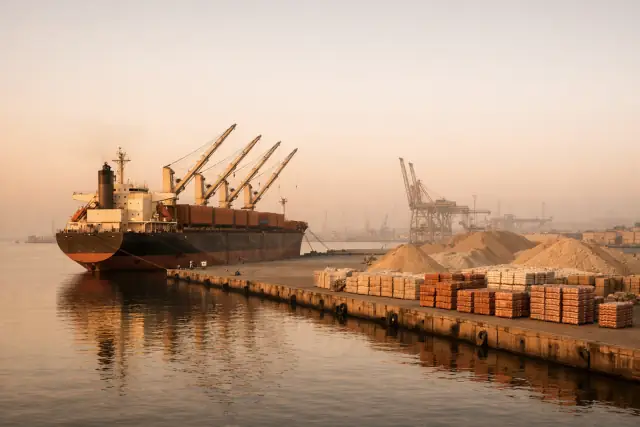
Planning Urea Purchases Around Demand Seasons: A Buyer's Guide
How importers plan urea around crop calendars: lead times, storage, staggered contracts versus one large buy, price formulas, payment timing, peak port capacity and a checklist. No forecasts.

Plan urea backwards from the date the product must be on the farm, not forwards from the date you feel ready to buy. Work out when the fertiliser has to be in your store, subtract the time for the voyage, the paperwork, the bagging and the inland haul, and that gives you the latest date to place the order. Buyers who start from the shipment date, not from the field date, are the ones who end up buying in a rush at peak demand.
This article contains no price forecasts and no market outlook. It does not say where urea prices will go. It is about process: how to organise timing, stock, contracts and payment so that the calendar does not force your decisions. Market commentary is kept separate; see our article on urea prices in 2026, and treat it as a different kind of document from this one.
Why crop calendars drive the buying calendar
Answer first: urea demand is tied to when farmers apply nitrogen, and application windows are short. Many buyers need the product at the same time of year, so availability, freight and port capacity all tighten together around those windows.
Nitrogen is applied before sowing, at sowing, or as a top dressing, and each crop and region has its own timing. In broad terms:
- South Asia has main cropping seasons tied to the monsoon and the winter, and demand follows each of them.
- East Africa has seasons tied to the rains, and in many areas there are two rainy periods in a year, so there can be more than one buying window.
- Europe applies nitrogen mainly in spring, with top dressing as crops grow.
- GCC demand depends on crops and use, with agriculture, landscaping and industrial users each following a different pattern.
These are broad statements. Exact dates vary by country, region, crop and season, and some countries run subsidy schemes and tender cycles that shape when state buyers purchase. Use your own agronomy calendar and local guidance rather than a generic one. The principle is that the crop fixes the date the farmer needs the product, and everything else fits around it.
Three effects follow:
- Many buyers want the same thing at once, and late buyers have fewer choices on loading dates and vessels.
- Freight is competed for. Many cargoes of one commodity moving together can affect vessel availability and cost, though by how much varies.
- Local infrastructure is stretched. Ports, bagging lines, trucks and warehouses run near capacity at peak.
None of this predicts that a given season will be tight or loose. It is a reason to plan early enough not to be at its mercy.

Why timing matters for availability and freight
Answer first: buying early gives you choice; buying late gives you whatever is left. The real cost of late buying is often not the price but a missed loading window or arrival after the application window has closed.
What you lose by being late:
- Fewer loading slots. A seller, a port and a vessel can only load so much in a given week, and cargoes already booked come first.
- Less negotiating room. If you have to buy now, your counterparty knows it.
- Rushed freight. Vessels or containers found at short notice may cost more, or a routing may be forced on you. Suez or Cape routing changes voyage time materially; our Red Sea shipping guide covers the issues.
- No slack for a quality query, a documents discrepancy or a bank delay.
- A missed season. Urea arriving after the window is worth something different to the farmer, and you may carry it for months.
Buying too early has its own cost in cash and storage. The aim is not to buy as early as possible, but early enough to keep options open.
Lead times: from order to arrival
Answer first: lead time is the sum of many steps, and buyers routinely underestimate it by leaving out those before and after the voyage. List the steps for your own case with a realistic duration range for each:
- Internal approval and budget.
- Enquiry, offers and negotiation. Firm offers are time-limited, so make sure your approval process can respond within the validity period.
- Contract signature.
- Payment instrument. If you pay by letter of credit, opening it takes time, and amendments take longer. See our letter of credit guide and payment terms guide.
- Import permits and registration, where required in your country.
- Cargo readiness and loading. Under FOB terms, the vessel must also be nominated and arrive.
- Inspection at loading, if you want it.
- Voyage, and the routing choice.
- Arrival, discharge and customs.
- Bagging and storage, if the cargo arrives in bulk.
- Inland transport to depots and farms.
The variable parts are where plans fail: bank delays, weather, port queues, documentation errors and vessel delays. Build in a margin, and decide in advance what you will do if it is used up.
A hypothetical timeline
This is an invented illustration to show the method. The durations are made up for the example, they are not typical lead times, and they say nothing about any real season, market or Chemineral commitment.
Suppose a buyer wants bagged urea in its regional warehouse by a date we will call Day 0, which is the start of its distribution to farmers. Working backwards with invented durations:
| Step (invented durations) | Time before Day 0 |
|---|---|
| Inland haul from port to warehouse completes | Day 0 |
| Port discharge, customs, bagging and loading trucks | 3 weeks before |
| Vessel arrives at the discharge port | 3 weeks before |
| Sea voyage | 3 weeks of transit, so loading about 6 weeks before |
| Cargo loads at the export port | 6 weeks before |
| Seller prepares the cargo; letter of credit open and confirmed | 8 weeks before |
| Contract signed | 9 weeks before |
| Offers compared; approval | 10 to 11 weeks before |
| RFQ issued | 12 weeks before |
On these invented numbers, the buyer must issue its enquiry about twelve weeks before it needs the product on the farm. Now add a cushion of, say, three weeks for delays at the bank, the port or the vessel. The enquiry date moves to about fifteen weeks before Day 0.
If the buyer starts at nine weeks before Day 0, it has already missed the latest enquiry date on these invented numbers. It must shorten the process (take the first offer, skip the comparison, rush the credit), find a faster source, or miss Day 0. That is the cost of a late start, and none of it depends on the market.
Use the method, not the numbers: list your own steps, put ranges against them, work back from your real Day 0, and add a margin sized to the delays you have actually seen.

Stock holding and storage conditions
Answer first: urea takes up moisture and cakes, so hold only what your storage can protect.
What goes wrong in storage
- Moisture and caking. Urea is hygroscopic: it absorbs moisture from humid air, and the particles then stick together into lumps or a hard block, especially under the weight of a high stack. Swings between warm days and cool nights make this worse.
- Contamination and damage. Spillage, dust, cross-contact with other products, torn bags and crushed pallets.
Practical storage rules
- Keep it dry. Use a covered, ventilated store with a sound roof and dry floor, and keep bags on pallets.
- Keep bags sealed and intact, and replace damaged ones quickly.
- Limit stack height to reduce compaction and caking.
- Rotate stock, first in, first out, and keep it away from other products and from walls and leaks.
- Check regularly for caking, moisture and bag damage.
Prilled or granular
Granular urea is generally harder and handles better in bulk and blending; prilled urea is generally softer and may need more care in storage and handling. Differences are explained in our urea specification guide. To compare product types, see the urea 46 prilled and urea 46 granular pages.
What holding costs
Count the money tied up, storage space, losses from caking and damage, insurance and handling. If your store is poor, a smaller early purchase and a later top-up may beat a single large early buy.
Staggered contracts versus one large purchase
Answer first: neither is better by definition. A single large purchase is simple and may earn better volume terms. Staggered purchases spread timing and price risk and ease storage and cash, at the cost of more administration and harder sourcing of later tranches.
| Single large purchase | Staggered purchases | |
|---|---|---|
| Price exposure | All at one point | Spread across several points |
| Availability risk | Fixed early, once contracted | Later tranches depend on supply at that time |
| Storage and cash | High at peak | Lower, and spread over time |
| Administration | Less | More contracts, credits and shipments |
| Flexibility | Low once contracted | Higher: you can adjust later tranches to actual demand |
Points to weigh:
- How reliable is your demand forecast? If you know your volume well, a bigger early commitment carries less risk. If demand is uncertain, tranches let you adjust.
- How good is your storage? Poor storage argues for smaller, later deliveries.
- How tight is the loading window? If it is narrow, commit the core volume early.
- Parcel size drives freight options. See our guide on bagged versus bulk fertiliser shipping.
- Term arrangements. Some buyers agree a seasonal volume delivered in lots. Write down volumes, tolerances, shipment windows, price mechanism and what happens if either side fails to perform.
A common approach is core and flex: commit early the volume you are confident of selling, and keep a smaller flexible volume for later.
Price formulas as a concept
Answer first: a price formula is the rule that turns market information into the price you pay. It is not a prediction, and it decides who carries price movement between signature and shipment.
Common structures, in concept:
- Fixed price. Agreed at signature and unchanged. The buyer knows the cost; the seller carries the movement risk and prices it into the offer.
- Formula or index-linked price. Set by a reference, such as an average of published price assessments over a stated period, plus or minus an agreed premium or discount. Write down the reference, period and source.
- Provisional price with final adjustment. Paid at shipment and adjusted later against the formula.
If you accept a formula, check:
- Which reference, which publication and which product basis? The assessed product and delivery basis should match what you are buying.
- Which pricing period? Is it around the bill of lading date, a fixed range of dates, or something else?
- What premium or discount applies, and is it fixed or open to change?
- What happens if the reference is unavailable or changes? Agree a fallback.
- How does it fit your payment instrument? A letter of credit needs an amount, so a formula price needs a way to fix the value, or a tolerance.
A formula does not remove price risk; it changes who holds it and when it is fixed. If your own sales price is fixed in advance, a floating purchase price leaves you exposed.
Spreading purchases to manage risk
Answer first: the simplest way to manage price risk is spreading purchases across several dates so that no single decision decides your whole season.
This is risk spreading, not market timing. It does not aim to beat the market; it aims to avoid carrying the whole season's cost on one day's price. In practice:
- Split the volume into tranches priced at different times.
- Mix fixed and formula pricing.
- Match purchase pricing to the timing of your own sales prices where you can.
Spreading reduces the chance of the worst outcome and also removes the chance of the best. If your selling price is regulated or set in advance, the case is stronger. For financial hedging instruments, take advice from your bank or a qualified adviser; this article does not cover them and is not financial advice.
Working capital and payment timing
Answer first: the cost of a cargo includes the cash tied up from the day payment leaves your account until your customers pay you. Plan payment timing as carefully as shipment timing.
- When does cash leave you? Under a letter of credit, funds are committed when the credit is issued and paid when documents are presented. Our payment terms guide compares the options.
- When do you receive cash? If you sell on credit to distributors or farmers, months may pass between paying for the cargo and being paid.
- What does it cost to bridge the gap? Credit limits, cash cover, fees and interest all add to the cargo cost.
- Is your bank ready? Credit lines and approvals take time, so agree limits before you need them.
Staggered purchases usually reduce peak cash need; a single large purchase concentrates it. Match the structure to your credit capacity, not the reverse.
Port and bagging capacity at peak
Answer first: a cargo arriving on time does not mean the fertiliser reaches the farmer on time. At peak, the bottleneck is often discharge, bagging, trucks or warehouse space. Ask well before the season:
- Berth and discharge. Can the port take your vessel on your dates, or is the berth shared with other bulk cargoes? Berth delay can mean demurrage; see our laytime and demurrage guide.
- Bagging capacity. If you bag locally, how many bags per day can the line fill, and what if a machine breaks down? Are bags and labour in place?
- Trucks and rail are also in demand at peak. Book early.
- Warehouse space. Do you have room for the whole cargo, or must you move it out as it arrives?
- Documents and customs. Have documents complete before arrival.
For bulk cargoes, a draft survey at loading and discharge supports the quantity; see the draft survey guide.
A planning checklist
Use this as a starting point and adapt it to your own market.
- Fix Day 0. Write down the date the product must be available to farmers, by region.
- Estimate demand. Set a base volume and a range, with the evidence behind it.
- List the steps from decision to farm, with a duration range for each, and work back to the latest RFQ date plus a margin.
- Choose the product form and specification. See the specification guide.
- Decide the structure: one purchase, tranches, or core plus flex.
- Choose the price basis and understand who holds the risk.
- Choose Incoterm, port and shipping mode, and check routing options.
- Arrange the payment instrument and credit lines early.
- Confirm permits, registration and import documents.
- Check storage, bagging, transport and port capacity for the arrival window.
- Plan inspection at loading, and what you will do if quality or quantity differ from the contract.
- Set review points where you compare actual progress with the plan, and name who decides what happens if you fall behind.
Frequently asked questions
How far ahead should I start buying urea?
Work back from the date you need the product on the farm, add up every step including bank, voyage, discharge, bagging and inland transport, then add a margin. The result is usually earlier than buyers expect.
Is it better to buy once or in several lots?
It depends on demand certainty, storage and cash. One purchase is simple and may carry volume leverage; several lots spread timing and price risk and ease storage and cash needs. Many buyers commit a core volume early and keep a flexible portion.
Does this article predict urea prices?
No. It contains no price forecast and no market outlook. It covers how to organise timing, contracts, storage and payment so that your plan does not depend on guessing the market.
How should I store urea?
Keep it dry, covered, off the floor and in sealed bags, with sensible stack heights and stock rotation. Urea absorbs moisture and cakes, so humidity and long storage are the main quality risks.
Does a price formula protect me from price movements?
No. A formula decides which reference sets your price and when, so it changes who carries the movement. Check the reference, the pricing period and any premium, and compare them with how you will price your own sales.
Next step
If you are planning a season's urea requirement, send an RFQ to the Chemineral trade desk with your product form, volume, shipment window and destination port, and say whether you want to compare Suez and Cape routing. We quote both routes side by side, SGS or Intertek pre-shipment inspection can be arranged, and firm offers are valid for 72 hours. This article is general planning guidance, not a market view or financial advice.
Our trade desk can turn the views in this report into firm offers on today's indicative prices — valid 72 hours, with complete documentation.
Request a quote