HDPE vs LDPE vs LLDPE: How to Choose the Right Polyethylene
HDPE, LDPE and LLDPE are all polyethylene, but chain structure changes stiffness, clarity and processing. Here is how each behaves and how to match grade to application.
HDPE is the stiff, strong, opaque member of the polyethylene family; LDPE is the soft, clear, easy-to-process one; LLDPE sits between them and wins where film toughness matters. The difference comes down to how the polymer chains are branched, and that branching drives density, which in turn drives almost every property a converter cares about.
If you buy polyethylene by the container or the vessel, the practical question is rarely "which is best?" It is "which family, and which grade within it, runs on my machine and passes my customer's test?" This guide sets out the structural differences, the properties that follow from them, where each type is normally used, and a decision method you can apply before you ask a supplier for a quote.
The short version
- HDPE (high-density polyethylene): few side branches, tightly packed chains, high stiffness and strength. Used for blow-moulded bottles and drums, injection-moulded crates and caps, pressure and drainage pipe, and thin, strong carrier-bag film.
- LDPE (low-density polyethylene): long, irregular branches, loosely packed chains, softness and good melt strength. Used for clear shrink and stretch-type film, lamination, extrusion coating, flexible tubing and squeeze products.
- LLDPE (linear low-density polyethylene): a linear backbone with short, regular side branches. Used for tough, puncture-resistant film, stretch wrap, liners, and flexible injection and rotational-moulded parts, often blended with LDPE.
Treat the density figures below as typical bands, not specifications. Always work from the producer's datasheet for the actual grade.
Why branching matters
All three are built from the same repeating unit, ethylene. What differs is how the chains are arranged, and that is set by the catalyst and process the producer uses.
HDPE: a mostly linear chain
HDPE chains have very few side branches. They pack closely together and crystallise to a high degree. The result is a polymer that is dense, stiff, strong and opaque, with good chemical resistance and a higher melting point than the other two. Typical HDPE density sits around 0.94 g/cm³ and above.
LDPE: long-chain branching
LDPE is made by a high-pressure free-radical process that produces chains with many long and short branches. Branches stop the chains packing neatly, so crystallinity is lower. You get a softer, more flexible, more transparent material. The long-chain branching also gives the melt high strength and elasticity, which is why LDPE is forgiving on blown-film bubbles and extrusion-coating lines. Typical LDPE density sits roughly between 0.91 and 0.93 g/cm³.
LLDPE: short, regular branches on a linear backbone
LLDPE is made with a different catalyst route that builds a linear chain and adds short branches at controlled intervals using a comonomer. The chain is linear like HDPE's, but the short branches keep density low like LDPE's. The practical consequence is a film that is noticeably tougher than LDPE at the same thickness: better tear, puncture and impact performance. The trade-off is a melt that is less elastic and harder to process on equipment set up for LDPE. Typical LLDPE density sits in a similar band to LDPE, often around 0.915 to 0.925 g/cm³.
The comonomer matters. Producers use different comonomers to build LLDPE, and longer comonomers generally give better film toughness. You will see this reflected in datasheet descriptions and in price differences between grades, though you should confirm it with the producer rather than assume it.
Properties compared
This table is a general guide to relative behaviour. It is not a specification and does not replace a datasheet.
| Property | HDPE | LDPE | LLDPE |
|---|---|---|---|
| Typical density | Highest of the three, around 0.94 g/cm³ and above | Roughly 0.91 to 0.93 g/cm³ | Often around 0.915 to 0.925 g/cm³ |
| Stiffness | High | Low | Low to medium |
| Clarity in film | Hazy or opaque | Best | Good, usually slightly below LDPE |
| Puncture and tear in film | Good in thin gauges, directional | Moderate | Best of the three |
| Melt strength | Good in high-molecular-weight grades | Excellent | Lower |
| Heat resistance | Highest | Lowest | Low to medium |
| Barrier to moisture | Best | Moderate | Moderate |
| Environmental stress-crack resistance | Grade-dependent, a key HDPE selection point | Generally good | Generally good |
Two cautions on reading this table. First, "best" and "worst" depend on grade: a high-molecular-weight HDPE film grade behaves very differently from a rigid injection grade. Second, density and melt flow index (MFI) are two separate dials. Density tells you about the polymer's structure; MFI tells you about its flow. Two products with the same density can process completely differently if their MFI differs. Our guide to polymer resin quality checks covers how both are verified on arrival.
Melt flow index: the second dial
MFI measures how many grams of molten polymer flow through a standard die in ten minutes under a defined load and temperature. It is an indirect indicator of molecular weight: low MFI means long chains and a stiff melt, high MFI means shorter chains and an easy-flowing melt. The test method is described in ISO 1133 and ASTM D1238, and polyethylene is conventionally tested at 190°C, though the load varies by grade type, so always read the conditions stated alongside the number.
The rule of thumb that holds across the polyethylene family:
- Low MFI gives better strength, toughness and stress-crack resistance, but is harder to process. Typical for pipe, large blow-moulded containers and heavy-duty film.
- High MFI gives easy flow into thin walls and complex tools, but lower toughness. Typical for injection moulding of thin-walled parts, caps and closures.
- Mid-range MFI is where most blown film and general-purpose extrusion sits.
An MFI figure is only meaningful with its test conditions. A "1.0" at one load is not the same as a "1.0" at another, and HDPE datasheets often quote values at a higher load than the standard one. If you are comparing offers from different origins, compare like with like.
Where each type is used
Film
Film is the largest use for LDPE and LLDPE, and a significant one for HDPE.
- LDPE film is chosen for clarity, softness, sealability and bubble stability. It appears in shrink film, bags where appearance matters, agricultural film and laminating layers. It is also the main choice for extrusion coating, such as coating paper or board.
- LLDPE film is chosen where mechanical strength is the priority. Stretch film, heavy-duty sacks, liners and thin down-gauged film all lean on LLDPE's puncture and tear performance. Many converters run LLDPE blended with a proportion of LDPE to recover processability and some clarity.
- HDPE film is stiff and crinkly, with very good moisture barrier. It is used for shopping and carrier bags, bin liners, food-contact wraps and similar applications where stiffness lets you use a very thin gauge. Film-grade HDPE is typically a low-MFI, high-molecular-weight grade.
Blow moulding
Blow moulding is HDPE's home ground. Bottles for household chemicals, milk and juice containers, jerricans and larger drums depend on stiffness, top-load strength and, critically, environmental stress-crack resistance (ESCR). ESCR describes how well the container resists cracking when stressed in contact with detergents or other chemicals. If your end customer fills containers with surfactants or aggressive liquids, ESCR is a selection criterion in its own right, not a footnote. Blow-moulding grades are typically low to medium MFI because the melt has to hold its shape as the parison hangs.
LDPE and LLDPE appear in blow moulding only for soft, squeezable bottles and tubes, usually where flexibility matters more than stiffness.
Injection moulding
Injection moulding needs the melt to fill the tool, so grades are higher in MFI than for blow moulding or pipe.
- HDPE injection grades make crates, pallets, caps and closures, buckets and housewares. Narrow molecular weight distribution tends to reduce warpage, which matters for flat or large parts.
- LDPE and LLDPE injection grades make flexible lids, plugs and soft-touch parts.
Warpage and shrinkage are real constraints in HDPE injection moulding because the polymer crystallises strongly as it cools. Tool designers account for this; buyers should too, by not switching grades casually between production runs.
Pipe
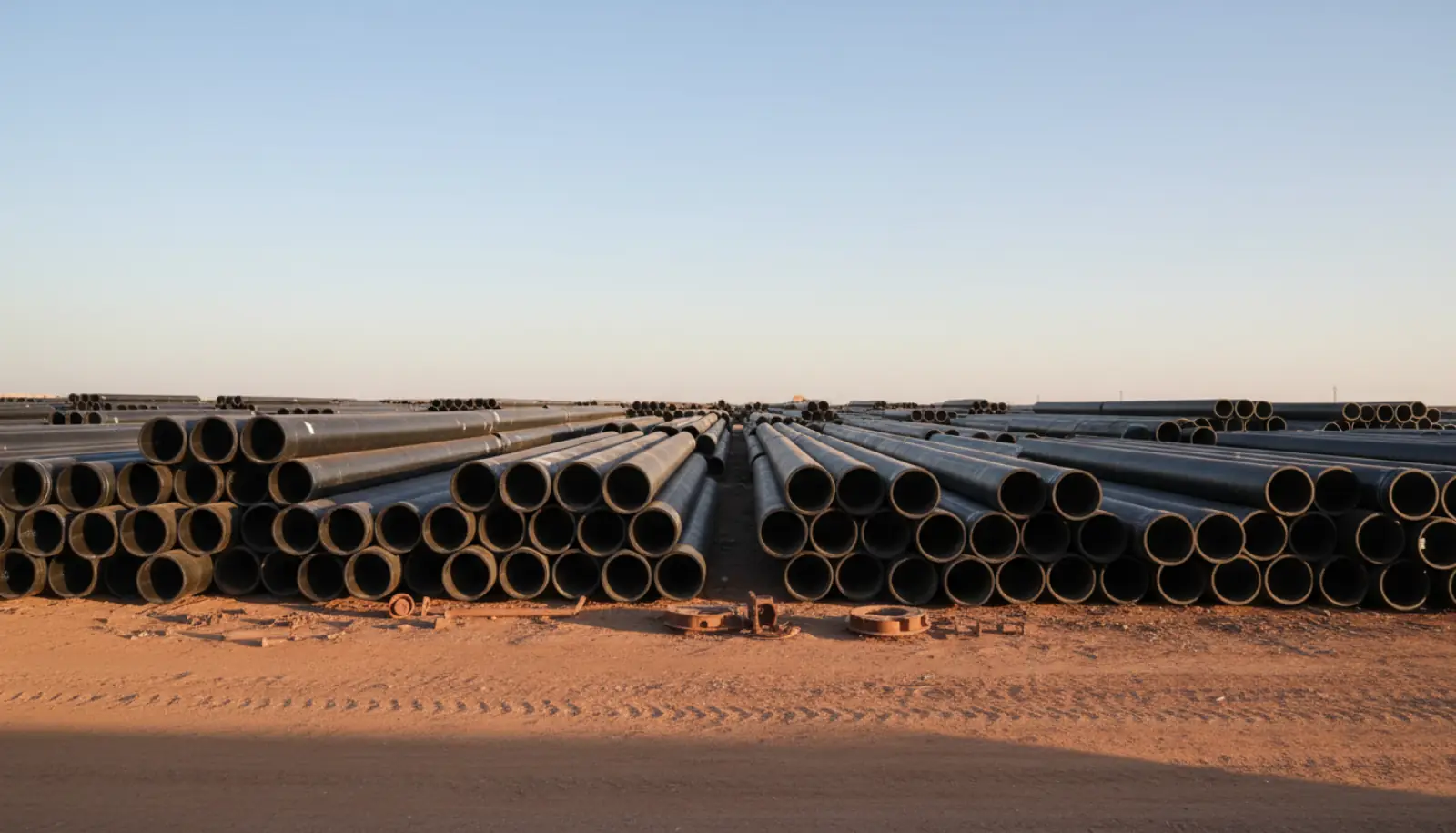
Pipe is a specialist HDPE application. Pressure and gas pipe, ducting and drainage all use HDPE for toughness, flexibility relative to rigid plastics, resistance to chemical attack and the ability to be joined by fusion welding. Pipe grades are low-MFI and are typically specified against pressure-rating classes and relevant national or international pipe standards. This is the application where grade substitution is least forgiving: pipe grades are qualified as a system, and a different resin from a different producer is not a drop-in replacement without the converter's own testing. For this reason, pipe-grade buyers should be very cautious about anything other than prime material with full documentation.
Rotational moulding and other uses
Rotomoulded tanks, kayaks and playground equipment use polyethylene powders, with LLDPE and certain HDPE grades common. Cable sheathing, wire insulation and various extruded profiles round out the list. If your application falls outside the headings above, ask the supplier for the producer's application guidance for the grade rather than assuming transfer from a similar product.
How to choose: a decision method
Work through the following in order. Each step narrows the field before you start comparing prices.
- Define the process. Blown or cast film, blow moulding, injection, pipe extrusion and rotomoulding each point to a different part of the grade catalogue. The process determines MFI range and, in part, the family.
- Define the critical property. Stiffness points to HDPE. Clarity and heat-seal ease point to LDPE. Puncture and tear toughness in film point to LLDPE. Stress-crack resistance or long-term pressure rating points to specialist HDPE grades.
- Set the MFI window with test conditions. Ask your technical team or converter for the range their machine runs on, and the standard test conditions it refers to. Do not ask for "about 1" without stating the conditions.
- Set the density window. For HDPE in particular, density affects stiffness and ESCR, so a narrow window may matter. For film grades a tolerance is usually sufficient.
- Decide on additives. Slip, anti-block, UV stabiliser, antioxidant, and process aids are added to many film and moulding grades. If your application needs one (outdoor film needs UV stabilisation; food-contact packaging needs compliant additives), say so in the enquiry. See the section below.
- Decide on the quality tier. Prime, near-prime or off-grade? That is a commercial and risk decision, covered in our guide to prime and off-grade polymers.
- Then compare offers. Price comparisons only make sense once steps 1 to 6 are fixed, and only between like-for-like specifications.
Blends and swaps
Converters often blend rather than switch. A few common examples:
- LLDPE plus a share of LDPE in film, to balance strength and processability.
- HDPE film grades blended with LLDPE to adjust stiffness and toughness.
- Recycled or off-grade content in non-critical applications such as refuse sacks or construction film.
Blending is a legitimate technique, but it is also the easiest route for quality problems, because an unspecified blend ratio shifts MFI, density and gel levels in ways that are hard to predict. If you blend, do it on your own line with known inputs and run small trials first.
Additives and what they do
The base resin is only part of the story. Additive packages decide how the grade behaves in the field.
- Antioxidants and process stabilisers protect the polymer during melt processing and extend life. Almost all commercial grades carry some.
- Slip and anti-block agents reduce friction and stop film layers sticking together. Too much slip can interfere with printing and lamination.
- UV stabilisers are required for outdoor service such as greenhouse film, water tanks and agricultural products.
- Carbon black and masterbatch provide colour and UV protection. Black pipe and tanks often get their weathering resistance from carbon black.
- Processing aids help LLDPE and metallocene grades run without melt fracture.
When you compare offers, check that the additive package named on the datasheet matches what you need. A base resin that appears cheaper but lacks UV stabilisation is not an equivalent for outdoor use.
What to ask for in an enquiry
A procurement desk can quote faster, and more accurately, if the enquiry states:
- The type: HDPE, LDPE or LLDPE, and the intended application (for example, blown film, blow moulding, injection, pipe).
- Target MFI with the test conditions, and density range if relevant.
- Any additive requirements (slip, anti-block, UV, food-contact compliance).
- The quality tier you will accept: prime only, or other grades for specified uses.
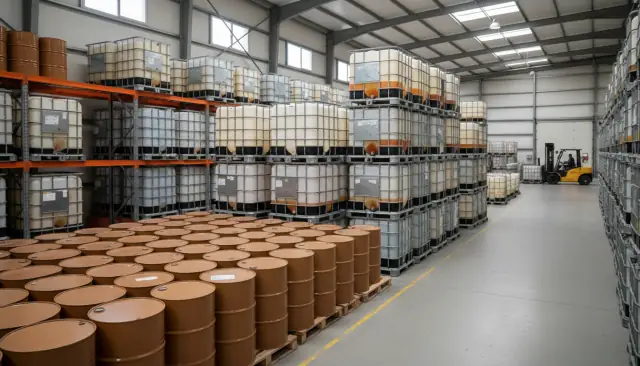
- Packing: 25 kg bags on pallets, bulk bags or other, and whether you need container or bulk shipment.
- Documents required: certificate of analysis, safety data sheet, and whether you want independent pre-shipment inspection.
- Destination port and preferred routing.
Chemineral offers independent pre-shipment inspection by SGS or Intertek, and quotes the Suez and Cape routings side by side so you can see the transit-time and freight trade-off before committing. Firm offers are valid for 72 hours, so it helps to have the specification settled before you ask. Our product pages for HDPE and LDPE set out what we can supply and how to enquire.
Common selection mistakes
- Choosing on density alone. Density is one dial; MFI and molecular weight distribution are others. Two grades at the same density can behave very differently.
- Quoting MFI without conditions. The number is meaningless without temperature and load.
- Treating LLDPE as a drop-in for LDPE. It is tougher, but the melt is less elastic. Extruder screw design, die gap, cooling and bubble stability may all need adjusting.
- Ignoring ESCR for chemical containers. Containers that leak or crack in the field cost far more than any saving on resin.
- Assuming "prime" means the same thing everywhere. Prime means the product meets the producer's published specification. It does not tell you the grade suits your process. Match the grade to the application first.
- Accepting a substitute grade without a trial. Even a datasheet-equivalent grade from another producer can run differently. Run a trial batch before committing a full order.
Frequently asked questions
Can I replace LDPE with LLDPE in my film line?
Often partially, rarely completely. LLDPE gives stronger film at lower gauge, but its melt has lower strength and behaves differently in the extruder. Many converters blend LLDPE with a proportion of LDPE to keep bubble stability and clarity. Trial the blend on your own line, and discuss target ratios with your resin supplier and machine supplier.
Is HDPE always cheaper than LDPE?
No. Relative pricing moves with feedstock, capacity and demand, and it differs by grade and region. This guide deliberately gives no price levels. Compare quotes on a like-for-like specification, covering MFI, density, additives and quality tier, rather than on family name.
What does MFI tell me, and what does it not?
MFI tells you how easily the melt flows under test conditions, which is related to molecular weight. It does not tell you the molecular weight distribution, the comonomer, or the additive package. Two resins with identical MFI can still behave differently, which is why the datasheet and a trial matter.
Which type is best for food packaging?
That depends on the packaging format and on compliance, not on the family alone. All three are used in food-contact applications when the grade and additives are suitable and compliant with the regulations of the destination market. Ask the supplier for documentation on food-contact status for the specific grade, and confirm it with your own regulatory adviser.
Can I use recycled or off-grade HDPE for pipe?
Pipe is the application where this is least advisable. Pipe grades are qualified for long-term pressure performance, and off-grade or recycled material generally lacks that qualification. Off-grade resin is better directed to non-critical products where the end customer's specification allows it.
How do I confirm the grade I receive matches what I ordered?
Check the bag markings and certificate of analysis against your purchase specification, then test a sample for MFI and density on arrival. Pre-shipment inspection by SGS or Intertek adds an independent check before the cargo leaves port. Our guide to quality checks for imported polymer resin lists the tests in order.
Next step
If you are buying polyethylene for film, blow moulding, injection or pipe, send your specification to the Chemineral trade desk through our contact page. Include the application, MFI window with test conditions, packing and destination, and we will respond with a firm offer, valid for 72 hours, with Suez and Cape routing quoted side by side from Sohar or Salalah.
Our trade desk can turn the views in this report into firm offers on today's indicative prices — valid 72 hours, with complete documentation.
Request a quote