Marine Cargo Insurance Guide: ICC (A), (B), (C), War, Strikes and Claims
What the Institute Cargo Clauses cover, why CIF only gives minimum cover, how general average works, who insures under each Incoterm, and the steps to take when a cargo is damaged or short.
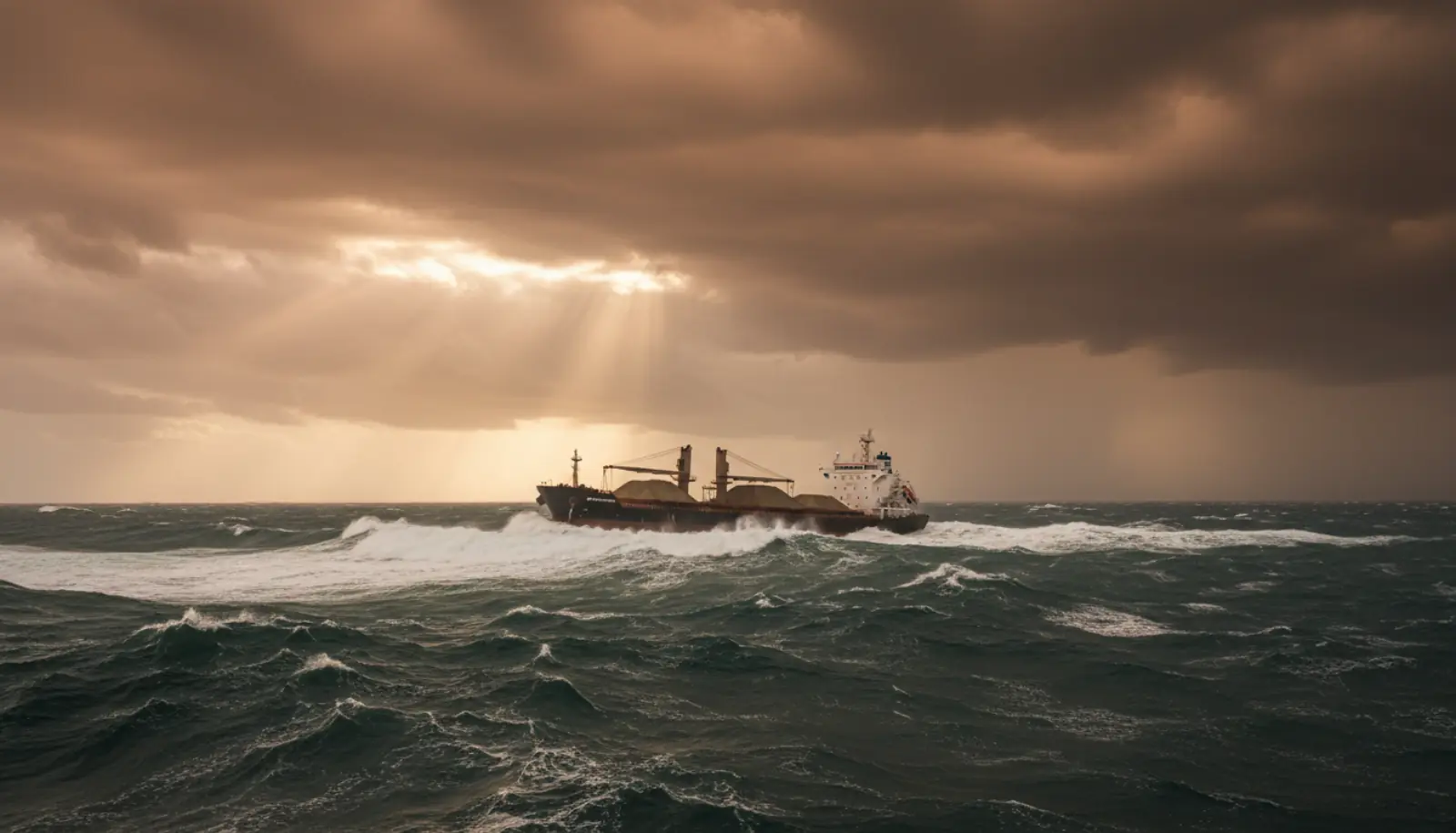
Marine cargo insurance pays for loss of or damage to your cargo in transit, and the cover you actually have depends on three choices: which Institute Cargo Clauses apply, what value is insured, and who buys the policy. Clauses (A) give the broadest cover, Clauses (C) the narrowest, and a CIF sale only obliges the seller to provide the narrowest.
This guide explains the three clause levels, war and strikes cover, general average, how to set the insured value, who insures under each Incoterm, and what to do when a claim arises. It is general guidance, not insurance or legal advice. Your broker and your policy wording decide what is covered on any shipment.
Why you need cargo insurance
A carrier is not an insurer of your cargo. Its liability is set by the contract of carriage and any convention that applies, can be limited well below the value of the goods, and is subject to defences such as perils of the sea. Where no one is liable for the loss, an uninsured buyer or seller carries all of it.
Insurance also matters for a less obvious reason: general average. A ship in trouble can call on every cargo owner to contribute to the cost of saving the voyage, even if your cargo is undamaged. A policy usually pays that contribution. Without one you may have to put up cash before the carrier releases your goods.
The Institute Cargo Clauses
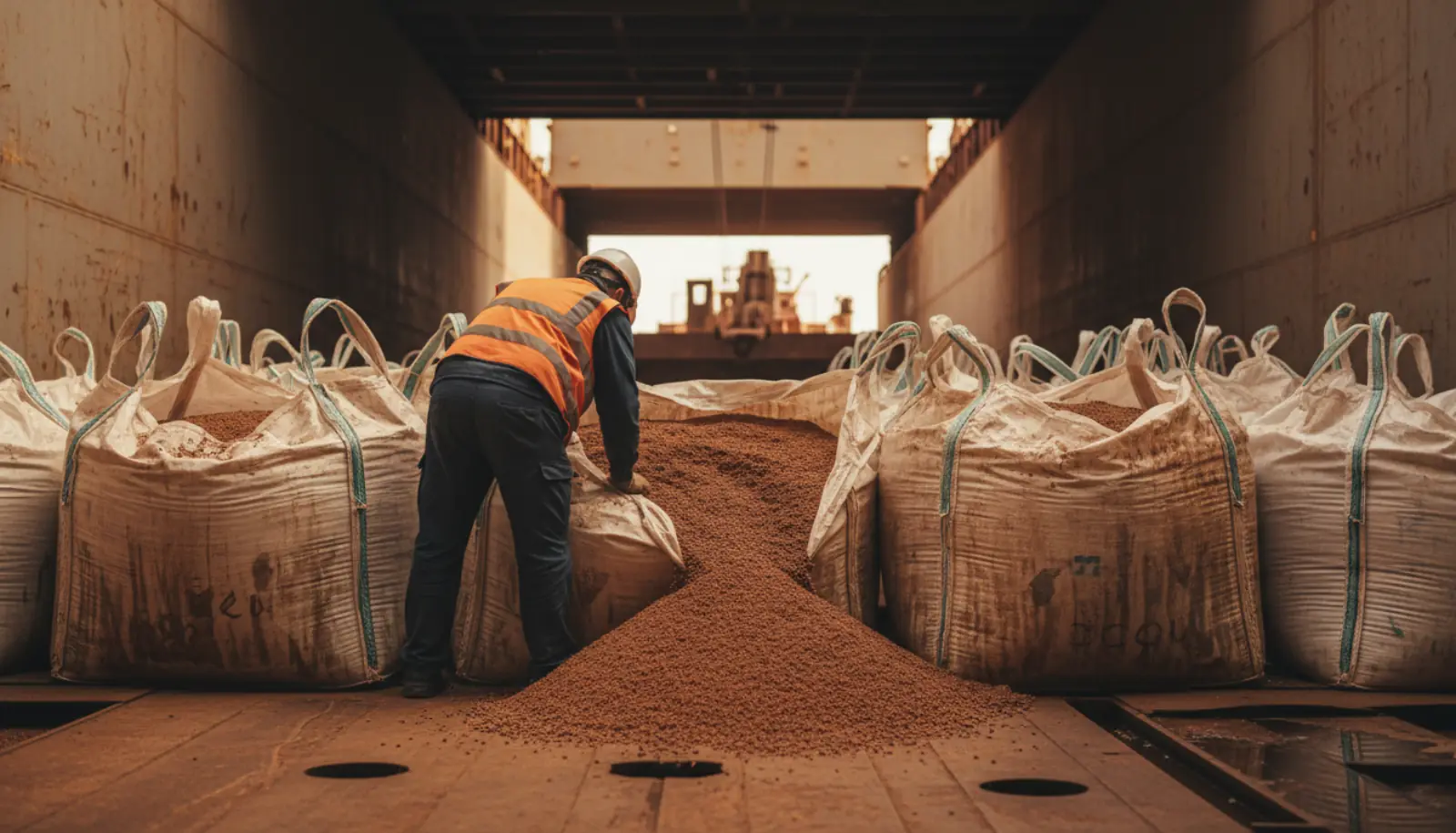
The Institute Cargo Clauses are standard wordings published in the London market and used, or copied, around the world. There are three levels, known as (A), (B) and (C). The two common editions are dated 1982 and 2009, with similar structure but some changes in wording, so check which edition your policy refers to.
- Clauses (A) cover all risks of loss of or damage to the cargo, except what the exclusions remove. This is the broadest cover. "All risks" does not mean every risk: the exclusions matter.
- Clauses (B) and Clauses (C) work the other way round. They list the perils that are covered. If the cause of loss is not on the list, there is no cover.
What each level covers
| Cause of loss | (A) | (B) | (C) |
|---|---|---|---|
| Fire or explosion | Yes | Yes | Yes |
| Ship stranded, grounded, sunk or capsized | Yes | Yes | Yes |
| Overturning or derailment of a land vehicle | Yes | Yes | Yes |
| Collision or contact with an external object | Yes | Yes | Yes |
| Discharge at a port of distress | Yes | Yes | Yes |
| General average sacrifice and jettison | Yes | Yes | Yes |
| Earthquake, volcanic eruption or lightning | Yes | Yes | No |
| Washing overboard | Yes | Yes | No |
| Sea, lake or river water entering the ship, hold, container or store | Yes | Yes | No |
| Total loss of a package lost overboard or dropped in loading or unloading | Yes | Yes | No |
| Theft, pilferage and non-delivery | Yes | No | No |
| Other accidental loss or damage not excluded | Yes | No | No |
The table is a simplified summary of the named perils. Read your wording, which is the only authority on your cover.
Standard exclusions
All three levels exclude, in broad terms, the following:
- Wilful misconduct of the insured.
- Ordinary leakage, ordinary loss in weight or volume, and ordinary wear and tear.
- Insufficient or unsuitable packing or preparation of the cargo.
- Inherent vice, meaning loss caused by the nature of the cargo itself, such as self-heating or deterioration.
- Delay, even when the delay is caused by an insured peril.
- Insolvency or financial default of the owners, managers, charterers or operators of the vessel, where the insured knew or should have known of it.
- Unseaworthiness and unfitness of the ship or container where the insured knew of it at loading.
- War, strikes and nuclear risks, which have their own clauses.
Two of these catch bulk buyers more than any other: ordinary loss in weight, and inherent vice. A small shortage on a bulk cargo will often be called ordinary loss. A cargo that deteriorates because of its own properties is not an insured accident.
Choosing a clause level
Pick the clause level from the cargo and the route, not from the premium. A few rules work well in practice.
- Choose (A) for bagged cargo, containers, ISO tanks and anything with theft or water-damage exposure. Polymers in bags, fertiliser in bags and any cargo in a box fall here. Theft, pilferage and non-delivery are only in (A).
- For bulk cargo, start with (A) and negotiate the shortage terms. Ask what excess applies to shortage and how the policy defines ordinary loss.
- Treat (C) as a floor, not a plan. It protects against the big casualties such as fire, sinking and collision. It does not cover sea water entering the hold of a ship that stays afloat, and it does not cover theft.
- Consider (B) only where you can show the cargo has no exposure the clause omits. Few buyers can.
- For heat-sensitive or hazardous cargoes, ask the broker in writing. Bitumen carried hot, hygroscopic fertiliser, corrosive liquids and fine powders each have loss mechanisms (temperature, moisture uptake, leakage, contamination) that can fall into inherent vice or other exclusions. Ask whether the policy covers them, or whether an extension is needed.
War and strikes cover
War and strikes are excluded from (A), (B) and (C) and insured under separate clauses, the Institute War Clauses (Cargo) and the Institute Strikes Clauses (Cargo).
- War clauses cover loss caused by war, civil war, revolution, rebellion and hostile acts by or against a belligerent power, and capture, seizure, arrest, restraint or detainment arising from those risks, plus derelict mines, torpedoes and bombs. Cover is generally limited to the period when the goods are on an oversea vessel. It does not usually follow the cargo on shore, so confirm the exact period in your wording.
- Strikes clauses cover loss caused by strikers, locked-out workers, persons taking part in labour disturbances, riots or civil commotions, and terrorism or political acts.
Do not assume these are included. Many policies add them as a standard extension, and some only add them at extra premium, and underwriters can set additional premium or notice conditions for voyages in waters they regard as high-risk. If your route may change, for example between Suez and the Cape, ask the broker how war cover and its cost respond. Our Red Sea shipping guide covers the routing decision.
General average
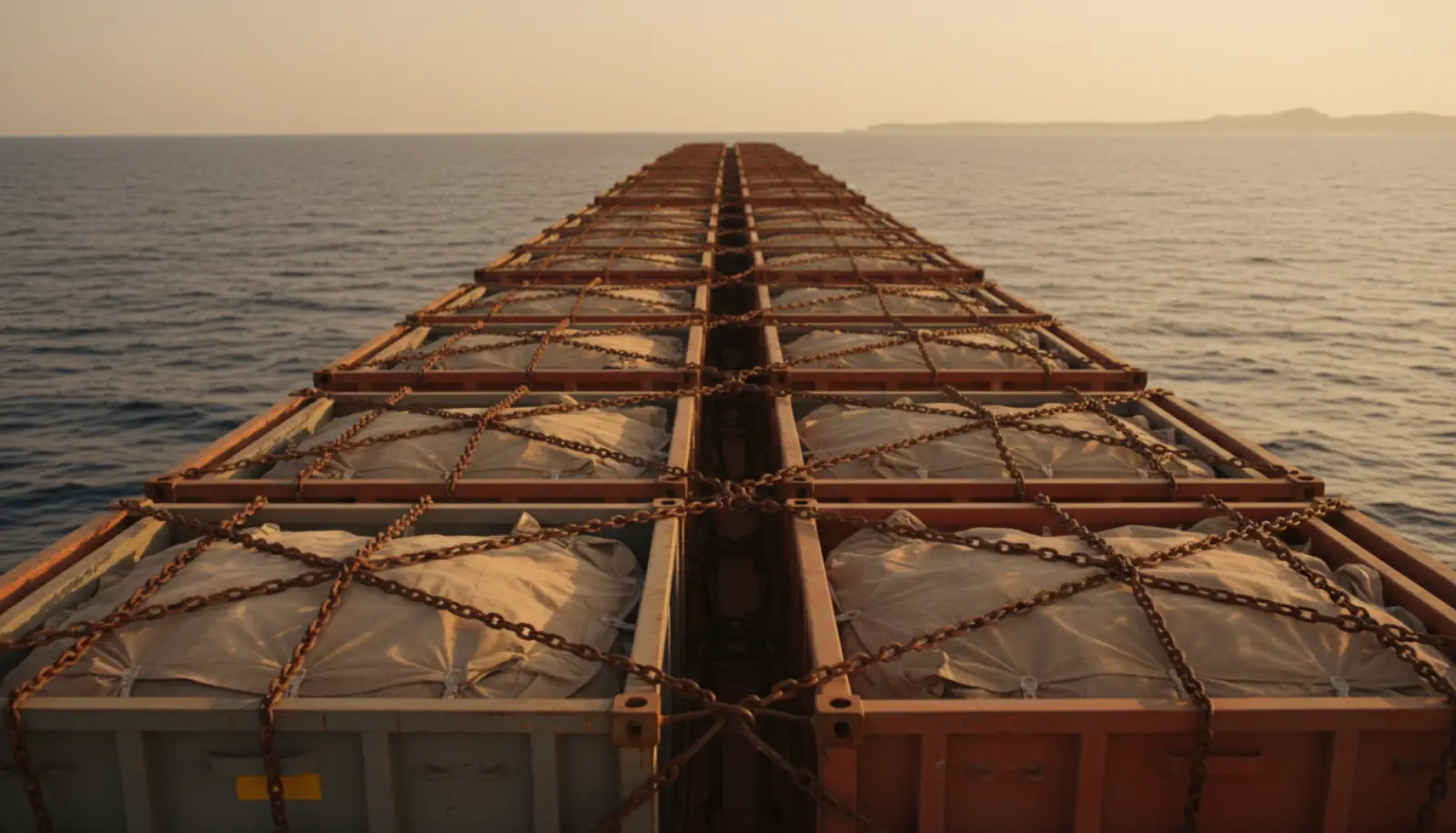
General average is a principle of maritime law. When the master deliberately sacrifices part of the ship or cargo, or incurs extraordinary expense, to save the whole venture from a common danger, the loss is shared by everyone with something at stake: the shipowner, the cargo owners and the freight interests. It is usually governed by the York-Antwerp Rules, which the bill of lading or charter party incorporates.
Examples are jettisoning cargo to refloat a grounded ship, or paying for a tow to a port of refuge.
What it means for a cargo owner
- You may owe a contribution even if your cargo is undamaged. Each cargo's share is a proportion of its value at destination against the total value saved.
- The carrier can hold your cargo until you provide security. This usually means signing an average bond and giving a guarantee or cash deposit. A cargo underwriter normally provides the guarantee on behalf of an insured buyer.
- An average adjuster calculates the shares. This can take a long time after the event.
- All three clause levels pay general average contributions and salvage charges, subject to the policy's terms.
Practical consequence: if you receive notice that the ship has declared general average, contact your insurer or broker immediately, before you accept the cargo or sign anything.
Setting the insured value
The convention in cargo insurance is to insure for the CIF value of the goods plus 10%. The extra 10% allows for costs and a margin that a total loss would otherwise leave unpaid. Incoterms 2020 requires cover of at least 110% of the contract price for CIF and CIP, and UCP 600 uses the same minimum for letter of credit insurance documents. Our letter of credit guide covers how banks check these documents.
Points to settle before the policy is issued:
- Agreed value. Marine policies are usually written on an agreed value basis, so the value stated is what will be paid on a total loss, subject to the policy terms.
- Underinsurance. If the insured value is less than the real value, a partial loss may be paid proportionately, leaving you to bear the gap.
- Currency. Insure in the currency of the sale or the letter of credit.
- Duties and costs. If import duty and local costs are significant, ask whether an increased-value extension should cover them.
- Voyage description. Names, ports and dates on the insurance document must match the bill of lading and invoice. Mismatches lead to rejected claims, and under a letter of credit to rejected documents.
Who insures under each Incoterm
Under Incoterms 2020 a seller must buy insurance for the buyer's benefit only under CIF and CIP. Under every other rule, neither side owes the other a contract of insurance, though each should insure its own risk. Risk and insurance are different things: the rule about who holds the risk does not tell you who has bought the policy.
| Incoterm | Who must arrange cargo insurance? | Minimum cover required |
|---|---|---|
| EXW, FCA, FAS, FOB | Buyer, for its own interest | None; the buyer chooses |
| CFR, CPT | Buyer, for its own interest | None; the buyer chooses |
| CIF | Seller, for the buyer's benefit | Clauses (C), at 110% of the contract price |
| CIP | Seller, for the buyer's benefit | Clauses (A), at 110% of the contract price |
| DAP, DPU, DDP | Seller carries the risk to the delivery point, so insures its own interest | None required for the buyer |
The practical notes:
- FOB and CFR buyers should have cover in place before the goods are loaded. Under CFR the seller must give timely shipping details so the buyer can arrange cover; late notice can leave a cargo uninsured.
- CIF buyers should read the policy or certificate before shipment. Check the clause level, insured value, voyage, claims agent and whether war and strikes cover is included. If (C) is not enough, either specify the cover in the contract and agree who pays, or buy CFR and insure yourself. See our Incoterms 2020 guide.
- Open cover. Regular importers often hold an annual open cover that attaches automatically to each shipment and is declared afterwards. It gives consistent terms and a single claims contact, but check that it fits your cargo, routes and Incoterms.
- Policy or certificate. The seller usually supplies an insurance certificate under its own open cover. The certificate must be assignable or endorsed so that you, as the buyer, can claim directly.
When cover starts and ends
Standard Institute wording gives "warehouse to warehouse" cover: it attaches when the cargo leaves the warehouse or place of storage at the start of the transit and continues through the ordinary course of transit. It ends on delivery to the final warehouse or place of storage named in the policy, or at the end of a stated number of days after discharge from the ocean vessel at the final port, whichever comes first. The standard wording sets that period at 60 days, though a policy can vary it.
Gaps appear when the Incoterm stops before your factory or tank. Under CIF to a port, the seller's policy may end at the discharge port. The inland leg then needs your own cover. Check the start and end points against the actual route, including any intermediate storage.
Check also the policy conditions on the vessel. Many policies set classification, age or flag conditions for the carrying ship. Under FOB, where you nominate the vessel, confirm that it meets your policy conditions, or you may face additional premium or no cover.
Claims: what to do when something goes wrong
Time matters in cargo claims, partly because evidence disappears and partly because rights against the carrier lapse if you are slow.
- Give notice at once. Tell your insurer or its named claims agent as soon as you find loss or damage, and tell the carrier or its agent in writing too. Do this before or at delivery where possible. Policy conditions require prompt notice, and your policy may name an agent whose survey you must obtain.
- Protect the cargo. The policy requires you to take reasonable measures to avoid or minimise further loss. Costs of doing so are generally recoverable under the policy.
- Do not accept delivery as clean. Note damage and shortage on the delivery receipt or tally. A clean receipt weakens a later claim.
- Arrange a survey. Your insurer's claims agent normally appoints a surveyor. Do not move, sell or dispose of damaged cargo before they have inspected it, unless to prevent further loss.
- Preserve your right of recovery. Send a written claim to the carrier within its time limit. If you do nothing, the insurer may reduce payment for the rights you let lapse.
- Assemble the documents. See the list below.
- Quantify the loss. With repair, reconditioning or salvage quotes, and any sale proceeds of damaged goods.
- Submit the claim and keep records. Answer the insurer's questions quickly.
Documents usually needed
- Original insurance policy or certificate, and any endorsement to you.
- Commercial invoice, packing list and bill of lading.
- Quality or quantity certificates from loading, such as inspection reports.
- Delivery receipt, tally sheets and discharge records with notes of damage or shortage.
- Surveyor's report and photographs.
- Letters to the carrier and its replies.
- Proof of value and of mitigation costs.
- General average documents, if any.
Time limits
Time limits vary by contract, so do not assume a figure. They come from at least three places: the insurance policy, which requires prompt notice and sets claim periods; the contract of carriage, which sets the carrier's deadlines; and the sale contract. For carriage governed by the Hague-Visby Rules, notice of loss is due at or before delivery, or within three days if the loss is not apparent, and suit is time-barred after one year from delivery. Those limits apply only where the bill of lading incorporates those rules. Other regimes differ. Ask your broker or a lawyer which applies to your shipment on the day you first suspect a loss.
Quantity claims on bulk cargo
Shortage is a frequent claim on bulk cargo and often the hardest to prove. Insurers distinguish ordinary loss in weight from insured loss, and many policies impose an excess. You need reliable weights at both ends; our guide to draft surveys for bulk cargo explains how they are produced and where they differ.
Frequently asked questions
Is CIF cover enough?
Often not. The minimum for CIF under Incoterms 2020 is Clauses (C) at 110% of the contract price, which covers major casualties but not many ordinary causes of loss, such as sea water damage or theft. If you want wider cover, specify it in the contract or buy CFR and insure yourself.
Do I need war and strikes cover?
Ask the broker whether they are included and for what period. They are separate from (A), (B) and (C) and can carry conditions or extra premium, especially for voyages through areas underwriters rate as high-risk. Whether you want them depends on route, cargo and risk appetite.
Will my insurance pay for a small shortage on a bulk cargo?
Possibly not. Ordinary loss in weight is excluded, and many policies apply an excess to shortage. You need reliable weights at loading and discharge to show a loss above the ordinary level.
Do I have to pay general average if my cargo arrived undamaged?
You may. Cargo owners contribute in proportion to the value saved, whether or not their own goods were damaged. Your insurer normally pays the contribution and provides the guarantee, so notify them as soon as you hear of a declaration.
What value should I insure for?
Normally the CIF value plus 10%, in the currency of the sale. A letter of credit may set the amount and the wording of the insurance document, so check the credit before the policy is issued.
Next step
If you are planning a purchase from Sohar or Salalah and want the Incoterm, insurance responsibility and inspection arrangements settled in the offer, send your product, quantity and destination to the Chemineral trade desk through our contact page. Firm offers are valid for 72 hours, with Suez and Cape routing quoted side by side.
Our trade desk can turn the views in this report into firm offers on today's indicative prices — valid 72 hours, with complete documentation.
Request a quote