Storing and Handling Bitumen: Heating, Tanks, Drums and Safety
How to heat, store and unload bitumen at your site without ageing the binder or injuring staff: temperature control, tanks, drums, water hazards and housekeeping.
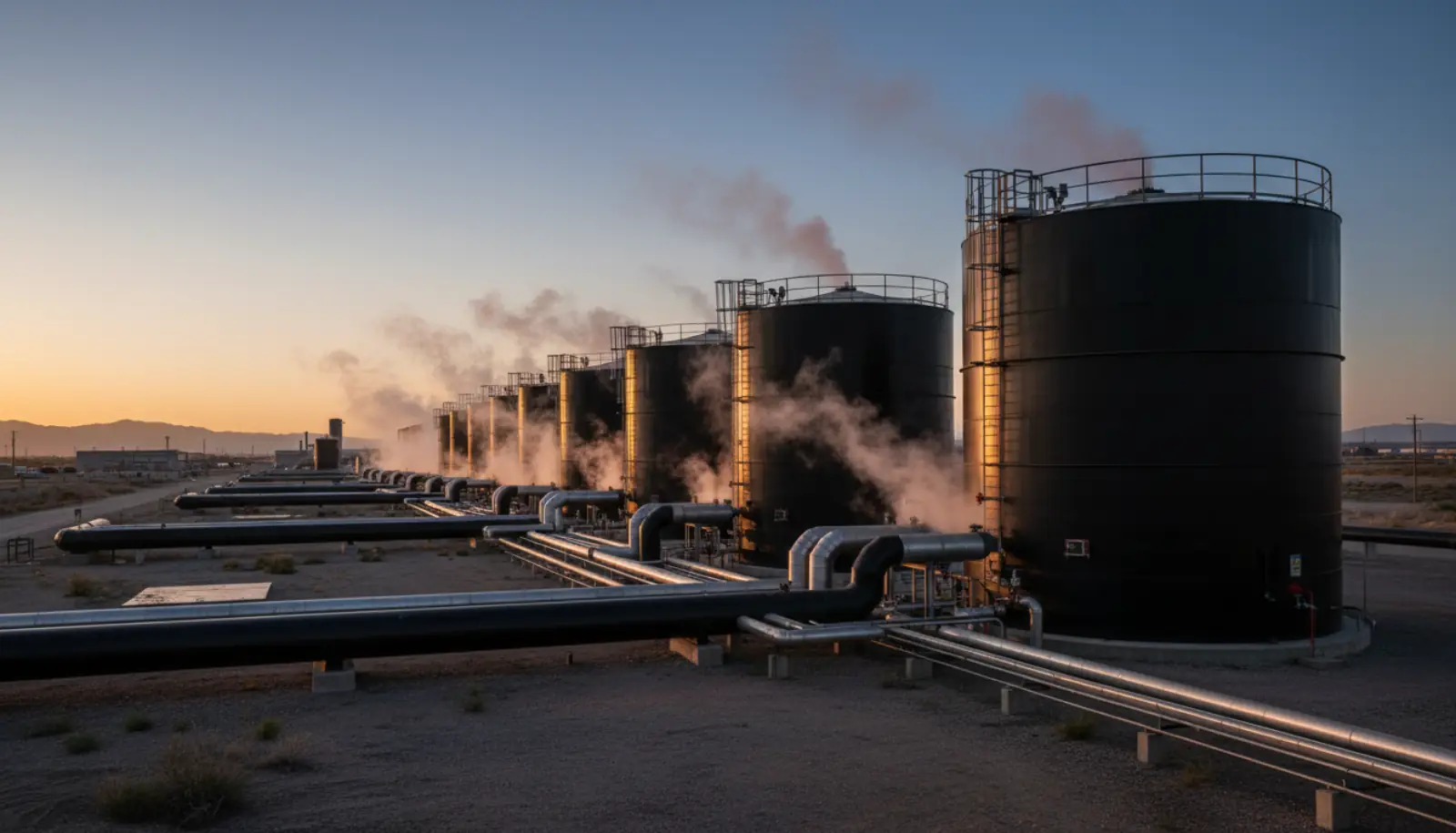
Bitumen must be heated to be pumped, sprayed or mixed, but heat is also what damages the binder and what injures people. The working rule is to hold it as cool as the job allows, for as short a time as possible, in dry and well-controlled equipment, at the temperatures your supplier's datasheet gives for the grade. There is no universal temperature, and this guide deliberately does not give one.
This guide covers what happens after the cargo reaches your site: why heating is needed, how to manage temperature, tanks and heating systems at a general level, drums and other packaged formats, water hazards, loading and unloading, burns and fire safety, and housekeeping. It is general guidance, not an engineering design or a substitute for your own risk assessment. Follow the supplier's datasheet and safety data sheet, the equipment maker's instructions, your site procedures and the rules that apply where you operate.
Why bitumen has to be heated
At ambient temperature, bitumen is a very stiff semi-solid or solid. Heating lowers its viscosity until it can be pumped through pipes, sprayed, or coated onto aggregate. Each operation has its own workable window: pumping needs a flowing liquid, spraying needs a thinner one, and mixing and compaction have their own requirements.
Three practical points follow:
- Harder grades need more heat than softer ones to reach the same viscosity. A 60/70 penetration grade will generally need to be handled hotter than an 85/100 for the same job. See our guide to bitumen grades, and the product pages for Bitumen 60/70 and Bitumen 85/100.
- Storage and application are different jobs. Suppliers often recommend holding stock at a lower temperature than the one used at the point of application. Ask for both figures.
- The datasheet sets the numbers. Grade, crude source, any modification and your equipment all affect the safe and useful range, so treat any figure you read elsewhere, including in forum posts and old site notes, as unverified.
Temperature management: three principles
1. Stay inside the supplier's range
Take the storage, pumping and application temperatures and the flash point from the datasheet for the grade you actually received, and write them on the tank and the log sheet. The upper limit is a ceiling, not a target. If the datasheet is unclear or missing, ask the supplier before heating, not after something goes wrong.
2. Limit ageing and oxidation
Hot bitumen in contact with air gradually hardens. Lighter components are lost and the binder oxidises, so penetration falls and the softening point rises. The effect builds with time, temperature and exposure to air, and it can leave a product failing its specification while it still looks normal in the tank.
- Keep stock turnover high. Do not keep a large tank hot for a small, slow-moving volume.
- Avoid repeated heating and cooling cycles. Each one adds ageing, and each cycle stresses the equipment.
- Minimise air contact. Return lines should discharge below the liquid surface rather than splashing through the headspace, and manways and vents should be kept as closed as the design allows.
- Ask the supplier what to do with the heating during idle periods. Whether to lower the setpoint, and by how much, depends on the product.
3. Avoid localised hot spots
The surface of a heater is always hotter than the bitumen around it. Where the heat flux is high, or where bitumen sits stagnant against the element, the film in contact can overheat, degrade and form a carbon deposit. The deposit insulates the heater, which then runs hotter to deliver the same duty, and the problem compounds.
- Prefer indirect heating, such as thermal oil or steam, to direct flame or high-temperature electric elements.
- Keep heating surfaces fully covered with liquid. An exposed element in a partly empty tank is a fire risk.
- Use circulation where the design calls for it, so heat spreads through the tank rather than concentrating at the coil.
- Fit temperature sensors at more than one height, and keep an independent high-temperature alarm or cut-out that does not rely on the same sensor as the controller.
- Keep a clear margin between the working temperature and the flash point on the datasheet.
Tanks, insulation and heating systems
Design belongs to competent engineers working to the applicable codes. A buyer should still know what good looks like.
Tank features that matter:
- Insulation and cladding in good condition, which reduces the energy needed and the temperature gradient.
- Sensible size. A tank much larger than the throughput holds bitumen hot for too long.
- Venting that is clear, protected from rain and sized for filling and emptying.
- Level and temperature instruments that are calibrated and readable, with a high-level alarm.
- Heated lines, valves and pumps. Cold spots in pipework are where bitumen solidifies and blocks. Pumps must suit viscous product.
- A sampling point that gives a representative sample.
- Bunding or containment sized for the stored volume.
- Dedicated tanks per grade. Mixing grades changes properties, so confirm with the supplier before putting a different grade or a modified product into a tank, and clean it first.
Common heating methods, in general terms:
| Method | How it works | Main watch-outs |
|---|---|---|
| Thermal oil coils or jackets | Hot oil circulates through coils or a jacket in or around the tank | Coil leaks put oil into the product; keep coils covered; control the oil temperature |
| Steam coils | Steam passes through coils in the tank | A leaking coil puts water into hot bitumen, which causes foaming; the steam temperature may limit the range |
| Electric elements | Immersion or surface heaters | High surface temperature; elements must stay submerged and be controlled |
| Direct-fired tubes | A flame heats a tube passing through the tank | Very high local temperatures; closer control and maintenance needed |
Polymer-modified bitumen. Modified binders can be more sensitive to prolonged heating and may need circulation or agitation in storage to stay uniform. Their storage rules differ from those of straight-run grades, so follow the supplier's instructions closely. Our polymer-modified bitumen guide explains the product.
Receiving drums, bitutainers and bulk
How you handle bitumen depends on how it arrives. Our bitumen packaging guide compares the formats in detail; the handling points are these.
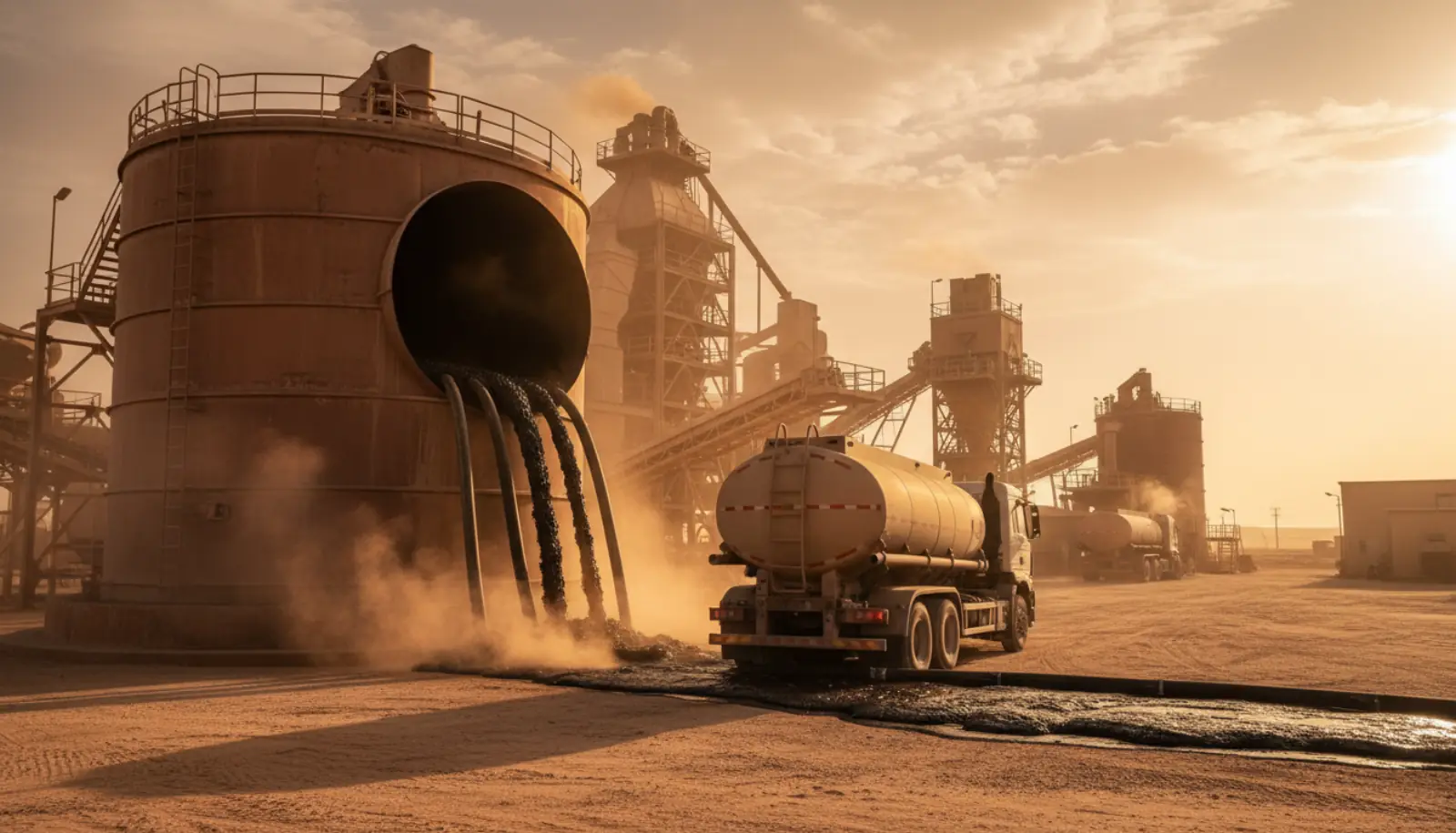
Bulk (heated). Hot bitumen is pumped from the delivery vehicle or vessel into your tank. The key controls are the tank's readiness, the condition of hoses and lines, and agreement on temperature and quantity at handover.
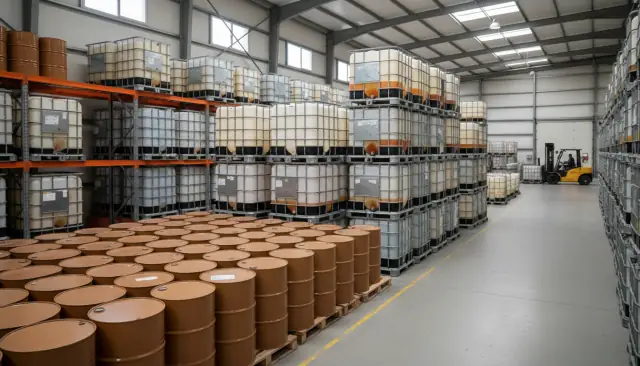
Drums. Steel drums hold bitumen that has cooled to a solid or semi-solid. Inspect on receipt for leaks, bulging, dents, rust and damaged closures. Handle with equipment rated for the weight, keep drums dry and on a firm surface, and follow the packaging maker's limits on stacking.
Bitutainers and similar bulk units. Names and designs vary by supplier, and some are called jumbo bags or bitu-bags. The bitumen is solid at ambient temperature, and the unit is melted or discharged using heated equipment. In some designs the packaging is meant to melt in with the product. Ask the supplier how the unit should be handled, melted and emptied, what happens to the packaging, and what equipment you need.
On receipt, whatever the format:
- Check grade, batch number and quantity against the delivery documents.
- Look for damage and note it on the receipt before the carrier leaves.
- Retain a sample, labelled with the batch and date.
- File the certificate of analysis and the safety data sheet where staff can find them.
Chemineral can arrange SGS or Intertek pre-shipment inspection, which gives you independent evidence of quality and quantity at loading to set against what you find on arrival.
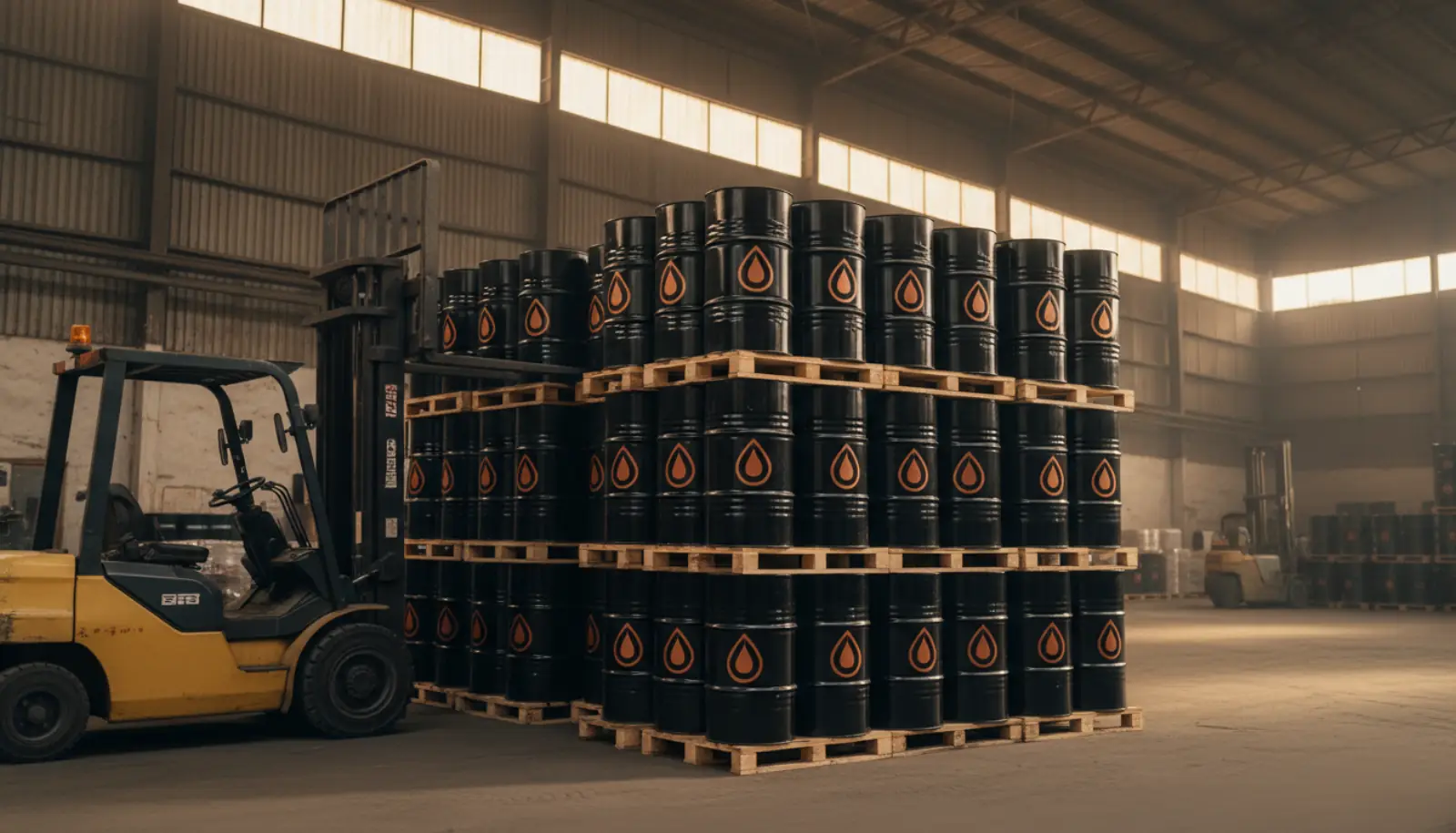
Reheating drummed bitumen
Reheating packaged bitumen is a common source of burns and fires. Use equipment designed for the job, such as a purpose-built drum melter or heated chamber, and follow its maker's instructions.
- Do not use open flames or direct fire on drums. Localised heat overheats the outer layer while the core stays solid.
- Never heat a sealed drum. Heated bitumen and any trapped air or vapour expand. Open or vent closures as the equipment maker and supplier instruct before heating starts.
- Heat slowly and evenly, and stay within the datasheet's temperature limits.
- Check for water first. Water in or on a drum turns to steam as the temperature rises. See the next section.
- Heat only what you will use, and use it promptly. Do not hold molten bitumen for days and re-solidify it.
- Never leave heating drums unattended unless the equipment is designed for it and has independent temperature protection.
- Stand clear of openings and wear protective equipment when drums are opened, tipped or emptied.
- Handle emptied drums as contaminated. Residue remains, so follow your site and local rules for reuse, recycling or disposal.
Water: the hazard that surprises people
Water and hot bitumen are a dangerous combination. Water entering hot bitumen turns to steam and expands violently, pushing the bitumen up and out as foam or an eruption. This is the classic cause of tank overflows and serious burns.
Where water comes from:
- rain or condensation entering through open manways, vents or drum closures;
- wet hoses, lines, pumps and fittings, or a tank that was not drained after cleaning;
- a leaking steam or hot water coil;
- wet or frozen drums and blocks heated too fast;
- adding hot product to a tank that still holds a water layer at the bottom;
- water used for cleaning or fire testing that was never fully removed.
Signs: crackling or popping, bubbling at the surface, foaming, an unexplained rise in level, or spitting at the burner or spray bar.
Controls:
- Keep tanks, lines, hoses and pumps dry, and cover openings.
- Check heating coils for leaks, particularly steam coils.
- Heat slowly through the range around the boiling point of water, and hold the temperature if foaming starts.
- Leave generous free space in the tank above the liquid (ullage) when heating, because foam and expansion take up volume.
- Do not load hot product into a tank that may hold water. Check and drain first.
- If foaming starts, stop heating and stop additions, keep people away from hatches and vents, and follow the site's emergency procedure. Do not open a foaming tank to look.
Loading and unloading
Most incidents happen during transfers. Plan them.
Before the transfer:
- Confirm the grade, and that the receiving tank is for this grade and is clean and dry.
- Check available volume, with allowance for expansion and foaming.
- Confirm the tank temperature is within the datasheet range.
- Check that hoses are rated for the temperature and the product, in good condition and correctly connected, and that lines are clear, dry and heated.
- Follow site procedures for permits, earthing or bonding, spill containment and communication between the delivery driver or crew and your operator.
- Keep ignition sources and unauthorised people away from the area.
During the transfer:
- Start slowly and check for leaks at joints.
- Monitor level, temperature and pressure throughout, with someone able to stop the transfer at once.
- Avoid free-fall filling that splashes or aerates the product.
- Stop if there is foaming, an unexpected temperature, a leak or an alarm.
After the transfer:
- Drain or clear lines as your procedure requires. Bitumen left in cold lines solidifies and blocks them, so keep trace heating on where fitted.
- Record the quantity, delivery temperature, time and batch in the tank log.
- Compare your tank-gauge reading and the delivery document. Raise any difference with the supplier promptly, with your retained sample available.
- Close valves and vents and check the area for drips.
Burns, fumes and fire
Burns. Hot bitumen sticks to skin, holds its heat and causes deep burns. Typical protection includes a hard hat, a face shield over safety glasses, heat-resistant gauntlet gloves, long-sleeved flame-retardant clothing, and trousers worn outside safety boots so that splashes do not run inside. Avoid synthetic clothing that melts. For first aid, follow the safety data sheet and your site procedure; the usual guidance is to cool the area promptly with cold water, not to try to remove bitumen stuck to the skin, and to get medical help. Train staff before an incident, and keep first-aid supplies and an emergency shower or water source close to the work.
Fumes and gases. Hot bitumen gives off fumes and vapours. Hydrogen sulphide can accumulate in the headspace of tanks and in enclosed spaces, and it is dangerous at low concentrations. Keep work areas ventilated, avoid standing in the path of vented vapour, use gas detection where the risk assessment calls for it, and never enter a tank without a formal confined-space procedure. Deposits inside tanks can also become a fire hazard when exposed to air, so tank cleaning is a job for trained contractors.
Fire. Keep ignition sources away from tanks, vents and transfer points, and control hot work with permits. Keep the operating temperature well below the flash point. Fire response depends on the situation, so plan with your fire adviser and the safety data sheet. In particular, do not put a water jet on burning hot bitumen, because the water can cause violent boil-over.
Housekeeping and routine checks
Good housekeeping prevents most of the small incidents that lead to big ones.
- Spills: contain them, let the material cool and set, then scrape or absorb it. Keep it out of drains and watercourses. Treat spill areas as slip hazards.
- Clear zones: keep combustibles, rubbish and vegetation away from tanks and heaters. Keep access routes clear.
- Signs and barriers: mark hot surfaces, hot-work limits and restricted areas.
- Daily: read and log temperatures and levels, check for leaks, drips and blocked vents, and look at hoses.
- Periodically: calibrate thermometers and level gauges, test alarms and cut-outs, inspect insulation, heating coils and hoses, and have tanks inspected by a competent person.
- Records: keep a tank log with grade, batch, dates, quantities and temperature history. It helps explain a quality problem later.
- Training: operators, drivers and maintenance staff need training in the hazards and the emergency plan, and refreshers.
What to ask your supplier
Put these into the RFQ or the supply agreement:
- The datasheet for the grade, with recommended storage, pumping and application temperatures, and the flash point.
- The safety data sheet.
- For packaged bitumen: the packaging type, how to handle and empty it, and what happens to the packaging.
- Guidance on holding time at storage temperature and on idle periods.
- For modified bitumen: storage stability and any need for circulation.
- A certificate of analysis for each batch, and the inspection arrangements if you want independent checks at loading.
Frequently asked questions
What temperature should I store 60/70 bitumen at?
Use the supplier's datasheet for the batch you received. Storage temperature depends on the grade, the product's source, any modification and your equipment, so no single number is right for every site. Stay below the datasheet maximum and well below the flash point.
Can I reheat bitumen several times?
Avoid it. Every heating cycle adds ageing and wears the equipment. Plan usage so that material is heated once and used, and ask the supplier for guidance on idle periods.
Why does bitumen foam when it is heated?
Usually because water is present. The water turns to steam and expands, lifting the bitumen as foam. Look for wet equipment, rain ingress, a leaking coil or damp drums, and heat slowly.
Can I mix different grades in one tank?
Not without checking. Mixing changes the properties of the blend and can leave you with a product that meets neither specification. Use dedicated tanks, and confirm with the supplier before combining grades or adding a modified product.
Is it safe to heat a drum with a torch?
No. Direct flame overheats the outer layer, and a sealed or partly sealed drum can build pressure. Use equipment designed for drum heating and follow its instructions.
Next step
If you are planning a bitumen purchase from Sohar or Salalah and want to settle the grade, the packaging and the handling requirements at your site before you commit, send your RFQ to the Chemineral trade desk, including your storage setup and how you plan to unload.
Our trade desk can turn the views in this report into firm offers on today's indicative prices — valid 72 hours, with complete documentation.
Request a quote