Buying Petrochemicals from Oman: Geography, Ports and What to Check
Why Oman's position outside the Strait of Hormuz and on the Arabian Sea matters to petrochemical buyers, how Sohar and Salalah differ, and what to check before buying from an Omani origin.
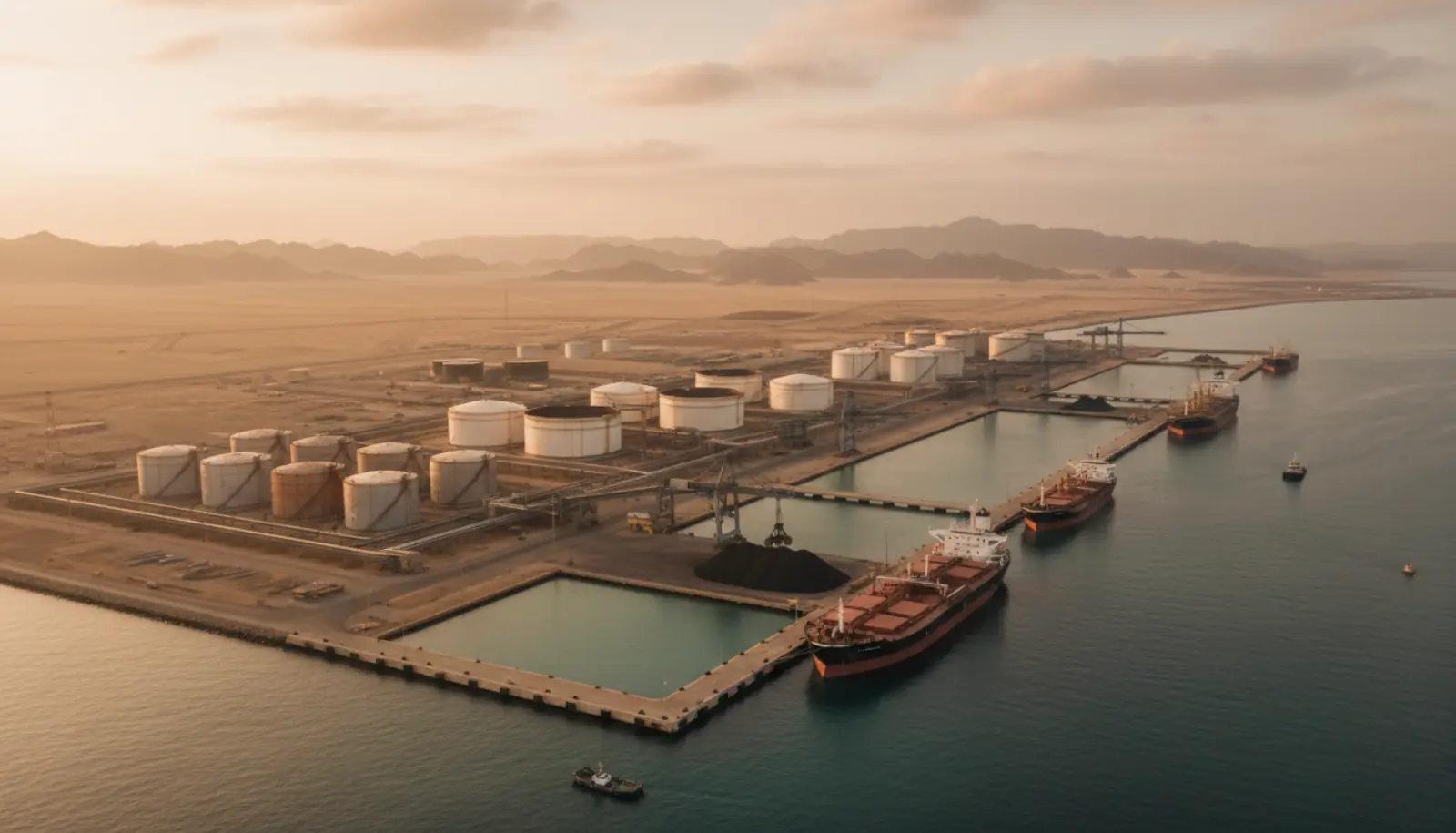
Oman matters as a petrochemical origin mainly because of where it sits. Its ports on the Gulf of Oman and the Arabian Sea are outside the Strait of Hormuz, and they face the markets that buy bulk bitumen, urea, sulphur, polymers, caustic soda and base oil: the Indian subcontinent, East Africa, the rest of the Gulf, and, via the Gulf of Aden, the Mediterranean and Europe. That is a geographic advantage, not a guarantee of price or quality, and buyers get the benefit only if they check the details of port, route, origin and contract.
This guide explains the geography in plain terms, what being outside Hormuz does and does not mean, how Sohar and Salalah differ, and a checklist of what to consider when buying from Oman. It sticks to well-established geography. It gives no throughput, capacity or ranking figures, and makes no claims about current conditions in any waterway. It is general guidance, not legal or insurance advice.
The short version
- Oman has coastlines on two bodies of water. The Gulf of Oman lies to the north-east and the Arabian Sea to the south-east, with Sohar on the first and Salalah on the second.
- Ships loading at these ports do not need to pass through the Strait of Hormuz to reach the open ocean. Producers and ports inside the Persian Gulf do.
- The Arabian Sea is the gateway to the main buying regions. South Asia is across the water, East Africa is to the south-west, and the Gulf of Aden and the Red Sea lie to the west.
- Sohar and Salalah serve different directions. Sohar suits the Gulf, the Gulf of Oman and the Indian subcontinent. Salalah suits the Arabian Sea, East Africa and the Gulf of Aden.
- Geography does not set price, quality or compliance. Check the product, the specification, the origin documents, the route and the contract on every deal.
Oman on the map
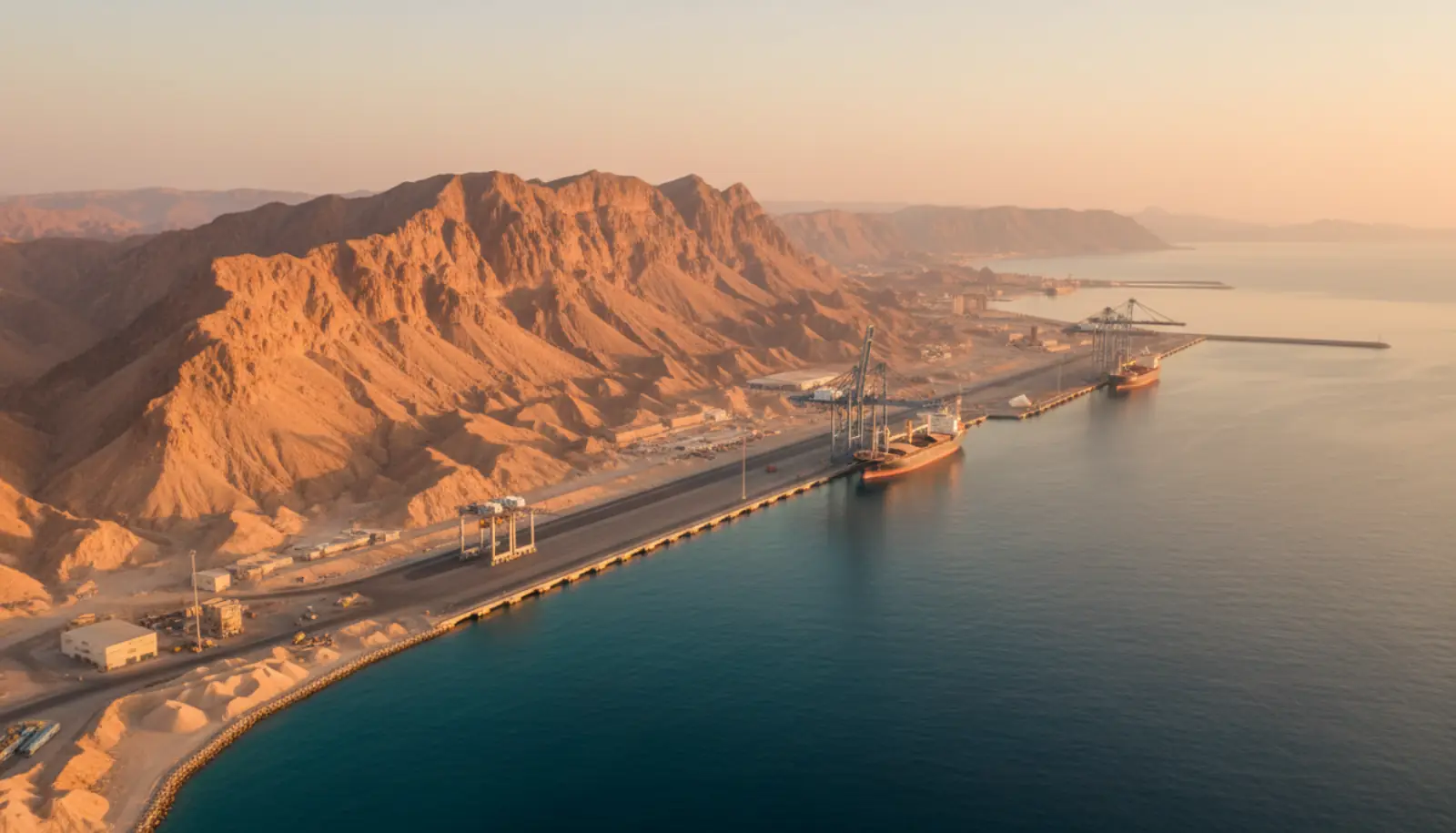
Oman occupies the south-eastern corner of the Arabian Peninsula. It borders the United Arab Emirates, Saudi Arabia and Yemen. Its long coast runs from the north-east, along the Gulf of Oman, round the eastern tip of the peninsula and down to the south along the Arabian Sea.
Three places matter for this guide.
- Sohar lies on the Batinah coast of the Gulf of Oman, north-west of Muscat and in the direction of the border with the UAE. It is an industrial port with industry around it.
- Salalah lies in the Dhofar region in the south of the country, on the Arabian Sea, not far from the border with Yemen.
- The Strait of Hormuz is the narrow waterway that joins the Persian Gulf to the Gulf of Oman. Sohar lies outside it, on the open-sea side.
For Chemineral, based in Sohar, exports leave from Sohar and Salalah. Which port loads a given cargo depends on the product and the shipment, so confirm it in the offer.
What "outside Hormuz" means
Producers and ports inside the Persian Gulf, including those on the coasts of Iraq, Kuwait, Saudi Arabia's eastern region, Bahrain, Qatar and parts of the UAE and Iran, ship through the Strait of Hormuz to reach the sea. Every such voyage depends on a single narrow passage.
A cargo loaded at Sohar or Salalah does not need that passage. Some ports in neighbouring countries on the Gulf of Oman side, such as Fujairah in the UAE, are also outside the strait, so Oman is not the only such origin.
What this can mean for a buyer
- One fewer chokepoint on the voyage. If a voyage does not transit the strait, it is not exposed to delays, queueing or restrictions there.
- Fewer scheduling dependencies. Fewer transit steps means fewer places where an ETA can slip.
- A different conversation with insurers and charterers. Underwriters and shipowners assess risk by the voyage and the area. A cargo that avoids a particular passage may be priced differently from one that does not.
What it does not mean
- It does not mean lower insurance in every case. Underwriters define higher-risk areas broadly and change them. Waters near a strait may be treated together with it. Ask for the actual war-risk terms for your voyage, and compare quotes from several origins on the same basis, not on an assumption.
- It does not remove other risks. Weather, port congestion, other chokepoints on the route and ordinary commercial risks all remain.
- It does not describe current conditions. Check with your broker and forwarder when you commit.
Treat "outside Hormuz" as a structural feature to put on your checklist, not as a promise.
The Arabian Sea: Oman's gateway to the markets
The Arabian Sea is the part of the Indian Ocean bounded by Oman and Yemen to the west, Pakistan and India to the north and east, and open ocean to the south. Salalah faces it directly, and ships from Sohar join it after leaving the Gulf of Oman.
From there, the main buying regions are reached as follows.
| Destination region | Route in outline | Notes |
|---|---|---|
| Pakistan and the west coast of India | Across the Arabian Sea | A short crossing compared with most long-haul trades; no canal involved |
| Bangladesh, Sri Lanka and the east coast of India | Around or across the southern tip of India, into the Bay of Bengal | Longer than the west-coast run but still a regional voyage |
| East Africa | South-west across the Indian Ocean | A direct voyage without a canal; Salalah is nearer than Sohar |
| The rest of the Gulf, including the UAE and Saudi Arabia | Short sea routes, or road from Sohar for some destinations | Entering the Persian Gulf involves Hormuz |
| Red Sea, Mediterranean, Europe | West through the Gulf of Aden, then the Red Sea and Suez, or the longer route round the Cape | See the Suez and Cape section below |
| South-East Asia | East, past India and Sri Lanka, towards the Strait of Malacca | Long haul, not a short regional run |
Distances here are not stated on purpose. Ask your forwarder for the distances for your port pair, then work out the days: divide the distance in nautical miles by the speed in knots times 24. For example, a ship at 12 knots covers about 288 nautical miles a day. That is an illustration of the arithmetic, not a transit time for any route.
Suez and the Cape
For Europe and the Mediterranean, cargo from either Omani port can go through the Gulf of Aden, the Red Sea and the Suez Canal, or round the Cape of Good Hope. Salalah lies nearer the Gulf of Aden than Sohar does, which shortens the approach on the Suez route. The choice between the two routes depends on cost, time, insurance and conditions at the time. Our Red Sea shipping guide explains the clauses and the comparison. Chemineral quotes Suez and Cape routing side by side.
Sohar and Salalah compared
The two ports serve different jobs. The table summarises their positions without citing any capacity or ranking figures.
| Feature | Sohar | Salalah |
|---|---|---|
| Sea | Gulf of Oman | Arabian Sea |
| Position | North of the country, Batinah coast, towards the UAE border | South of the country, Dhofar region, towards the Yemen border |
| Strait of Hormuz | Outside it, on the Gulf of Oman side | Far outside it, on the open Arabian Sea |
| Natural direction | Gulf, Gulf of Oman, Pakistan and India | East Africa, Gulf of Aden, onward to Suez and the Mediterranean |
Choosing between them
Do not choose a port by reputation. Choose by the cargo and the voyage.
- Start with the destination. Which side of the Arabian Sea is your port on, and which route will the ship take?
- Check what is loaded where. Not every product loads at both ports in every shipment. Ask which port the offer relates to.
- Check the vessel type and cargo form. Bulk, packed, containerised and liquid cargoes need different facilities. Ask what the loading port offers for your cargo type.
- Compare delivered cost and time, not the loading port in isolation.
Hypothetical example
All details here are invented to show the method.
A buyer in a South Asian port receives two offers for the same cargo. One is FOB Sohar and the other is FOB Salalah. The prices differ slightly, and the buyer's first instinct is to take the cheaper one. A more careful comparison asks:
- Which port is the shorter sail to my discharge port, in days at the assumed speed?
- Do the ship's nomination and loading windows suit my berth availability?
- Is the cargo form the same (bulk or packed), and is the inspection arrangement the same?
- Does either offer assume a weather season that affects loading?
If the answers are equal, the cheaper offer wins. If the offers differ in packing or inspection, they are not comparable yet.
Oman for each buyer region
South Asia
The Arabian Sea crossing makes Oman a natural supplier to Pakistan, India's west coast and, with a longer voyage, Bangladesh and Sri Lanka. Keep seasonal timing in mind: monsoon weather affects ports, anchorages and inland logistics in the region, so coordinate your discharge plans with the season.
East Africa
East Africa is reached by a direct Indian Ocean voyage with no canal involved, which makes Salalah a convenient loading point. The buyer's practical issues tend to be at the discharge end: port draft limits, discharge rates, storage and inland transport. Our RFQ guide lists the details to raise so that vessel and parcel size suit the port.
The GCC
For buyers elsewhere in the Gulf Cooperation Council, short sea voyages are available, and from Sohar some destinations can be served by road. Check customs, transit and border arrangements for your own route, because they depend on the product, the documents and the regulations at the time. Entering the Persian Gulf by sea involves the Strait of Hormuz.
Europe and the Mediterranean
For these buyers the route is the main decision. See the Suez and Cape section above and our Red Sea shipping guide. A cargo that loads outside Hormuz still faces the Red Sea or Cape choice on its way west.
What to consider when buying from Oman
This is the checklist that turns geography into a decision.
1. Loading port is not country of origin
A cargo that loads at Sohar or Salalah is not necessarily of Omani origin. Origin is where the goods were produced or substantially transformed, and it is established by origin documents and rules, not by the port on the bill of lading. This matters for duties, preferential trade treatment, sanctions screening and import regulations. Ask for the country of origin, the producer and the origin certificate. Do not assume.
2. Documents
Confirm the full set before shipment: commercial invoice, packing list, bill of lading, certificate of origin, certificate of analysis or inspection certificate, and insurance document where relevant. Our export shipping documents guide explains each. If you pay by letter of credit, make sure the credit's wording matches what the exporter can issue, including the port names. See our letter of credit guide.
3. Incoterm
Decide who arranges the ship and the insurance. Under FOB Sohar or FOB Salalah the buyer nominates the vessel and controls the route. Under CFR or CIF the seller does. Each has consequences for risk, cost and flexibility. Our Incoterms 2020 guide sets them out for petrochemical cargoes.
4. Route and insurance
Ask for the intended route and the transit time assumptions. For Europe and the Mediterranean, ask for Suez and Cape quotes side by side. For insurance, ask exactly what is covered, including war and strikes cover, and who pays any additional premium. See our marine cargo insurance guide.
5. Inspection and specification
Specify the product, the test methods and the inspection arrangement in the contract. Chemineral can arrange SGS or Intertek pre-shipment inspection. Our guide to pre-shipment inspection explains what a certificate does and does not prove.
6. Weather and seasons
Two seasonal features deserve attention.
- The south-west monsoon, which runs broadly through the middle of the year, brings rough seas and swell to the Arabian Sea. Ports and anchorages on exposed coasts can face weather delays, and shipping schedules can be affected.
- Tropical cyclones form in the Arabian Sea from time to time, mostly in the periods either side of the monsoon, and can disrupt shipping and port operations.
Neither is a reason to avoid Oman. Both are reasons to allow slack in loading windows and laycan and to ask the supplier how weather is handled in the contract. Our laytime and demurrage guide shows how weather exceptions work.
7. Working days and holidays
Oman's weekend is Friday and Saturday, and public holidays follow the Islamic and national calendars. This affects office hours for notices of readiness, inspector attendance, customs and bank processing. Check the dates around your loading window, and make sure the contract's laytime terms (SHINC, SHEX, FHEX) reflect them.
8. Currency and payment
International petrochemical trade is normally priced in US dollars, and the Omani rial is pegged to the dollar. Confirm the currency of the offer and the payment terms, and check bank charges on both sides.
9. Counterparty checks
Geography is not a substitute for due diligence. Verify the legal entity, the registration, the bank account and the people you are dealing with, whatever the origin. Our supplier verification guide gives a checklist.
10. Offer validity
Markets and freight move quickly, so firm offers are usually short-dated. Chemineral's firm offers are valid for 72 hours. Have your approvals and payment arrangements ready so that you can accept in time.
Where the Oman advantage stops
It is easy to overstate the case for any origin. A fair summary:
- Geography helps with routing and exposure to chokepoints. It does not change the quality of the product, which depends on the producer and the specification.
- Geography does not set the price. Price depends on the product market, freight, insurance, the Incoterm and competition among sellers.
- Oman is not the right origin for every buyer. For a destination best served from another region, or a product not available at Omani ports in your form and quantity, another origin may suit better. Compare delivered offers on the same terms.
Frequently asked questions
Are Sohar and Salalah outside the Strait of Hormuz?
Yes. Sohar is on the Gulf of Oman, the open-sea side of the strait, and Salalah is on the Arabian Sea. A ship loading at either does not need to pass through the strait to reach the ocean.
Does loading in Oman guarantee lower war-risk or insurance costs?
No. Underwriters price risk by area and voyage, and they change their views. Ask for actual quotes for your route and compare origins on the same basis.
Which port is better for East Africa, Sohar or Salalah?
Salalah is geographically nearer East Africa. But the right answer depends on which port loads your product, the vessel and the timing. Ask for offers from both where available and compare delivered cost and time.
Does a cargo loaded in Oman have Omani origin?
Not necessarily. The loading port and the country of origin are different things. Ask for the producer, the country of origin and the origin certificate, and check them against your import requirements.
How does the monsoon affect shipments from Oman?
The south-west monsoon, broadly in the middle of the year, brings rough seas to the Arabian Sea, and tropical cyclones occasionally form there. Both can delay loading, sailing or discharge. Allow flexibility in the loading window and agree how weather delays are treated in the contract.
Can I get quotes for both Suez and Cape routing from Oman?
For European and Mediterranean destinations, yes. Chemineral quotes Suez and Cape routing side by side so that you can compare the time and cost of each. See the Red Sea shipping guide for the clauses to check.
Next step
If you are weighing Omani origin for bitumen, urea, sulphur, polymers, caustic soda or base oil, browse our product range and send your product, quantity, packing and discharge port through our contact page. Chemineral exports from Sohar and Salalah, and firm offers are valid for 72 hours.
Our trade desk can turn the views in this report into firm offers on today's indicative prices — valid 72 hours, with complete documentation.
Request a quote