Bitumen Emulsion and Cutback Bitumen: How They Differ from Paving Grades
What bitumen emulsions and cutbacks are, where each is used, how emulsions break and cutbacks cure, and how to specify and store them without costly mistakes.
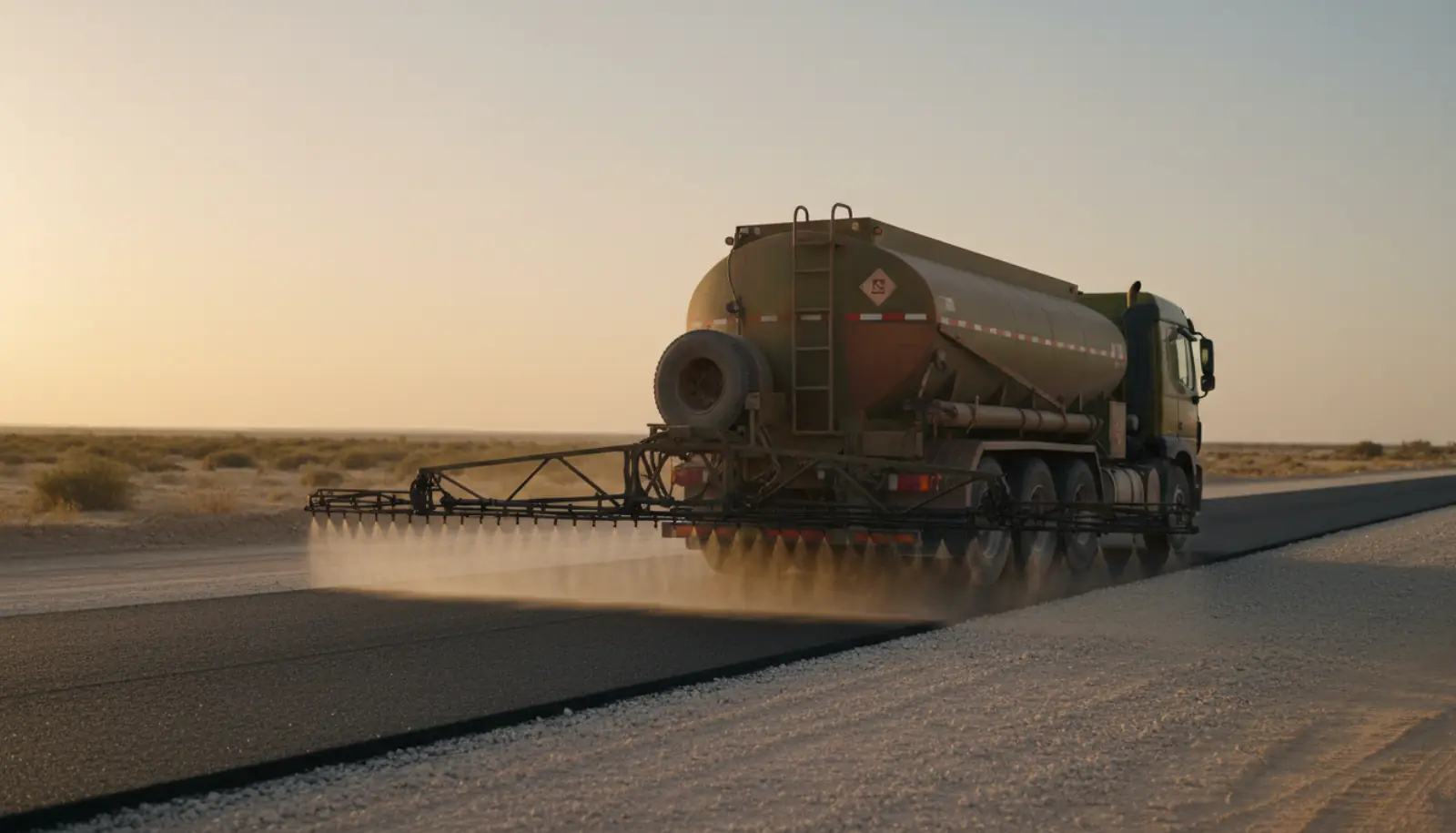
Emulsions and cutbacks are both ways of making bitumen workable without heating it to full paving temperature. An emulsion does it with water, a cutback does it with solvent, and both leave the same thing behind once the carrier has gone: bitumen binder on the road. The right choice depends on the job, the weather, local regulations and what your specification allows, and the product datasheet, not a general guide, sets the working limits.
This guide is for procurement managers, importers and contractors who buy or specify bitumen for road works. It explains how emulsions and cutbacks differ from straight-run paving grades, what they are used for, how they break, set and cure, and what to check before ordering. It gives no universal numbers on purpose. Grades, temperatures, residual binder content and application rates vary by specification and by manufacturer, so always follow your project specification and the supplier's technical datasheet.
Straight-run paving grades, emulsions and cutbacks: the basic difference
Answer first: a paving-grade bitumen is bitumen on its own, an emulsion is bitumen dispersed in water, and a cutback is bitumen thinned with a solvent.
- Straight-run paving grade. This is the product most road projects import in bulk. It is solid or very viscous at ambient temperature and has to be heated to be pumped, mixed with aggregate or sprayed. Grades are usually defined by penetration, viscosity or performance grade; see our guide to bitumen grades explained. Hot mix asphalt is made with this type of binder.
- Bitumen emulsion. Tiny droplets of bitumen are dispersed in water with the help of an emulsifier (a surface-active chemical). The result is a liquid that can be pumped and sprayed at much lower temperatures than a paving grade. When the water leaves, the droplets come together and the binder is left on the surface.
- Cutback bitumen. A paving-grade bitumen is blended with a petroleum solvent so that the mixture is fluid enough to spray or mix at lower temperatures. When the solvent evaporates, the bitumen stiffens again. The solvent is a volatile, usually flammable petroleum fraction, which is the root of most of the safety and environmental concerns.
All three share one point: whatever is applied has to end up as bitumen binder doing its job in the pavement. The carrier (water or solvent) is only there to get it onto the surface or into the mix.
Emulsions and cutbacks are made at a dedicated plant, from a base bitumen, with the right equipment and controls. The questions in this guide are the ones to put to whoever manufactures the product you buy.
Where each product is used
Tack coat
A tack coat is a thin film of binder sprayed on an existing surface before a new asphalt layer is laid, so the layers bond. Emulsions are widely used for this, and many specifications prefer them. Too little and the layers can slip; too much and the film can squeeze up. The rate is a specification matter.
Prime coat
A prime coat is applied to an unbound granular base, such as crushed stone, before surfacing. Its job is to penetrate and bind the top of the base, waterproof it and give the next layer something to bond with. Low-viscosity binders penetrate better, which is why cutbacks have been used for priming for many years, and why specifiers still ask for them. Some agencies now allow or require specially formulated emulsions or other low-solvent products for the purpose. What works depends on the base material, so check the specification.
Surface dressing and chip seal
In surface dressing, a film of binder is sprayed on the road and then covered with chippings that are rolled in. The binder has to wet the stone, hold it and resist traffic. Emulsions (including polymer-modified types), cutbacks and hot-applied binders are all used around the world. The choice depends on the climate, traffic, the stone and local practice. Weather matters greatly here, because binder and chip must go down close together and the binder needs strength before traffic arrives.
Cold mix and patching
Cold mix is made by mixing aggregate with a liquid binder without heating the aggregate to hot mix temperatures. It is used for patching, small repairs, stockpile mixes and lower-traffic roads. Emulsion-based mixes depend on the emulsion breaking in contact with the aggregate. Cutback-based mixes depend on the solvent leaving. Both gain strength over time rather than on day one, so they are normally repair or lower-traffic solutions.
Where straight-run grades still fit
For structural asphalt layers made at a hot-mix plant, the usual binder is a paving grade, or a polymer-modified grade where the design calls for it; see our polymer-modified bitumen guide. Our 60/70 and 85/100 pages cover penetration paving grades, which are not emulsions or cutbacks.
Emulsions: cationic, anionic and how they break
What the charge means
Emulsifiers give the bitumen droplets an electrical charge so they stay apart in the water.
- Cationic emulsions have positively charged droplets.
- Anionic emulsions have negatively charged droplets.
- Non-ionic emulsions also exist and are used for special purposes, but they are less common in road work.
In general terms, many mineral aggregates carry a negative surface charge, so positively charged droplets are drawn to them, which can help the emulsion break and bond. Cationic emulsions are therefore widely used and often favoured with siliceous aggregates, while some aggregates, such as certain limestones, may work well with anionic emulsions. This is a tendency, not a rule: confirm it with a compatibility test on your actual aggregate, and do not swap types on the strength of a general guide.
Breaking and setting
When an emulsion is applied, it has to "break": the droplets lose their stability, come together and start to form a continuous binder film as the water separates. Breaking is triggered by contact with the aggregate or the surface, evaporation of water, absorption into a porous surface and, in some cases, by temperature.
Names usually reflect how fast this happens; rapid-, medium- and slow-setting types are common in several national systems. In broad terms:
- Rapid-setting types break soon after contact and suit spray applications such as surface dressing.
- Medium-setting types are designed for mixing with coarse or open-graded aggregates, with enough time to coat them.
- Slow-setting types are formulated to mix with fine or dense aggregates and for tack or fog applications, where more stability matters.
Codes differ between standards, so use the designation in your specification and ask the supplier what it means in the standard cited.
"Breaking" and "curing" are not the same as strength. After an emulsion breaks, the binder still needs time to lose the remaining water and develop cohesion. Trafficking a surface too early is a common cause of picked-up chippings and damaged tack coats.
Emulsions rely on water leaving, so cold, humid or wet weather slows them and rain on a fresh application can wash it away. Application conditions belong in the specification and the datasheet.
Cutbacks: curing and why they are being phased down
Curing
A cutback is applied as a fluid, and the solvent then evaporates into the air, a process called curing. As it does, the binder stiffens and reaches its working strength. Cutbacks are conventionally grouped by how fast the solvent leaves: rapid-curing, medium-curing and slow-curing types are the common categories, with a lighter, more volatile solvent evaporating faster than a heavier one. As with emulsions, the codes and grade systems vary by standard.
Curing depends on temperature, air movement, the thickness of the film and how much of the surface is exposed. On a prime coat, the cutback soaks into the base, so curing can take longer than you would expect from the surface appearance. Placing the next layer on uncured binder can trap solvent and soften the layer.
Why solvent-based products are being phased down
Many road authorities have restricted or reduced the use of cutbacks. The reasons are consistent across jurisdictions, even though the details of the rules differ:
- Air quality. The solvent evaporates into the atmosphere and contributes to emissions of volatile organic compounds.
- Worker safety. Cutbacks are flammable and are a fire risk when heated or handled near ignition sources. Fumes are also a health consideration for crews.
- Alternatives exist. Emulsions and other low-solvent products can do many of the same jobs.
If your specification still calls for a cutback, that is the engineer's decision. Check the rules where the product will be stored and applied, not only where it is made.

Storage and handling
Storage is where most emulsion and cutback problems begin. Follow the datasheet and safety data sheet (SDS) for the exact product. In general terms:
Emulsions
- They are water-based, so freezing matters. Freezing can break the emulsion irreversibly and leave coagulated bitumen in the tank. Protect product from freezing in storage and transport, wherever your climate makes it a risk.
- They are sensitive to heat and to overheating. Excess heat can cause water loss and skinning. Follow the maximum storage and application temperature on the datasheet.
- Agitation and age matter. Some products need gentle circulation in long storage; others can be broken by hard agitation. Ask the supplier.
- Do not mix types. Cationic and anionic emulsions are generally incompatible with each other and can coagulate on contact. Different brands or grades of the same type may also be incompatible. Do not top up a tank holding one product with another without confirmation from the supplier.
- Clean equipment. Residues, poor-quality water or cleaning chemicals can destabilise an emulsion.
- Shelf life is limited. Plan deliveries so stock turns over, and ask for the manufacturer's guidance.
Cutbacks
- They are flammable. Treat storage and heating as a fire-safety matter. Keep ignition sources away, follow the SDS and apply local flammable-liquid regulations to tanks, bunds and transfer operations.
- Solvent loss. A poorly sealed container can lose solvent and change viscosity.
- Heating needs care. Heat only as the datasheet allows, with equipment suitable for flammable products.
Straight-run bitumen
Paving grades are stored hot, which is a different discipline; see our bitumen heating, storage and handling guide. An emulsion is water-based and tolerates neither high heat nor freezing.
Packaging and delivery
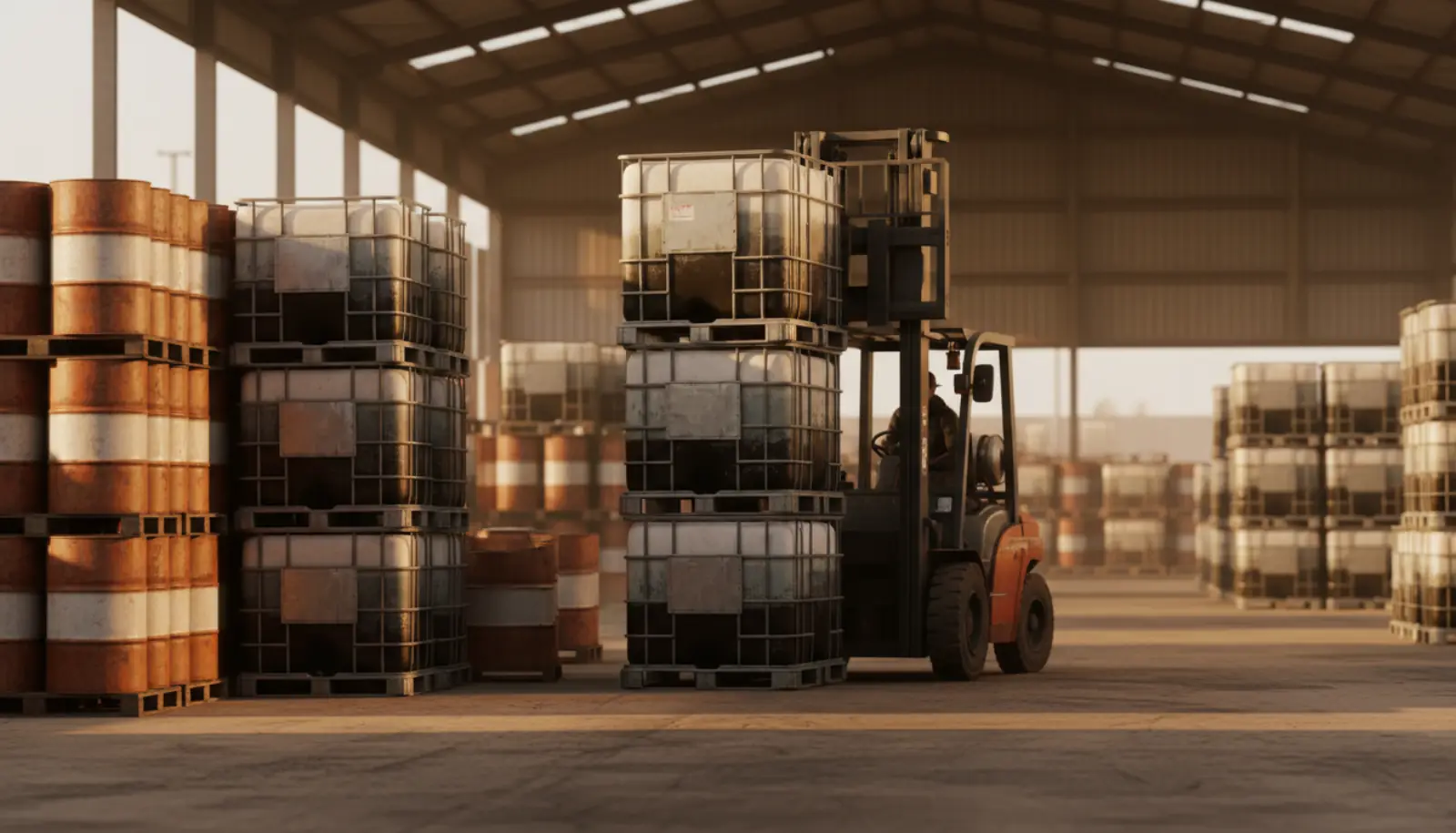
Emulsions and cutbacks are commonly delivered in bulk by tanker, or in drums and intermediate bulk containers (IBCs) for smaller jobs. The packaging question is partly practical and partly about what the product tolerates.
- Bulk tanker. Normal for large sprayer or plant supply. Check that the tank is clean, suited to the product, and that your receiving tank is empty or holds a compatible product.
- Drums and IBCs. Convenient for patching and small contractors. Check freeze protection for emulsions, and labelling and closures for cutbacks.
- Marking. Labels and delivery documents should show type, grade, batch and manufacturer.
- Dangerous goods. Cutbacks are generally treated as flammable liquids in transport; classification depends on the product and mode, so check the SDS and the carrier. See our dangerous goods shipping guide.
- Packed paving grades are a separate topic; see bitumen packaging options.
How to specify an emulsion or cutback
A purchase specification should leave no room for the supplier to guess. At a minimum, write down:
- Product family. Emulsion or cutback.
- Type or class. For emulsions: cationic or anionic, and the setting rate. For cutbacks: the curing rate and the viscosity class. Use the designation in the standard your specification cites, and name the standard.
- Grade. The specific grade code within that standard.
- Residual binder content. The proportion of bitumen left after the water (or solvent) has gone. This is the number that tells you how much binder you are really buying and spraying. Take the requirement from the specification and the datasheet; do not assume any figure.
- Base bitumen. If the specification requires a particular base bitumen grade, or a polymer-modified base, state it.
- Properties and tests. The test methods and the limits in the specification, and which are checked on every batch.
- Application use. Tack coat, prime coat, surface dressing, cold mix or other, because the same type may not be suitable for all.
- Quantity and unit. State whether the quantity is of the product as supplied or of the residual binder. This is a frequent source of disputes.
- Packaging and delivery. Bulk or packed, delivery point, and any freeze protection or temperature conditions on arrival.
- Documents. Certificate of analysis, batch number, SDS and, where relevant, independent inspection.
Why residual binder content is the number that matters
Because an emulsion is partly water, two products with different binder content are not like for like. The comparison that matters is cost per tonne of residual binder, delivered to site, for a product that meets the specification. Cutbacks have the same issue with solvent content.
For a like-for-like comparison, divide each offered price by the product's residual binder fraction (from its datasheet) to get a price per tonne of binder, then compare those figures. A hypothetical illustration: if one emulsion costs more per tonne but carries more binder, it can still be the cheaper source of binder once you divide through. The numbers must always come from the datasheets, not from this guide.
Quality checks and documents
For any emulsion or cutback, ask for the manufacturer's certificate of analysis for the batch, and compare the results with the limits in the specification. For emulsions, buyers often check items such as residue on sieving, residual binder content, stability and viscosity; for cutbacks, viscosity, flash point, distillation behaviour and residue properties. Which tests apply is set by the standard your specification cites.
Other points worth checking:
- Sampling. Take representative samples at delivery and keep sealed, labelled retained samples in case of dispute.
- Aggregate compatibility. For mixes and chip seals, test the binder against your actual aggregate.
- Independent verification. For import or large orders, independent inspection and testing can be arranged at origin. Chemineral can arrange SGS or Intertek pre-shipment inspection on the bitumen grades it offers; for third-party products, the inspection scope would need to be agreed with the manufacturer.
- Planning the supply. Quantities for surface treatments should be listed separately from the asphalt binder in your project plan; see our bitumen supply planning guide for road projects.
Common buyer mistakes
- Treating all emulsions as interchangeable. Charge, setting rate and grade all matter.
- Comparing price per tonne without residual binder content. Water is not binder.
- Specifying a cutback out of habit. Check whether local rules still permit it.
- Ignoring freezing and heat limits. A cold night or an overheated tank can ruin a delivery.
- Mixing products in a tank. Topping up without checking compatibility can coagulate a load.
- Not allowing for setting or curing time. Early traffic or an early next layer causes failures that look like product defects.
- Skipping the aggregate compatibility check. It is cheap compared with a failed seal.
- Mixing up product and binder quantities. State the basis in the contract.
A short checklist before you order
- Confirm product family, type, grade and standard in the specification.
- Check that local rules still allow the product.
- Request the datasheet, SDS and a typical certificate of analysis.
- Agree residual binder content and the basis of quantity and price.
- Confirm packaging, delivery method and freeze or heat protection.
- Plan storage, cleaning and application equipment before delivery.
Frequently asked questions
Is bitumen emulsion the same as liquid bitumen?
No. Emulsion is bitumen dispersed in water, and the water leaves after application. "Liquid bitumen" is a loose phrase that can also mean a cutback, which is bitumen thinned with solvent. Ask which one is meant, and what the product designation is.
Can I use a paving-grade bitumen instead of an emulsion for a tack coat?
Not as it is. Paving grade is too viscous to spray at ambient temperature and would need heating and suitable equipment, and the specification may require a particular product. Follow the project specification for the tack coat material.
Is cationic or anionic emulsion better?
Neither is better in every case. Cationic types are widely used and often work well with many common aggregates, while anionic types suit some others. The way to decide is the specification and a compatibility test with your actual aggregate.
Why do cutbacks cause problems on prime coats?
If the solvent has not left the binder before the next layer goes on, it can stay trapped and soften the layers. Allow the curing the specification and datasheet require, and do not judge by the surface appearance alone.
What is residual binder content, and why does it matter?
It is the proportion of the product that remains as bitumen after the water or solvent has gone. It tells you how much binder you are actually buying and applying. Compare offers on the cost per tonne of residual binder, and follow the specification for the required value.
Next step
If you are planning bitumen supply for a road programme and want to discuss grades, packaging, inspection and shipping routes from Sohar or Salalah, send an RFQ to the Chemineral trade desk. Firm offers are valid for 72 hours, and we quote Suez and Cape routing side by side so you can compare transit and cost.
Our trade desk can turn the views in this report into firm offers on today's indicative prices — valid 72 hours, with complete documentation.
Request a quote