
Choosing HDPE Grades by Process: Injection, Blow Moulding, Pipe and Film
How melt flow, density and molecular weight distribution shape HDPE performance in injection, blow moulding, pipe, film and raffia, and what to specify and check when buying.
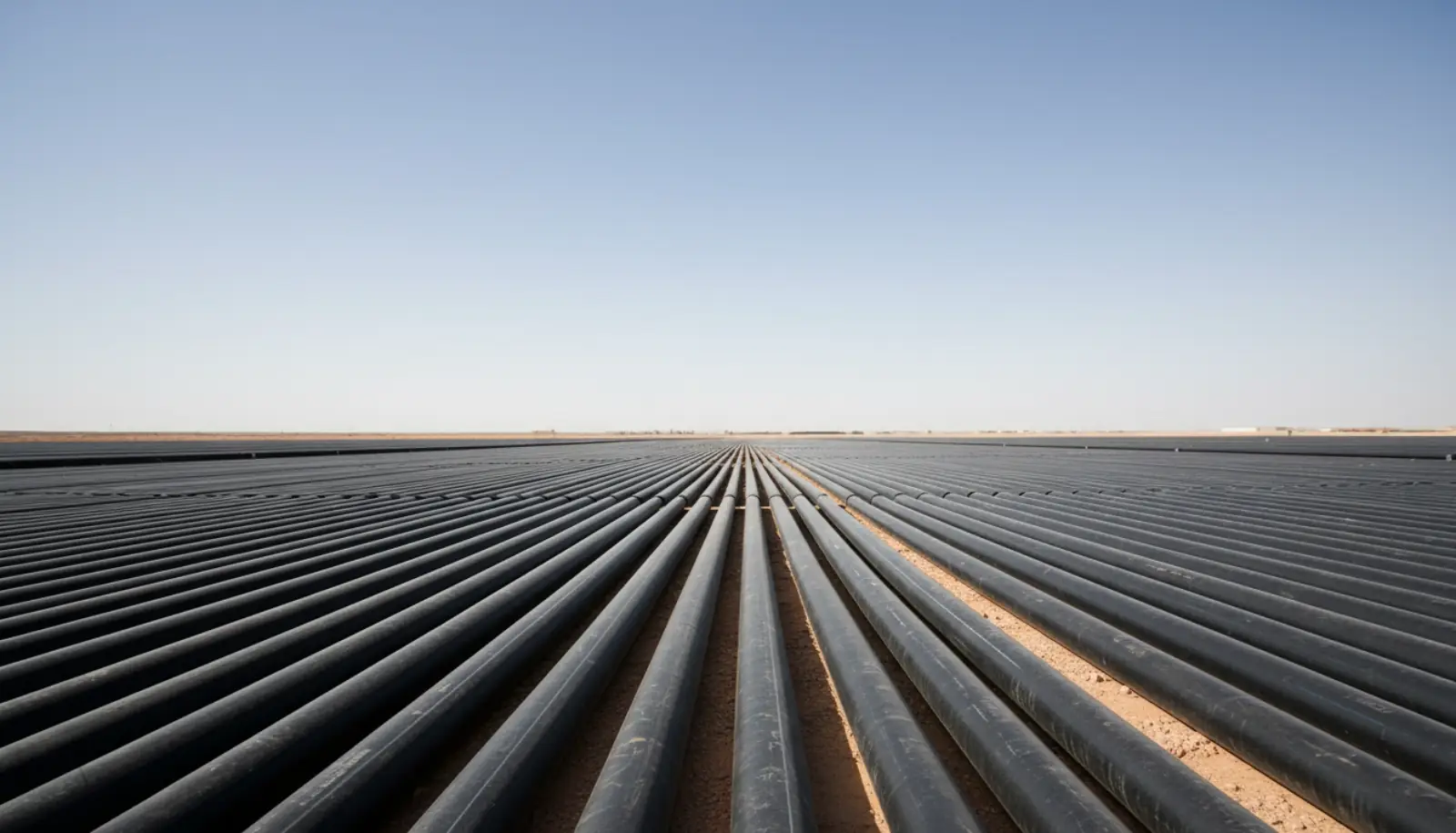
Choose HDPE by process first, then by the properties that process needs: injection moulding generally wants easy flow, blow moulding wants melt strength and stress-crack resistance, and pipe wants long-term strength and toughness. Three numbers on the datasheet, melt flow index, density and the shape of the molecular weight distribution, explain most of the difference between grades. A grade that is excellent for one process can be unworkable in another, even though both are called HDPE.
This guide is for importers, converters and procurement managers who buy HDPE and need to match grade to process. It describes how the main properties behave in concept, what each process generally asks of the resin, how to check a delivery and what to put in an enquiry. It gives no universal figures. Every value that matters comes from the producer's datasheet and test methods, and your converter's or standard's requirements decide what is acceptable. For the broader polymer family, see our guide to HDPE, LDPE and LLDPE differences and the HDPE product page.
The three properties that drive grade choice
Melt flow index (MFI)
Melt flow index is a measure of how easily molten polymer flows through a standard die under a standard load and temperature. It is reported on the datasheet with the test conditions, and the conditions matter: values measured under different loads are not comparable.
In concept:
- Higher melt flow means the melt flows more easily. Typically it also means shorter polymer chains, so the resin fills thin or complex moulds easily, but the finished product is generally less tough and less resistant to long-term stress.
- Lower melt flow means a stiffer, more viscous melt and longer chains. These grades usually give better toughness and long-term strength, but need more powerful equipment and are harder to process.
For the highest-molecular-weight grades, such as those for pipe, large containers and heavy film, makers often quote a flow measurement under a higher load, because the standard one gives values too small to be useful. Do not compare figures from different loads.
Density
Density reflects how tightly the polymer chains pack, which depends on how much short-chain branching (from a comonomer) the polymer has.
- Higher density generally means higher stiffness, higher strength, better barrier to moisture and gases, and better resistance to some chemicals, but usually lower impact toughness and lower resistance to environmental stress cracking.
- Lower density within the HDPE family generally means a little more flexibility and toughness and better stress-crack resistance.
This is a trade-off, not a ranking. You choose the density for the balance of stiffness and toughness the product needs.
Molecular weight distribution (MWD)
MWD describes the spread of chain lengths in the polymer.
- A narrow distribution has chains of similar length. It generally gives good impact and clean, uniform flow, and is common in injection moulding grades.
- A broad distribution mixes short and long chains. The short chains help the melt flow under shear, and the long chains give melt strength and toughness. Broad grades are common where processing and strength both matter, such as blow moulding, pipe and film.
These properties interact. A resin's melt flow, density and MWD together determine what the datasheet will say about stiffness, impact, stress-crack resistance and processing. Two grades with the same melt flow can behave very differently if their density or distribution differ.
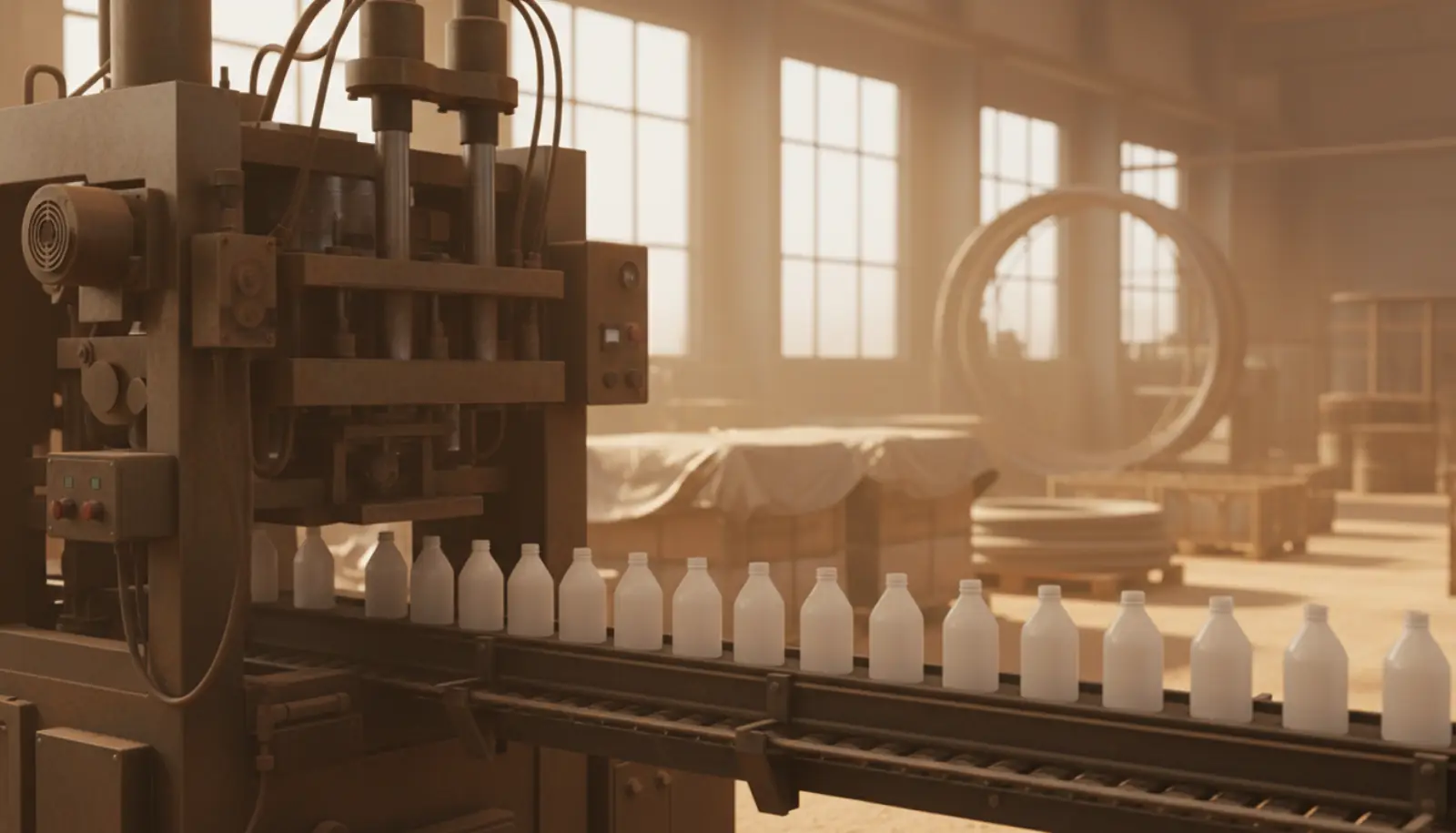
Unimodal and bimodal grades
At a conceptual level, a unimodal grade has a single population of chain lengths, while a bimodal grade is built from two populations: a lower-molecular-weight fraction and a higher-molecular-weight fraction, typically produced in staged reactors or by special catalysts.
The point of bimodal design is to get properties that a single population struggles to deliver together. The lower-weight fraction helps processing and stiffness, while the high-weight fraction (often with more comonomer) supports toughness and resistance to slow crack growth. Bimodal grades are widely used for demanding pressure-pipe and large-part applications, and also appear in film and some blow moulding.
For a buyer, the practical lessons are:
- Do not substitute a unimodal grade for a bimodal one on the strength of similar melt flow and density figures. Long-term performance may differ.
- Do not pay a premium for bimodal grades where the process does not need them. Ask the converter what actually limits product performance.
- Check what the datasheet claims and what standards it meets. Pressure-pipe classifications and standards are defined by long-term testing, not by headline density and melt flow.
What each process asks of the resin
Injection moulding
Injection moulding forces molten resin into a closed mould, so flow, cycle time and dimensional stability matter.
- Melt flow: generally higher, so the resin fills the mould quickly, including thin walls, ribs and long flow paths.
- Density and stiffness: chosen for the part. Crates, caps, closures, buckets and housewares generally need a balance of stiffness and impact.
- MWD: often narrower, which can improve impact strength and reduce warpage in some parts. Ask your moulder what the part requires.
- Warpage and shrinkage: HDPE shrinks on cooling and can warp, especially in flat parts. Grade, mould design and cooling all contribute.
- Stress cracking: parts that meet detergents, oils or chemicals under stress, such as closures and crates, need attention to stress-crack resistance.
Higher melt flow improves filling but reduces toughness and stress-crack resistance. Test the part in service conditions before a large order.
Blow moulding: bottles, drums and containers
In extrusion blow moulding, a molten tube (the parison) is extruded, enclosed in a mould and inflated. It then has to hold its shape and thickness while hanging, so melt strength is central.
- Melt flow: generally lower than for injection grades, so the parison does not sag or draw down under its own weight.
- MWD: broad grades are common, to combine melt strength with processing ease.
- Environmental stress cracking resistance (ESCR): often the key property. Bottles and drums hold detergents, cleaning products, oils, agrochemicals and other contents that can encourage cracking under stress.
- Stiffness and top-load strength: affects stacking and the wall thickness you need. Higher density increases stiffness but may reduce ESCR.
- Drums and large containers: usually use high-molecular-weight grades for toughness and drop performance. If they carry hazardous goods, check packaging approvals.
- Food and pharma packaging: needs grades supplied for that use. Ask for the relevant food-contact declarations; a general-purpose grade is not a substitute.
A useful decision rule for blow moulding: if the container holds anything aggressive, specify ESCR first and stiffness second.
Pipe and fittings
Pipe is a long-life application, with products expected to carry fluids under pressure for decades. That changes how the resin is chosen.
- Long-term strength under pressure is the basis of pressure-pipe classification. Standards and resin ratings (such as the PE 80 and PE 100 families you will see on datasheets) are established by long-term testing against the relevant standard. A resin must have been tested and certified for the application; matching melt flow and density is not enough.
- Resistance to slow crack growth is critical. Pipes can fail by slow crack growth from a defect or point of stress, long before the material is overloaded in the short term.
- Melt flow: generally low, because high molecular weight supports long-term strength.
- Bimodal grades are common in pressure pipe because they combine processability with the strength and crack resistance the application needs.
- Fittings are often injection moulded, so they use a different grade from the pipe. Check compatibility with the joining method used on site.
For pipe, the decision rule is: buy a grade that is certified for the pipe standard you are making to, and ask for the certificate. A generic datasheet is not enough.
Film and raffia
HDPE film is generally thin, stiff and strong, used for carrier bags, liners, packaging and similar products. Our LDPE film extrusion guide covers LDPE and LLDPE film; HDPE film follows similar principles, with some differences.
- Film grades: often high molecular weight with a broad or bimodal distribution, so the bubble is stable and thin gauges are possible. Melt strength matters in blown film.
- Properties: stiffness, tear and puncture performance, and barrier. HDPE film is generally stiffer and more crinkly than LDPE film.
- Raffia and tape: HDPE is used to extrude flat tapes that are stretched (oriented) and woven into sacks, bags and fabrics. The resin needs to stretch evenly without breaking, so melt flow and distribution are chosen for stable tape extrusion and drawing. Ask the tape producer for its preferred grade, as the process window can be narrow.
Environmental stress cracking resistance
ESCR is the resistance of a polyethylene product to cracking when it is under stress and in contact with certain liquids, such as detergents, surfactants or oils. The failure is not the material dissolving; the liquid helps cracks form and spread at stresses below those that would break the plastic in air.
In concept:
- Higher molecular weight and greater comonomer content (which lowers density slightly) improve ESCR.
- Higher density and higher melt flow tend to reduce it.
- Moulding conditions matter: residual stress, wall thickness variations, weld lines and notches can cause cracks even in a good resin.
- The contents matter. A container fine with water may fail with a concentrated cleaning product.
The test methods and conditions vary, and results from one method do not transfer to another. If ESCR matters to you, ask for the producer's data on a named test method, and then test your own container with your own contents under realistic conditions.
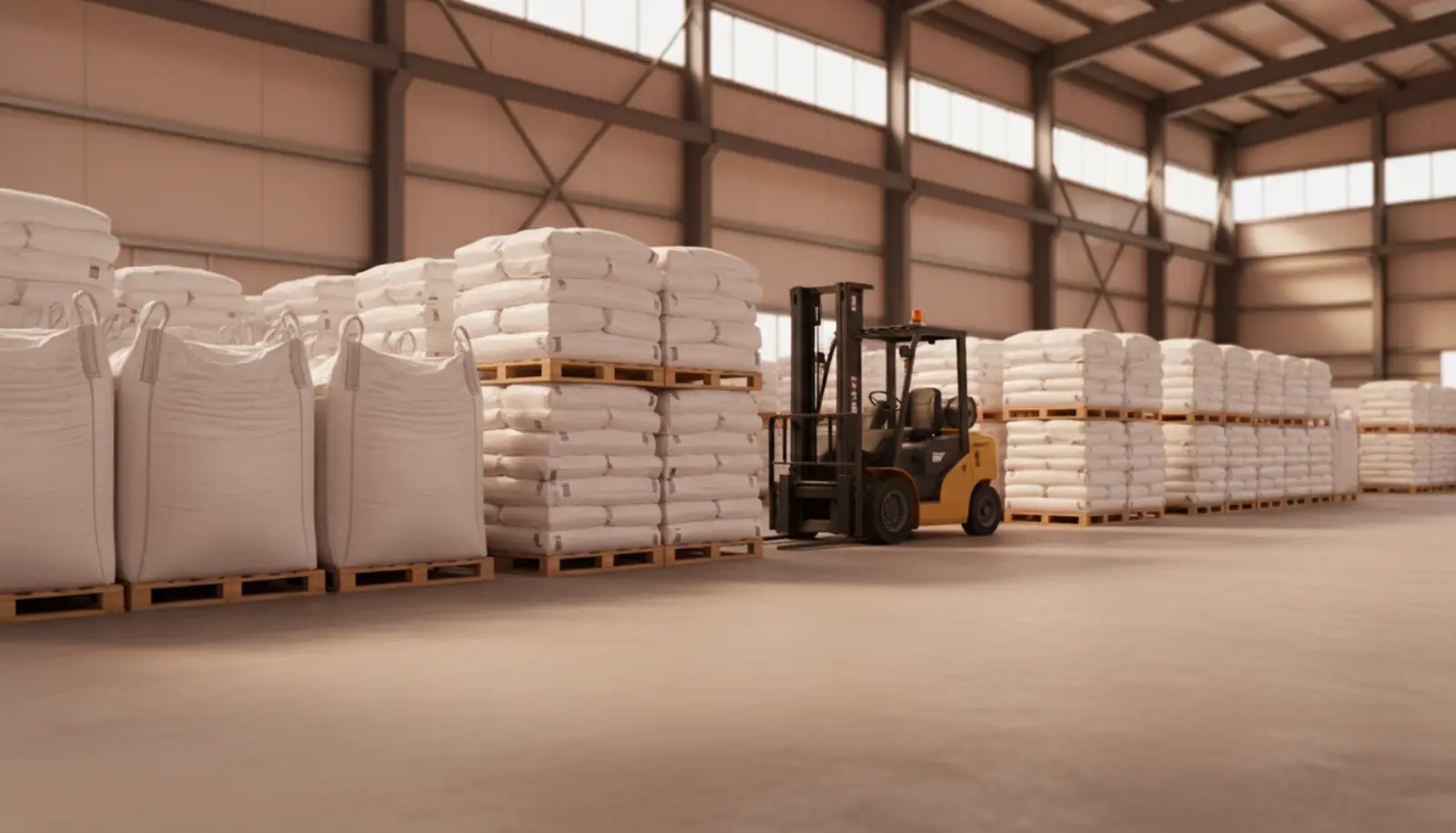
Impact and stiffness trade-offs
Almost every HDPE grade decision involves a trade-off between stiffness and toughness, and between easy processing and long-term performance. Rules of thumb in concept:
| If you push for | You generally gain | You generally risk |
|---|---|---|
| Higher density | Stiffness, strength, barrier | Impact toughness, ESCR |
| Higher melt flow | Easy filling, fast cycles | Toughness, stress-crack resistance |
| Lower melt flow | Toughness, melt strength, long-term strength | Harder processing, more power needed |
| Broader distribution | Processing at high molecular weight | Effects on impact or appearance that vary by grade |
| Bimodal design | A better combined balance | Higher cost; needs correct processing |
This table is directional and general. Individual grades differ, and the datasheet is the authority.
Colour, additives and carbon black
Natural HDPE (uncoloured pellets) is the base, and many grades are sold with additives or as coloured compounds.
- Stabilisers protect the polymer during processing and in service. Long-life products such as pipes and outdoor items rely on them.
- UV stabilisers protect against sunlight. Outdoor and drum applications often need them.
- Pigments and masterbatch. Colour can be added at the converter using masterbatch or supplied as a pre-coloured compound. Colour consistency from batch to batch depends on dispersion and dosing.
- Carbon black is used in pipe and some outdoor products, both for colour and as a UV protection. For pipe, black compounds are generally supplied with the carbon black already dispersed, because poor dispersion can lead to weak points. Do not add black masterbatch to a pipe resin unless the producer and the standard allow it.
- Other additives such as slip and anti-block are used in specific products. Tell the supplier if you need or must avoid them.
Resolve colour and additive questions before the order, while you can still change grade.
Quality checks on arrival
Arrival inspection gives you evidence if there is a dispute, and a chance to catch a problem before it reaches production. Our guide to polymer resin quality checks covers the general method; the points below are specific to HDPE.
- Documents. Compare the certificate of analysis, the bill of lading, the packing list and the label. Grade name, batch or lot number, quantity and producer should agree.
- Packaging. Check bags, bulk bags or containers for damage, moisture, dirt and mixed lots. Torn or wet packaging is a reason to take photographs and notify the carrier and supplier at once.
- Visual inspection. Look at pellet shape and colour, and for dust, fines, strings, black specks, foreign material or contamination from other polymers. A sample on a white tray under good light is a fast check.
- Melt flow and density. Test a representative sample, ideally at an accredited laboratory, and compare it with the certificate and the specification, using the same test method and conditions.
- Application check. A small trial run on your line often reveals more than a laboratory report. Record the processing conditions and the results.
- Retained samples. Keep sealed, labelled samples from every lot, with the batch number, for the period your contract or your quality system requires.
- Pipe and regulated uses. Ask for the certification and traceability documents the standard requires, and check them against the batch.
For orders where independent evidence matters, pre-shipment inspection can be arranged. Chemineral offers SGS or Intertek pre-shipment inspection. Agree the scope, sampling and test methods in advance, and put them in the contract.
Prime or off-grade
If a price looks unusually low, find out whether the material is prime, off-specification, mixed or reprocessed; see prime versus off-grade polymers. Off-grade is a poor choice for pipe, food-contact or any safety or long-life product.
What to specify when buying HDPE
An enquiry that names only "HDPE" will get answers you cannot compare. Include:
- Process. Injection, blow moulding (and what container), pipe, film, raffia or other.
- End product. What you make, what it holds and where it is used (outdoors, under pressure, contact with food or chemicals).
- Grade or equivalent. A named grade if you have one, or the target properties if you want alternatives offered.
- Key properties. Melt flow with the test conditions, density, and any ESCR, impact or stiffness requirement, each with its test method.
- Distribution type. Whether a bimodal grade is required.
- Standards and certifications. For pipe, packaging or regulated uses, name the standard and ask for certification.
- Colour and additives. Natural or coloured, UV stabilised, carbon black content as required, and any restrictions.
- Prime status. State that you require prime material, and what documents prove it.
- Quantity, packaging and shipment. Tonnage, bag or bulk bag size, containerised or bulk, delivery terms and port; see our guide to container shipping for polymers.
- Inspection and documents. Certificate of analysis, independent inspection if wanted, and the retained-sample arrangement.
- Claims window. How long after arrival you may raise a quality claim, and how samples will be tested.
If you ask for the closest available grades, state which requirements are mandatory and which are preferred.
Common buyer mistakes
- Choosing on melt flow and density alone. Two grades with the same figures can differ in distribution, comonomer and long-term performance.
- Using a general-purpose grade where certification is needed, such as pressure pipe, food-contact and dangerous-goods packaging.
- Neglecting ESCR for containers holding detergents or chemicals.
- Changing grade without a trial. Even a close equivalent can behave differently on your line.
- Not keeping retained samples, which weakens any claim.
- Buying on price alone without knowing whether the cargo is prime.
Frequently asked questions
Which HDPE grade is best for injection moulding?
There is no single best grade. Injection grades generally have higher melt flow so the resin fills the mould easily, balanced against the stiffness and impact the part needs. Choose from the producer's datasheet, then run a trial on your mould.
Why do blow moulding grades have lower melt flow?
The molten tube has to hold its shape and thickness while it hangs before the mould closes. A more viscous melt, from longer chains, resists sagging. Blow moulding grades also need good stress-crack resistance, which longer chains help.
What is bimodal HDPE?
It is a polymer built from two populations of chain length: a shorter fraction that helps processing and stiffness, and a longer fraction that supports toughness and crack resistance. It is widely used where both processability and long-term performance matter, such as pressure pipe. Do not assume equivalence with a unimodal grade.
Can I use any black HDPE for pipe?
No. Pipe resins are tested and certified to the relevant standards, and carbon black has to be properly dispersed and stabilised within the compound. Use a grade that the producer certifies for the pipe standard you are making to, and ask for the certificate.
What is environmental stress cracking?
It is cracking that occurs when a stressed plastic product is in contact with certain liquids, such as detergents or oils, at stresses lower than it would otherwise tolerate. Higher molecular weight and a little more comonomer generally help. Test your own container with its actual contents.
What should I check when a cargo of HDPE arrives?
Compare the documents with the labels, inspect the packaging and pellets, test melt flow and density against the certificate, run a small trial if possible, and keep sealed retained samples from each lot. Notify the supplier and carrier promptly if you find damage or a discrepancy.
Next step
If you are buying HDPE for injection, blow moulding, pipe, film or raffia and want to discuss grade, packaging, inspection and shipping from Sohar or Salalah, send an RFQ to the Chemineral trade desk. Firm offers are valid for 72 hours, and we quote Suez and Cape routing side by side so you can compare transit and cost.
Our trade desk can turn the views in this report into firm offers on today's indicative prices — valid 72 hours, with complete documentation.
Request a quote