
Choosing LDPE for Film Extrusion: Melt Flow, Additives and Specs
How to choose an LDPE grade for blown film: melt flow and density, film types, slip and antiblock additives, gels, bubble stability, blending with LLDPE, resin storage and what to put in a purchase spec.

Choose an LDPE film grade by working back from the film you need to make: its gauge, its strength and clarity requirements, the additives it carries and the line it will run on. Melt flow index and density are the two numbers that narrow the field, but they only point you to a family of grades; the datasheet, a processing trial and a clear purchase specification do the rest.
This guide covers blown film basics, what melt flow and density mean on the extruder, the main film types, additives, gels, bubble stability, gauge and strength trade-offs, blending with LLDPE, resin handling and what to specify when buying. It is general guidance. No figure here applies to every grade or every line. Each producer's datasheet, and your own trials, take precedence.
Blown film basics
In blown film extrusion, polyethylene pellets are melted in an extruder and pushed through an annular die to form a thin-walled tube of melt. Air introduced inside inflates the tube into a bubble, which is cooled, usually by air from a ring around the die, then flattened by nip rollers and wound up. The film can be slit into flat sheet, left as a tube, or gusseted for bags.
Three adjustments define the film:
- Blow-up ratio (BUR). The ratio of the final bubble diameter to the die diameter. It controls how much the film is stretched across the machine direction.
- Draw-down ratio. How much the melt is stretched along the machine direction as it is pulled away from the die.
- Cooling. The height at which the melt solidifies, called the frost line, affects clarity, crystallinity and stability.
Stretching in the two directions orients the polymer chains, and the balance between them is why blown film has different strength and tear properties in each direction. LDPE is popular for blown film because it is easy to process, forms a stable bubble, and gives good clarity and sealing performance for general packaging. Its trade-off is that its toughness at very thin gauges is generally lower than that of linear polyethylene, which is why blends are common (see below). For the polymer families, our guide to HDPE, LDPE and LLDPE differences is the starting point.
What melt flow index tells you
Melt flow index (MFI or MFR) describes how readily the molten polymer flows under a standard load and temperature. For polyethylene it is commonly reported in grams per 10 minutes, measured under standard conditions such as those in ISO 1133 or ASTM D1238. The test conditions must be stated, because a number without them is not comparable.
What it means for film:
- Lower melt flow (higher molecular weight, more viscous melt). Generally better melt strength, so the bubble holds up, and often better mechanical strength. It also means higher melt pressure and motor load on the extruder.
- Higher melt flow (lower viscosity). Easier to extrude, lower pressure and temperature, often better optical properties, but a weaker bubble and usually lower film strength.
As a general trend, film grades sit in the lower part of the melt flow range for polyethylene, with the specific grade depending on the film type and the line. Do not choose from a typical range that a colleague or a website gives you. Ask the producer which MFI the grade is designed around, and check that the number is stated with its test conditions and tolerance.
One caution: MFI is a single-point measurement. Two resins with the same MFI can behave differently on the line because of differences in molecular weight distribution and long-chain branching.
What density tells you
Density reflects how tightly the polymer chains pack, which in polyethylene is linked to branching. LDPE's long and short branches keep it at the lower-density end of the polyethylene family, and the density of a given film grade sits in a narrow band set by the producer. Check the value and the test method on the datasheet; do not rely on a family generalisation.
In general terms, within polyethylene a higher density tends to give higher stiffness and a higher melting temperature, but lower clarity and flexibility. For film that means a trade-off between stiffness for handling and running on packaging machinery, and softness and transparency. Density also affects the weight of film per unit area for a given thickness, so it should appear in any yield calculation.
General-purpose, shrink, heavy-duty and agricultural film
Different end uses push toward different grade families. Treat the descriptions below as a starting point for a conversation with the producer, not as recipes.
| Film type | Typical priorities | General direction |
|---|---|---|
| General-purpose packaging (bags, liners, wrap) | Clarity, sealing, a balance of strength and cost, easy processing | Film grades of LDPE, often with slip and antiblock, sometimes blended with LLDPE |
| Shrink film | Controlled shrink force and shrink range, clarity, stable orientation | LDPE-rich formulations are common, because of how they orient and shrink; blends adjust toughness |
| Heavy-duty film (sacks, industrial liners) | Puncture, impact and tear resistance, stiffness at larger gauges | Heavier gauges, often with LLDPE or higher-strength resins in the blend |
| Agricultural film (mulch, greenhouse, silage) | Weather durability, UV stability, strength over a season, sometimes light diffusion or anti-fog | Formulations with UV stabilisers and other additives; mixtures of LDPE with LLDPE or copolymers depending on the application |
Some further points on each:
- General-purpose film. The goal is dependable processing and consistent quality. A film grade with good sealing and the right additive package is usually enough, and cost per square metre matters most.
- Shrink film. The orientation locked into the film during blowing is released when heat is applied, so the processing conditions, BUR and draw-down determine the shrink behaviour as much as the resin does. Test on the real packaging line before committing.
- Heavy-duty film. Large gauges stress the extruder and cooling system, so cooling capacity can become the limit, not the resin.
- Agricultural film. The film has to survive sun, heat, moisture and sometimes chemicals from agrochemicals. UV stabiliser content and dispersion drive the service life, and the producer or masterbatch supplier should say what the formulation is designed for. Do not assume a general-purpose film will last a season outdoors. For service life claims, ask for the evidence behind them.
Additives: slip, antiblock and processing aids
Film resins are often supplied with some additives already compounded in, or you add them as masterbatch at the extruder. Whether they are in the resin should be explicit in the specification.
- Slip agents. Migrate to the film surface and reduce friction, so layers slide over each other and over machinery. Typically fatty acid amides. They take time to bloom, so friction measured straight off the line may differ from friction a few days later, and too much slip can cause problems with sealing, printing and lamination.
- Antiblock agents. Fine mineral particles such as silica or talc that create microscopic roughness, stopping layers of film sticking together. Too much can reduce clarity and increase haze, and abrasive types can wear equipment.
- Processing aids. Additives that improve melt flow behaviour at the die, reducing die build-up and melt fracture. They are used more with linear polyethylene than with LDPE, but may appear in blends.
- Antioxidants and stabilisers. Protect the polymer during processing and storage. Their levels affect colour stability and the shelf life of the resin.
- UV stabilisers. Slow the degradation of film exposed to sunlight, essential in agricultural uses.
- Anti-fog and other speciality additives. Used in greenhouse and food packaging applications.
Decide who supplies which additive and at what level, and say so in the order. Where a resin is sold as "plain" or "unadditivated", you must add what the film needs. Where it is sold with slip and antiblock, check that the grade's levels suit your film, because stacking additional masterbatch on top can overshoot. Ask the producer for the additive type and the loading range, not only the grade name.
Gel content and clarity
Gels are small defects in the film, sometimes called fish eyes. They are lumps of polymer that did not melt or mix properly, or have cross-linked, or are contamination. They show up as bumps or clear specks, and they are a particular problem in thin film, clear film and film that will be printed, because they can cause holes, weak spots, print defects and visual rejection.
Sources include:
- Resin with a high level of cross-linked or very high molecular weight fractions.
- Contamination by another polymer, dust, or degraded material in the hopper or on the screw.
- Poor mixing of masterbatch, or incompatible carrier resin.
- Excessive residence time or temperature in the extruder or die, causing degradation.
- Poor handling and storage of resin, such as dust pick-up or mixing grades.
How to manage them:
- Ask the producer how it controls and measures gels, and what level is acceptable for your film type. If gel rating is critical, make it a specification item, with a defined method, and agree the test.
- Run a trial and examine the film against light, or by an agreed visual or instrument method.
- Use melt filtration suited to the line, and keep grades separate in storage.
Clarity depends on both resin and process. Haze arises from surface roughness and from crystallinity and structure inside the film. Lower melt temperatures, effective cooling, the right antiblock level and clean dies generally help, but there is no universal setting. Measure clarity by the same method, for instance haze and gloss tests such as ASTM D1003 for haze, with a stated film thickness, because haze rises with thickness.
Bubble stability
A stable bubble is the difference between a line running at a steady rate and one that wanders, wrinkles or collapses. Stability depends on melt strength, cooling, air flow around the bubble and line configuration.
LDPE's long-chain branching gives it good melt strength, which is one reason it is valued as a film resin. Factors that affect stability:
- Melt flow and melt strength. A lower MFI generally helps, but a higher melt viscosity raises the load on the extruder.
- Melt temperature. Too hot and the melt is weak; too cool and it can cause surface defects and higher pressure.
- Cooling air. Uneven or insufficient cooling produces gauge variation and instability, as does draughts around the bubble.
- Output rate. Pushing a line faster than the cooling can handle is a common cause of instability.
If a grade is unstable on your line, it does not necessarily mean the resin is faulty. Check the process first, and then talk to the producer with the details: MFI, die size, BUR, melt temperature, output and gauge.
Gauge and strength trade-offs
Film gauge is a balance of cost, performance and processability. The main tensions:
- Thinner film saves resin and reduces cost per square metre, but lowers puncture, tear and impact resistance and is harder to run.
- Higher strength grades or blends let you down-gauge safely, but may cost more per tonne and run differently.
- Stiffness against toughness. Stiffer film runs better on packaging machinery but can be less tough.
- Clarity against slip and antiblock. More additive improves handling but can reduce clarity.
Judge strength by tests that relate to the end use, such as dart impact (ASTM D1709), tear resistance (ASTM D1922), tensile properties and puncture resistance, at a stated gauge. Compare films at the same thickness and conditions. A resin that appears stronger on a datasheet may not give a thinner film in practice if your line cannot run it. The only reliable comparison is a trial on your own equipment.
Blending LDPE with LLDPE
Many film producers blend LDPE and LLDPE, to combine LDPE's processability, melt strength and clarity with LLDPE's toughness and puncture resistance. In general terms:
- Adding LLDPE to LDPE tends to improve toughness and allows thinner gauges.
- Adding LDPE to LLDPE tends to improve bubble stability, ease of processing and sometimes optical properties.
- The blend ratio is a decision made by trial. Do not copy ratios from another producer, because they depend on the specific grades, the line and the film requirements.
Points to watch:
- Mixing quality. Blends must be well mixed. Dry blends can segregate in storage and handling, giving gauge and property variations. Use proper blending equipment and avoid transfer methods that separate pellets of different size or density.
- Equipment. LLDPE usually calls for more motor power and a die gap and screw design suited to its higher melt pressure. Check the line before raising the LLDPE content.
- Additives. Check the combined additive levels from both resins.
For a deeper look at the linear grades, see our guide to HDPE, LDPE and LLDPE differences.
Handling and storage of resin
Resin problems often show up as film problems. Basic practice:
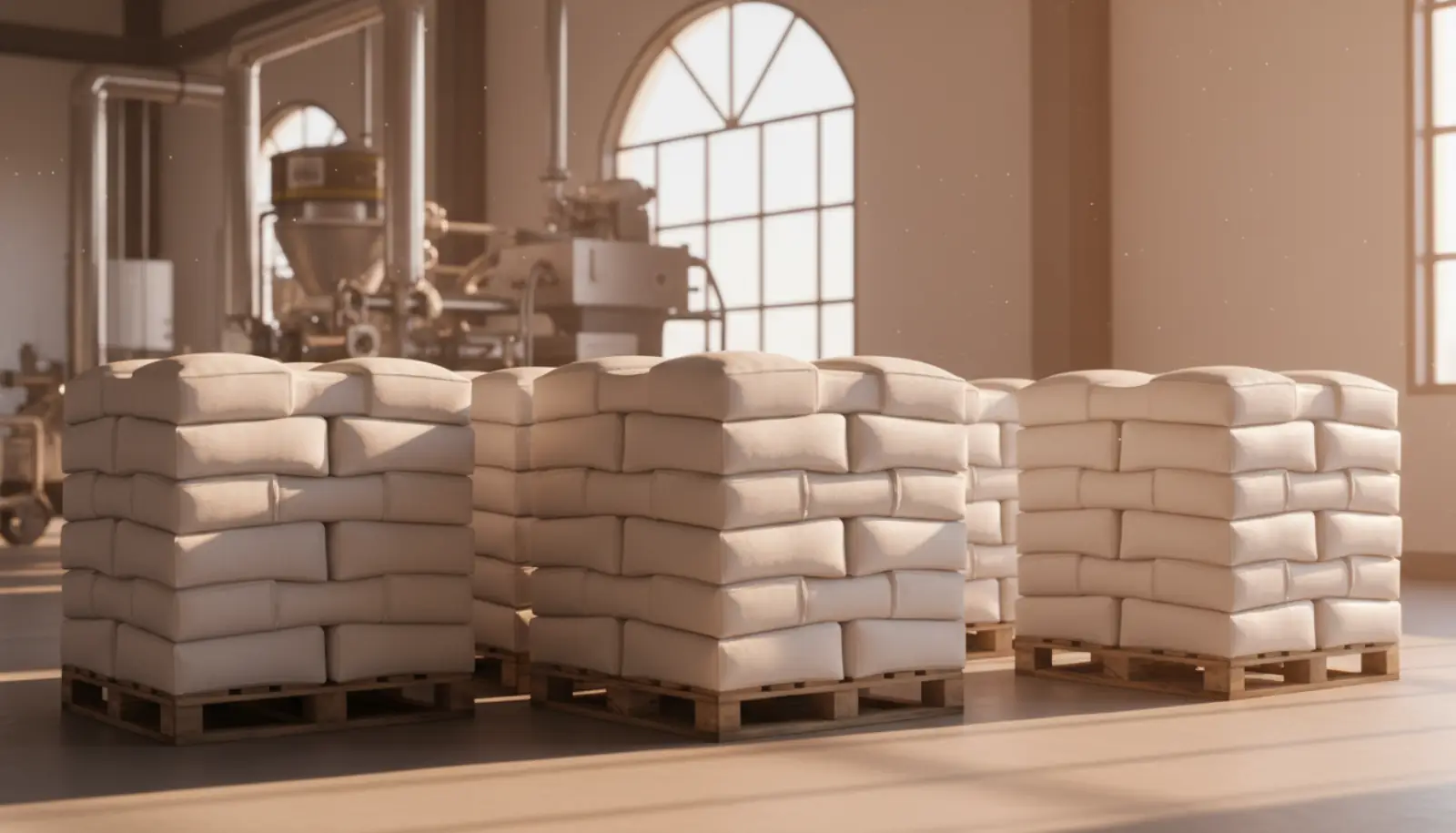
- Keep it dry, clean and covered. Store sealed bags or boxes on pallets, indoors, away from direct sunlight, heat sources and moisture. Polyethylene absorbs little moisture, but surface water and condensation can still cause film defects.
- Protect it from contamination. Dust, other polymers and foreign matter lead to gels and specks. Keep pellets of different grades separate, and keep clear labelling.
- Control the temperature. Do not stack bags where they are exposed to heat, as pellets can fuse into lumps in warm conditions, especially with some additives.
- First in, first out. Use older lots first, and record lot numbers against production runs.
- Reseal part-used bags, and clean the loading system between grades.
- Check after transit. Inspect packaging for damage on arrival, and sample before use. Our polymer resin quality checks guide explains what to test.
For shipping, see our container shipping guide for polymers, which covers loading, condensation risk and documentation, and our guide to prime versus off-grade polymers if you are comparing grades of differing status.
What to specify when buying
A purchase specification for film resin should leave no room for guessing. Include:
- Grade and producer, or a defined equivalence rule. If you accept equivalents, state the properties that must match and who approves.
- Prime or off-grade status. Say which you are buying and what documents prove it.
- Melt flow index, with test conditions and tolerance. For example "per ISO 1133 or ASTM D1238 at stated conditions", with the range.
- Density, with test method and tolerance.
- Additive package. Slip, antiblock and other additives, type and level range, or "none".
- Gel level or clarity requirement, with test method, where film quality depends on it.
- Mechanical properties on film, if relevant, stated at a given gauge and conditions.
- Packaging. Bag size and net weight, pallets, liners, container loading and labelling with grade and lot number.
- Documents. Certificate of analysis for each lot, datasheet and, if needed, food-contact or regulatory declarations. Check whether your market needs any and ask the producer before shipment.
- Inspection and sampling. Independent inspection if required, such as SGS or Intertek pre-shipment inspection, which Chemineral can arrange, with sealed retained samples.
- Claims basis. The specification, the test methods and the time limit for notice; see our quality claims guide.
- Trial quantity. If you are switching grades or suppliers, agree a trial lot with defined acceptance criteria before the main order.
Do not accept "typical properties" as a contract specification. A typical value is the producer's description of normal production, not a limit you can claim against.
Frequently asked questions
What melt flow index should I choose for blown film?
There is no single answer. Film grades generally sit toward the lower end of the polyethylene melt flow range, but the right value depends on the film type, gauge and line. Ask the producer which MFI the grade is designed around and test it on your line.
Is LDPE better than LLDPE for film?
Neither is better in general. LDPE offers easy processing, bubble stability and clarity; LLDPE offers toughness and puncture resistance. Many films use a blend, with the ratio chosen by trial.
Do I need slip and antiblock?
Often yes, because they help film run on packaging machinery and stop layers sticking. Too much can hurt clarity, sealing or printing. Decide the levels with the producer, and check whether the resin is supplied with them already.
What causes gels in film?
Common sources are unmelted or cross-linked polymer, contamination, degraded material, poor masterbatch mixing and rough handling of resin. Ask the producer how it controls gels, run a trial and keep grades separate.
How do I store LDPE resin?
Keep it dry, clean, covered and away from heat and sunlight, with grades separate and lots recorded. Use older stock first and check for damage and contamination before loading the hopper.
Can I buy off-grade LDPE for film?
It depends on what the film must do. Off-grade resin may lack consistency or a certificate of analysis, which matters for thin, clear or critical film. Read our prime versus off-grade guide and trial any lot before committing to volume.
Next step
If you are looking for LDPE for film extrusion from Sohar or Salalah and want to confirm the grade, packing and inspection arrangements, send your RFQ to the Chemineral trade desk with your film type, gauge, line and target volume.
Our trade desk can turn the views in this report into firm offers on today's indicative prices — valid 72 hours, with complete documentation.
Request a quote