How to Read a Safety Data Sheet: The 16 Sections Explained for Importers and Plant Managers
A practical walk through the sixteen sections of a safety data sheet, what each one tells a buyer, which sections drive storage, transport and emergency planning, how the label relates to it, and how to check a sheet is valid.
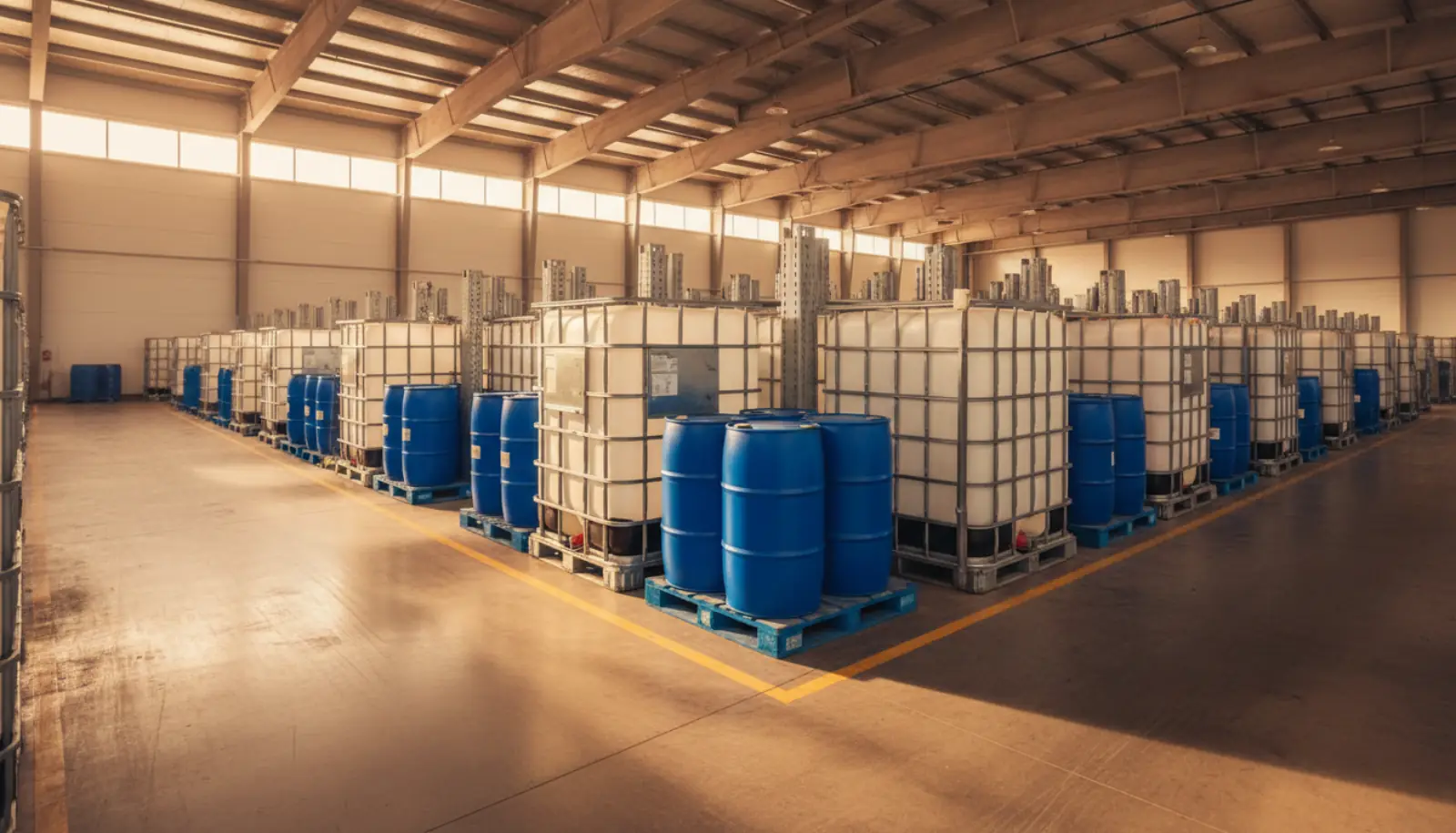
Every chemical shipment comes with a safety data sheet, and most of them go straight into a folder. That is a missed opportunity, because the sheet answers the questions a buyer should ask before the cargo arrives. What can this product do to people? What must it be kept away from? What protective equipment do the warehouse staff need? How is it classified for shipping? What do we do if a drum splits?
This guide walks through the sixteen sections of a safety data sheet in order, explains what each tells an importer or plant manager, and shows how to check that a sheet is current and applies to what you are buying. It is general guidance, not safety or legal advice. The sheet for your specific product, and the regulations in your country, always take priority, and a qualified safety professional should review your storage and handling arrangements. For how the transport classification works, see our guide to dangerous goods in shipping chemicals.
What a safety data sheet is
Answer first: a safety data sheet, or SDS, is the supplier's structured statement of a product's hazards and how to handle, store, transport and dispose of it safely. It follows an internationally agreed sixteen-section format.
The format comes from the Globally Harmonized System of Classification and Labelling of Chemicals, usually shortened to GHS, which is a United Nations framework that countries adopt into their own laws. Adoption is not identical everywhere. Countries have taken up different versions and different parts of it, and they set their own rules on language, format details and who must provide the sheet. So a sheet that is valid in the country of origin may need to be adapted for the country of import.
What it is not
- It is not a specification. The technical data sheet and the sales specification describe quality and performance. See our guides to the urea specification and base oil specification.
- It is not a certificate of analysis. The certificate reports the test results for one batch.
- It is not a transport document. The dangerous goods declaration is separate, though it draws on section 14.
- It is not a guarantee that a product is safe. It describes hazards so that you can control them.
A buyer needs all of these documents, for different purposes.
The sixteen sections
Section 1: Identification
Names the product, its recommended uses and any uses advised against, and gives the supplier's details and an emergency telephone number.
What to check: that the product name and grade match what you are buying, that the supplier named is the producer or a legitimate source, and that the emergency number works from your country and time zone. A sheet with a different trade name or a different producer's details needs an explanation.
Section 2: Hazard identification
States the hazard classification, and shows the label elements: pictograms, a signal word, hazard statements and precautionary statements.
What to check: this is the summary section. It tells you in a few lines whether the product is, for example, corrosive, flammable, toxic or hazardous to the environment, or not classified as hazardous at all. If you read only one section before placing an order, read this one, then section 7.
Section 3: Composition and information on ingredients
Lists the substance or the components of a mixture, with identifiers such as CAS numbers and concentration ranges for hazardous ingredients. Some details may be withheld as confidential where the law allows.
What to check: that the composition matches the grade, concentration and form you ordered. A sheet for a solution at one strength does not cover a different strength or the solid. Impurities and additives that carry their own hazards should appear here.
Section 4: First-aid measures
Describes what to do after inhalation, skin contact, eye contact or swallowing, the most important symptoms, and when medical attention is needed.
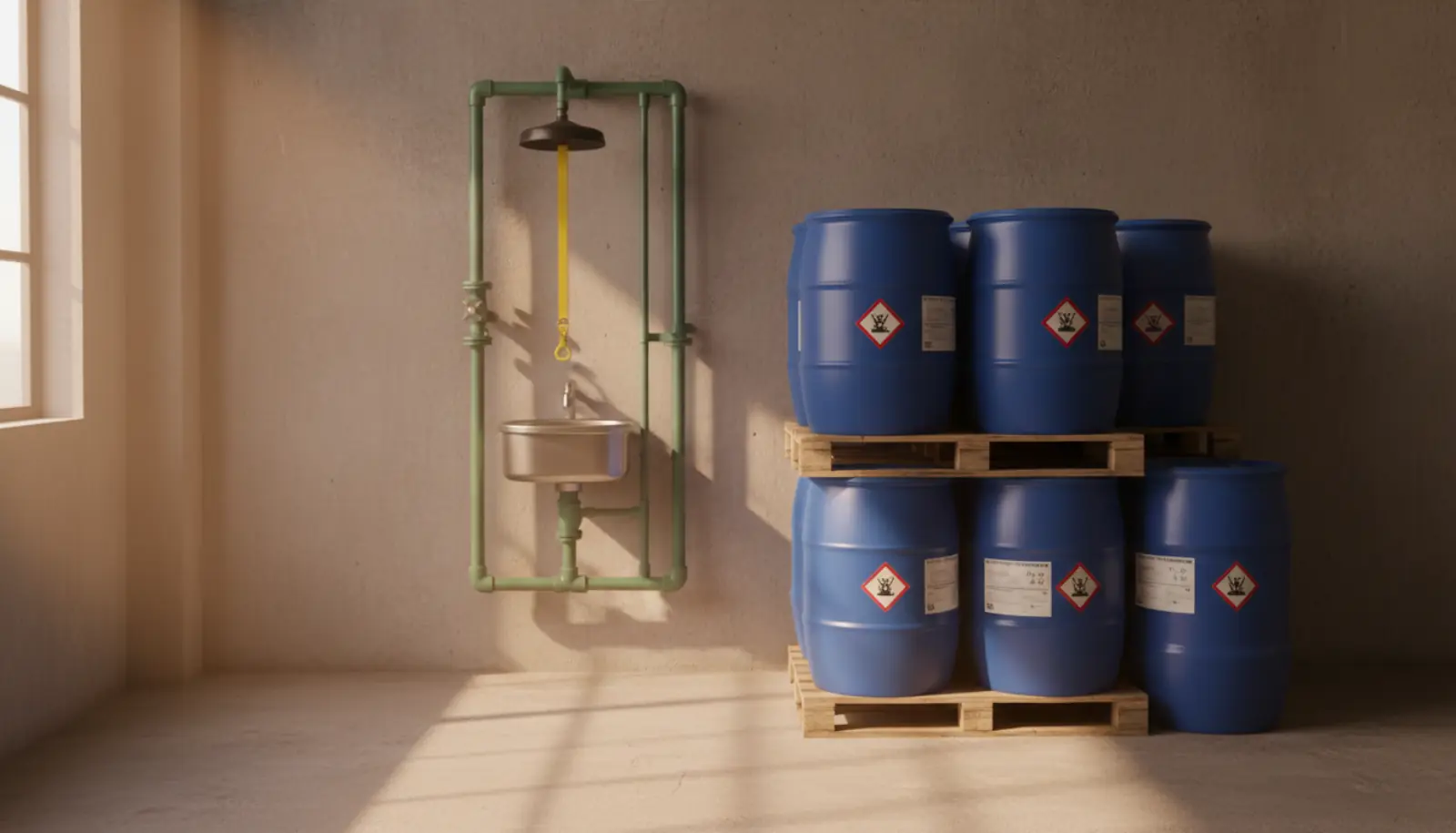
What to check: that your first-aid arrangements match. If the sheet calls for prolonged eye rinsing, there must be an eye-wash station close to where the product is handled. Share this section with your first aiders and site medical provider.
Section 5: Fire-fighting measures
Lists suitable and unsuitable extinguishing media, hazards arising from combustion, and advice for firefighters.
What to check: that your extinguishers and fire plan fit. Some products must not be fought with a water jet, and some give off hazardous gases when burning. Our guide to sulphur dust and fire safety shows how much this section can matter for one product.
Section 6: Accidental release measures
Covers personal precautions, protective equipment, environmental precautions and methods for containing and cleaning up a spill.
What to check: that you have the spill materials and containment the sheet describes, that drains are protected and that staff know the procedure. Solid and liquid spills need different responses.
Section 7: Handling and storage
Gives precautions for safe handling and conditions for safe storage, including incompatible materials.
What to check: this is the section that should shape your warehouse. Look for temperature limits, ventilation needs, moisture sensitivity, stacking advice, incompatible substances and materials unsuitable for containers. Our product storage guides, such as caustic soda storage and handling, bitumen heating and storage and base oil storage, turn this kind of information into practice.
Section 8: Exposure controls and personal protection
Lists occupational exposure limits where they exist, engineering controls such as ventilation, and the personal protective equipment required for eyes, skin, hands and breathing.
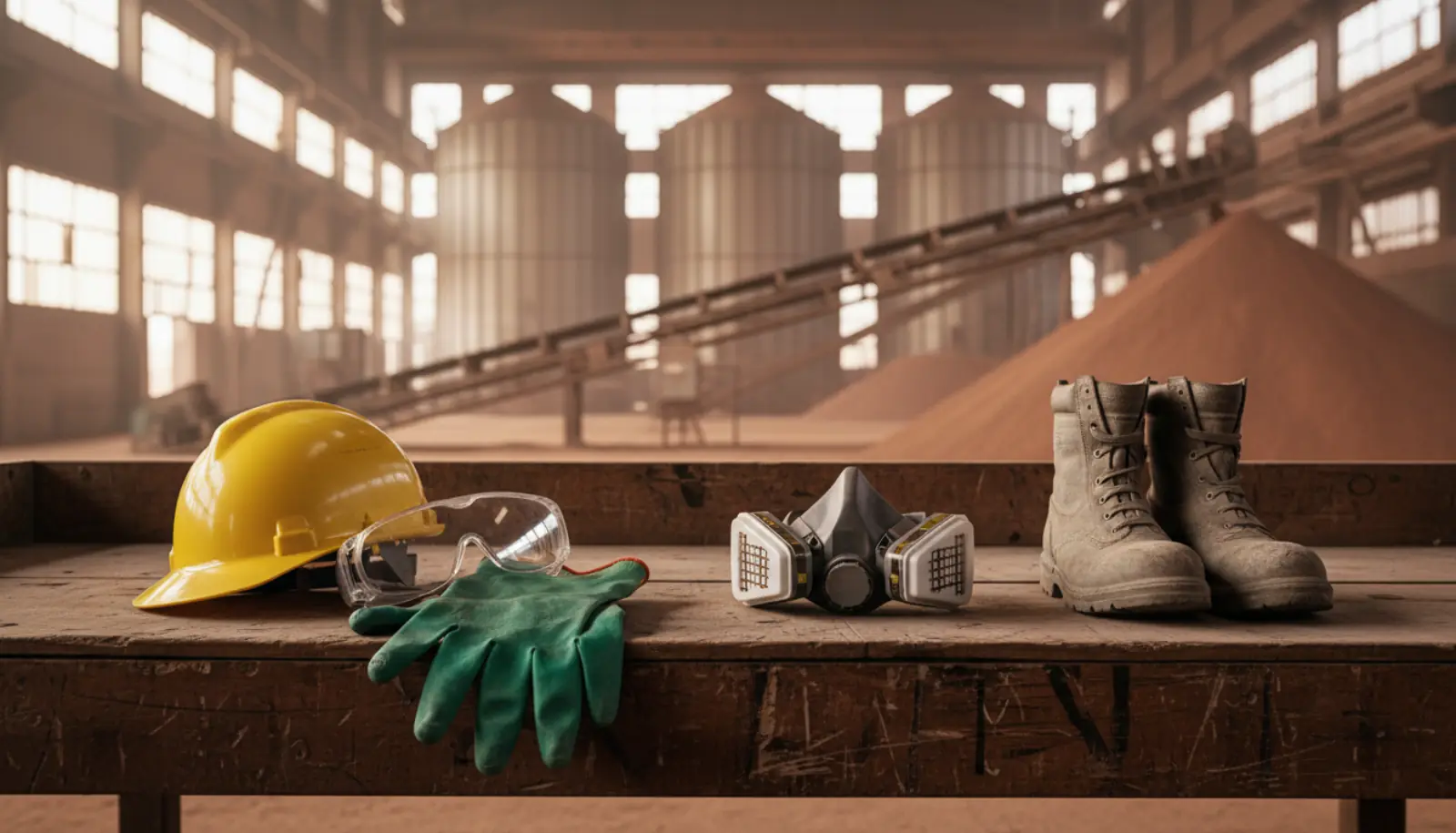
What to check: the specific type of equipment. "Gloves" is not enough. A good sheet names the glove material and the type of respiratory filter. Exposure limits are set nationally, so the values on a foreign sheet may differ from yours. Use this section to write your site's equipment requirements.
Section 9: Physical and chemical properties
Gives appearance, odour, pH, melting and boiling points, flash point, flammability, vapour pressure, density, solubility and similar data.
What to check: the data relevant to your handling. Flash point matters for heated products. Density is needed for tank and weight calculations. Melting or pour point tells you whether the product will solidify in a cold store. Dust properties matter for powders. These values are safety data and may differ from the sales specification.
Section 10: Stability and reactivity
Describes chemical stability, conditions to avoid, incompatible materials and hazardous decomposition products.
What to check: read this alongside section 7 when planning where to put the product. It tells you what must be separated, such as acids from alkalis, and what conditions cause trouble, such as heat, moisture or contact with certain metals.
Section 11: Toxicological information
Summarises the health effects and the data behind the classification: acute toxicity, irritation, sensitisation and longer-term effects.
What to check: this section is mainly for safety and occupational health professionals. For a buyer, it explains why the product is classified as it is, and whether there are long-term health concerns that call for health surveillance.
Section 12: Ecological information
Covers effects on the environment: toxicity to aquatic life, persistence, and how the product behaves in soil and water.
What to check: whether spills to drains, soil or water are a particular concern, which affects containment and your environmental permits.
Section 13: Disposal considerations
Gives guidance on disposing of the product and contaminated packaging.
What to check: disposal is governed by local waste law, so this section points you in the right direction but does not replace your regulator's rules. Empty bags and drums often count as contaminated packaging.
Section 14: Transport information
States whether the product is regulated for transport and, if so, the UN number, proper shipping name, hazard class, packing group and environmental hazards, usually for road, rail, sea and air separately.
What to check: the entry for sea transport, since most commodity cargoes move by sea, and any conditions attached. A product can be classified for supply and use but not regulated for transport, or the other way round. Confirm in writing with the seller that the classification applies to your shipment, and pass it to your forwarder early. See dangerous goods in shipping chemicals.
Section 15: Regulatory information
Lists safety, health and environmental regulations specific to the product that are not covered elsewhere.
What to check: this section is usually written for the supplier's own market. It may not mention the rules in yours. Treat it as a prompt to check your own country's chemical inventory, registration, licensing and reporting rules. See import permits and registration for chemicals.
Section 16: Other information
Contains the date of preparation or last revision, a revision history, abbreviations and sometimes training advice.
What to check: the revision date. An old sheet may predate changes in classification or regulation. Ask for the latest version, and ask how you will be told when it is revised.
The label and the sheet
Answer first: the label on the package is the short version of section 2. The two must agree.
Under the harmonised system, a hazardous product's label carries:
- Pictograms. Diamond-shaped symbols with a red border, showing the type of hazard, such as corrosion, flame, health hazard or environmental hazard.
- A signal word. "Danger" for more severe hazards or "Warning" for less severe ones.
- Hazard statements. Standard phrases describing the hazard, each with a code beginning with H.
- Precautionary statements. Standard phrases on prevention, response, storage and disposal, each with a code beginning with P.
- Product identifier and supplier details.
Transport labels and marks on the outside of packages follow the transport rules and are a separate system, though they describe the same product. When cargo arrives, check that the labels on the bags or drums match the sheet you were sent. A mismatch suggests that the sheet, the label or the product is not what was agreed.
Importers often carry the legal duty to make sure the label and sheet meet local requirements, including language. A sheet in a language your staff cannot read does not protect them, so arrange a compliant local version where the law requires it.
Which sections to read for which decision
| Decision | Sections to read first |
|---|---|
| Can we handle this product at all? | 2, 7, 8, 10 |
| Where and how do we store it? | 7, 9, 10 |
| What protective equipment is needed? | 8, with 4 for first aid |
| How is it shipped and documented? | 14, with 2 and 9 |
| What do we do in a fire or spill? | 5, 6, with 4 |
| What can it not be stored next to? | 7, 10 |
| How do we dispose of waste and packaging? | 13, with 12 |
| Is the sheet current and for our grade? | 1, 3, 16 |
| What local rules might apply? | 15, plus your own regulator |
Checking that a sheet is valid
Answer first: a sheet is useful only if it is current, comes from a legitimate source and describes the exact product and form you are buying.
Run these checks before you accept one:
- Source. Issued by the producer or an authorised supplier, with real contact details.
- Product match. Name, grade, form and concentration match your order and the certificate of analysis.
- Date. A recent revision date, and a version number.
- Completeness. All sixteen sections present, with no blank sections where data should exist.
- Consistency. Classification in section 2 agrees with the data in sections 9 to 12 and the transport entry in section 14. A sheet that says "not hazardous" in one place and lists a hazard class in another needs questioning.
- Label agreement. Pictograms and statements match the packaging.
- Language and format required in your country.
- Emergency contact that works.
Warning signs include a sheet copied from another company with the name changed, a sheet for a different concentration, generic text that does not mention your product's form, and missing transport information. Our guide to verifying a petrochemical supplier covers document checks more widely, and qualifying a new supplier shows where the sheet fits in an approval process.
Using the sheet before the cargo arrives
A sheet read after the cargo arrives is too late to change the store. Use it earlier:
- At enquiry. Ask for the sheet with the offer, and check sections 2 and 14 to see whether permits, special packing or dangerous goods handling will apply.
- Before ordering. Confirm that you can store and handle the product as sections 7, 8 and 10 require.
- Before shipment. Give section 14 to your forwarder and insurer, and confirm port and carrier acceptance.
- Before arrival. Brief warehouse staff, check protective equipment, spill kits, eye-wash and fire equipment, and plan segregation.
- On arrival. Compare labels with the sheet and file the sheet where staff can reach it.
- Afterwards. Review when the sheet is revised, when the grade changes and when your process changes.
Even products not classified as hazardous deserve this. Dust, slips, manual handling and reactions with other stored materials can still cause harm, and section 7 often contains useful storage advice for products such as urea, polymers and calcium carbonate. See our guide to shelf life and storage.
Common mistakes
- Filing the sheet without reading it.
- Using a sheet for a different grade, form or concentration.
- Relying on an old revision.
- Reading only the transport section and ignoring storage and handling.
- Assuming "not classified" means no precautions.
- Accepting a foreign-language or foreign-format sheet where local rules require otherwise.
- Confusing the sheet with the specification or the certificate of analysis.
- Not checking labels against the sheet on arrival.
- Keeping the sheet in the office where the people handling the product cannot see it.
- Treating the supplier's regulatory section as covering your country.
Frequently asked questions
What is the difference between an SDS and an MSDS?
They are the same kind of document. MSDS, material safety data sheet, is the older name. SDS is the term used under the harmonised system, with a standard sixteen-section format.
How many sections does a safety data sheet have?
Sixteen, in a fixed order, from identification and hazards through handling, properties and toxicology to transport, regulatory and other information.
Which section shows the shipping classification?
Section 14, transport information. It gives the UN number, proper shipping name, class and packing group for each mode of transport, or states that the product is not regulated.
How often is a safety data sheet updated?
Suppliers must revise it when significant new information becomes available, and some jurisdictions set review periods. Check the revision date in section 16 and ask for the latest version with each order.
Do non-hazardous products need a safety data sheet?
Requirements vary by country and product. Many suppliers provide one anyway, and it is worth having, because it contains storage and handling advice even where the product is not classified as hazardous.
Next step
If you are evaluating a product and want the current safety data sheet, technical data sheet and specification together, send the trade desk your product, grade, quantity and destination through the contact page. We quote Suez and Cape routing side by side for shipments from Sohar and Salalah, and firm offers are valid for 72 hours.
Our trade desk can turn the views in this report into firm offers on today's indicative prices — valid 72 hours, with complete documentation.
Request a quote