How Long Can You Store It? Shelf Life and Storage Time for Common Industrial Commodities
What shelf life and retest dates mean for bulk chemicals, fertilisers and polymers, what changes in each product over time, how storage conditions shorten or extend it, and what to ask a supplier before you stock up.
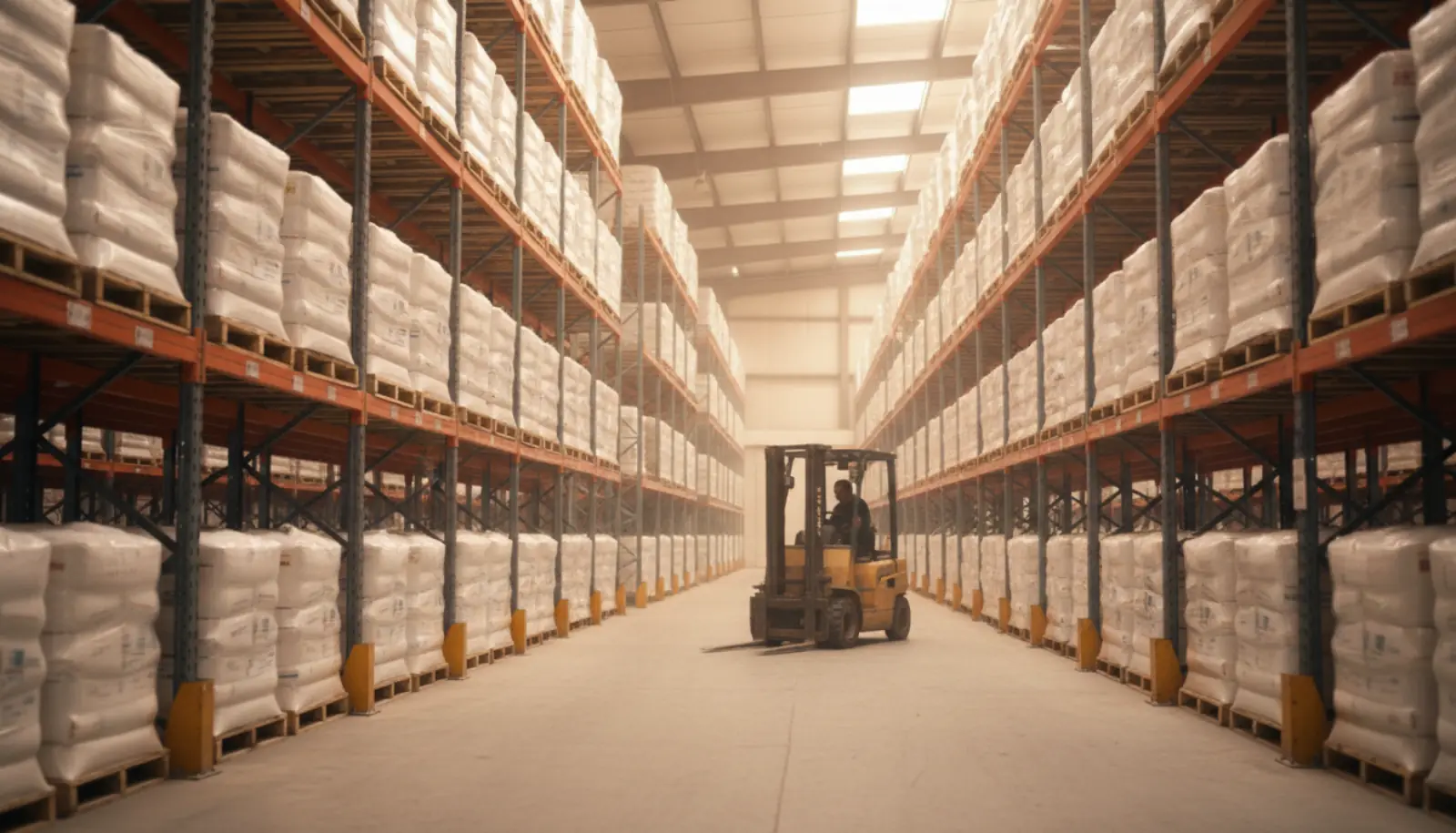
Buyers often ask a simple question: how long can I keep this product before it goes off? The honest answer is "it depends on the product, the packing and where you keep it", and each of those is a variable the buyer controls more than the producer does. A tonne of urea in a dry, cool, well-run store may be in perfect condition after months. The same tonne in a damp shed may be a block of lumps in a few weeks. A polymer resin may be fine for a long time in sealed bags and spoil faster in sunlight and heat.
This guide explains what shelf life and retest dates mean, what physically changes in each of the main commodities over time, which storage habits protect the product and what to ask a supplier before you decide how much to hold. It gives no fixed durations, because they depend on grade, packing and conditions, and only the producer's data and your own testing can give you a safe figure. For storage details on individual products, see the guides linked in each section.
What "shelf life" actually means
Answer first: shelf life is the period during which a product is expected to stay within specification when stored as directed. It is a statement about stored condition, not a promise that the product will be good for a number of months regardless of where it sits.
Shelf life, retest date and best-before
Different industries use different words, and they mean different things:
- Shelf life. How long the producer expects the product to meet its specification under recommended storage.
- Retest date. The date after which you should test the product again before using it. Many industrial chemicals use this idea, because a product past its retest date is not necessarily bad, but it is unverified.
- Best before or use by. More common for consumer products and foods, and less common in bulk industrial trade.
When a supplier quotes a figure, ask which of these it is, under what conditions and for which packing.
Who decides
The producer's technical data sheet usually states storage conditions and a typical period. Your contract may define the period for which the supplier guarantees the product. Beyond that, the buyer is responsible for storing it properly and testing it when in doubt.
What changes in a product over time
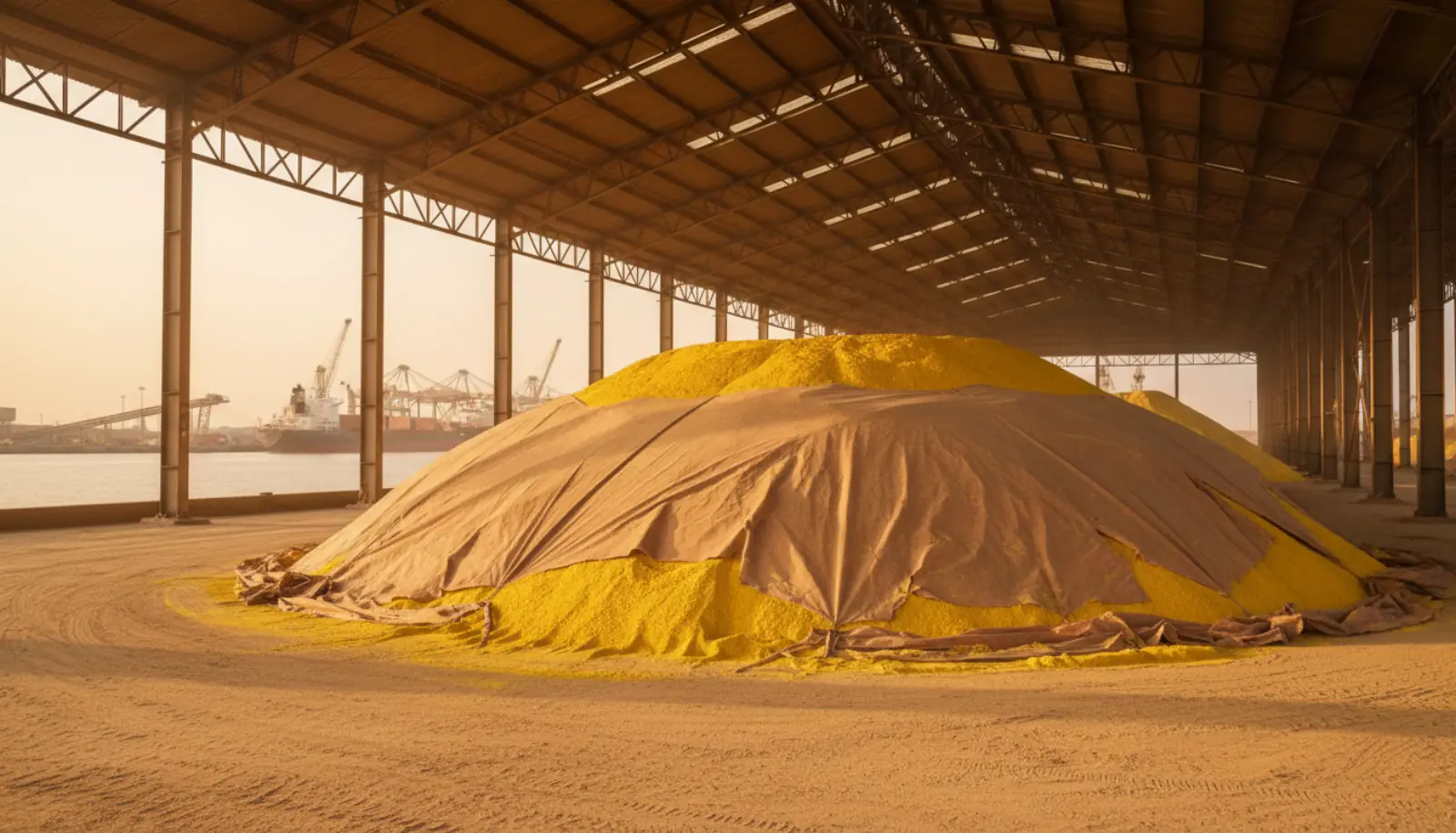
Answer first: the main ageing processes are moisture pick-up, oxidation, contamination, physical change such as caking or settling, and loss of volatile components. Which one matters depends on the product.
- Moisture pick-up. Hygroscopic solids absorb water from humid air. This causes caking, changes assay and can affect handling and processing.
- Oxidation and degradation. Heat, light and air can slowly change organic materials such as polymers, oils and bitumen.
- Reaction with the atmosphere. Some products, such as caustic soda, react with carbon dioxide in the air.
- Contamination. Dust, water, residues from earlier cargoes or foreign particles can enter during storage or handling.
- Physical change. Settling, segregation, caking or crushing alter how the product flows and mixes.
- Evaporation. Volatile components can escape from poorly sealed containers.
Understanding which process applies tells you what to protect against.
Urea
Answer first: urea's main enemy is humidity. It does not "expire" chemically in a short time, but moisture causes caking that can make it unusable without reprocessing.
Urea absorbs moisture from humid air, and when the moisture later evaporates the particles bond together. Tall stacks add pressure. The practical storage life of urea therefore depends mainly on how dry and steady the store is, how well the bags are made and how high the stack is. Product held for long periods in a poorly sealed building can deteriorate rapidly, and product in a dry, enclosed store can stay in good condition for much longer. See our detailed urea storage and caking guide, and our guide to planning urea purchases around demand seasons for how to avoid holding stock longer than necessary.
For industrial and feed uses, tighter specifications mean even small changes in moisture or contamination can matter, so see the industrial uses guide before holding technical grades for long periods.
Bitumen
Answer first: bitumen keeps well when cool and sealed, but repeated or prolonged heating ages it, so the risk is in how it is kept hot, not in how long it sits cold.
Cold storage
In drums or in a tank at ambient temperature, bitumen is relatively stable, though it may need reheating to use. Drums can deform or leak if stored badly, and water or dirt can enter through damaged closures.
Hot storage
Holding bitumen hot for long periods exposes it to oxidation, which hardens it and changes properties such as penetration and softening point. Local overheating from poor tank design can make this worse. The practical rule is to heat only what you need, for as short a time as you can and at the temperature recommended by the supplier. Our guide to bitumen heating, storage and handling covers this in detail, and the bitumen quality tests guide lists tests that show whether a long-held lot has changed.
Modified and emulsified products
Polymer modified bitumen can separate if stored hot and still for too long, and emulsions have a limited storage life because the emulsion can break. Follow the maker's storage advice. See polymer-modified bitumen and bitumen emulsions and cutbacks.
Polymers: HDPE, LDPE and polypropylene
Answer first: polymer pellets are stable when dry, cool and protected from sunlight, and sealed bags are the first line of defence.
What can go wrong
- Heat and sunlight. Prolonged exposure can degrade the polymer and the additives that protect it. Outdoor storage of pellets in clear or thin packaging is a risk.
- Moisture. Most polyolefin pellets absorb very little water, but surface moisture from condensation can cause defects in processing. Wet pellets may need drying.
- Contamination. Dust, other resins and foreign particles are common problems when bags are opened or when pellets are handled in silos and hoppers.
- Additive depletion. Antioxidants and stabilisers protect the polymer in processing and use. Over very long periods or under harsh conditions they can be used up.
- Caking and static. Warm storage under load can cause pellets to stick together, and dust and fines can collect static charge.
Practical rules
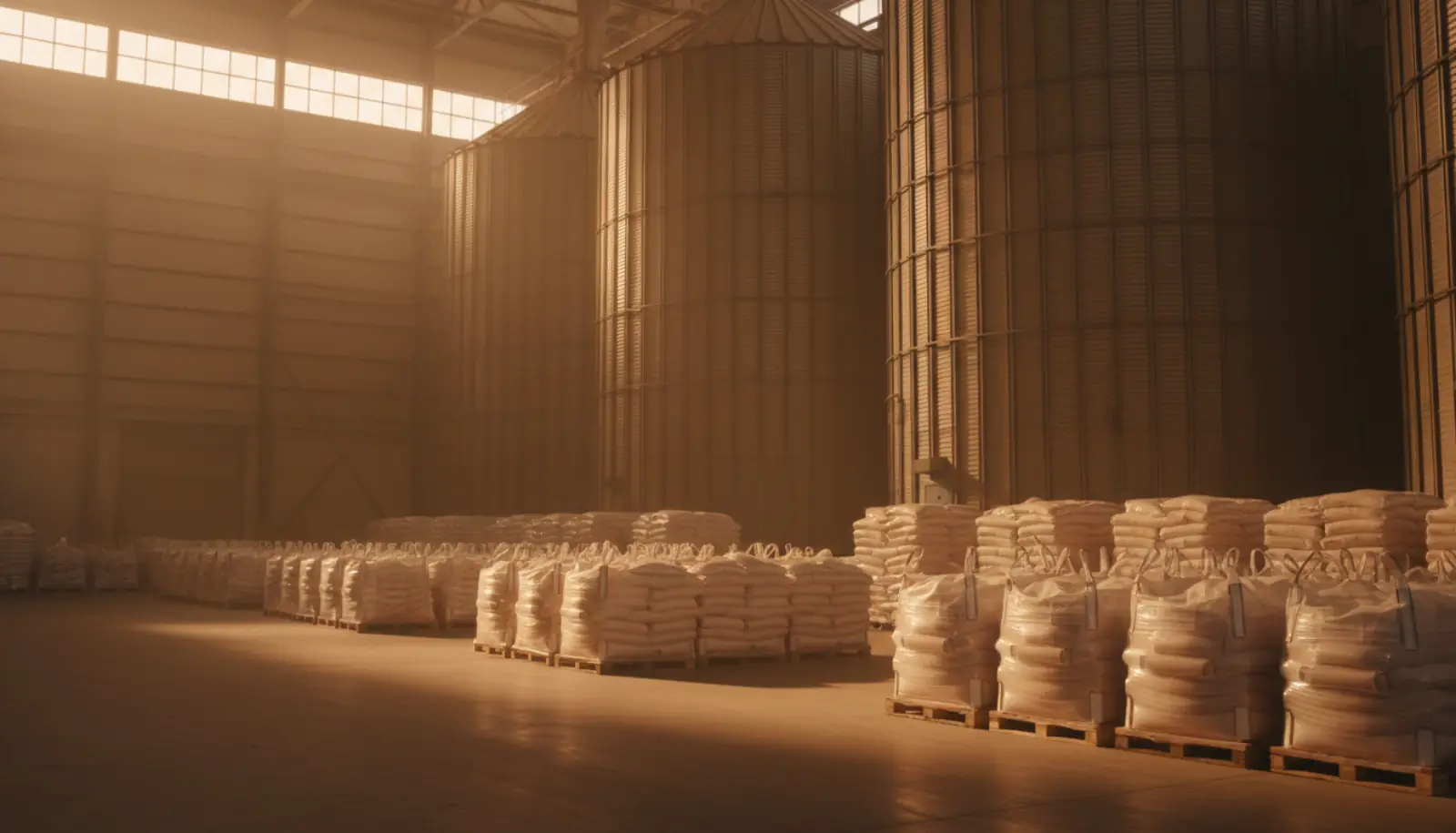
Keep bags on pallets, under cover, away from heat and direct sun, and rotate stock first in, first out. Check bags for tears, and re-seal opened bags. Before processing an old lot, test a sample for melt flow and run a small trial. Our guide to polymer resin quality checks explains what to look at, and the guides to HDPE grades, LDPE film grades and polypropylene grades describe why a specific grade may be more sensitive. For containerised cargo, see our container shipping guide.
Caustic soda
Answer first: solid caustic soda is hygroscopic and also absorbs carbon dioxide, so poorly sealed product slowly loses strength. Liquid caustic has its own issues, including crystallisation in the cold.
Solid forms
Flakes and pearls absorb moisture from the air and react with carbon dioxide to form carbonate, which lowers the effective strength and can form crusts or lumps. A bag that is torn or left open changes faster. Keep solids in sealed, intact packaging, in a dry store, and reseal partly used bags.
Liquid caustic
Strong solutions can crystallise at low temperatures, which blocks lines, and storage tanks may pick up carbon dioxide over time through vents. The solution can also take up contaminants from poorly cleaned tanks. Check temperature limits and tank condition. Our guides to forms and storage and handling go further, and the safety data sheet governs safe handling.
Sulphur
Answer first: sulphur is chemically stable in storage, so the issues are physical and safety-related: dust, moisture, caking and fire risk.
Sulphur does not spoil in the way organic materials do. Over time, however, powder and fines can compact, wet product can cake and corrode equipment, and dust accumulations in the store create fire and explosion hazards that need active control. Our guide to sulphur dust and fire safety is essential for anyone storing it, and the granular sulphur buyers' guide covers handling by form.
Calcium carbonate
Answer first: calcium carbonate is mineral and stable, but moisture, contamination and the condition of any surface coating decide how well it performs after storage.
Moisture can cause lumps and poor flow, and can affect how well the product disperses in a plastic or a paint. Coated grades, such as those treated to improve compatibility with polymers, can behave differently if the coating is damaged or if the product picks up moisture. Fine products also segregate or compact in storage. Store dry, off the floor and in sealed bags, and check dispersion on a small scale before using an old lot in a critical process. See our guides to calcium carbonate in masterbatch and fillers and calcium carbonate in paint, paper and construction.
Activated carbon
Answer first: activated carbon works by adsorbing, so it will also adsorb moisture and vapours from the store. Keep it sealed until use.
Open or damaged packaging lets carbon take up water and other vapours, which reduces the capacity available for the job it is bought for. Storage near solvents, fuels or strong odours is a particular risk. Keep it in intact, sealed packaging, in a clean, dry area, and away from chemical vapours. For carbon used in water treatment or gold recovery, check the relevant parameters of a stored lot before putting it in service. Our guides to activated carbon selection and activated carbon for gold recovery and water treatment explain which properties matter.
Dry carbon in bulk also carries safety considerations, including dust and the tendency of wet carbon to remove oxygen from enclosed spaces, so follow the safety data sheet and your site's confined-space rules.
Base oil
Answer first: base oil is stable when sealed and clean, but oxidation and contamination are the main risks during long storage, particularly after drums are opened.
Sealed drums and clean tanks protect base oil well. Once opened, air, moisture and dust can enter. Heat speeds oxidation, and water can cause haze or corrosion. Mixing grades or using a dirty transfer line spoils a batch more quickly than age does. Our base oil storage and contamination guide sets out practical controls and a first-in, first-out approach, and the base oil specification guide lists the properties to retest.
How climate and packing change the answer
Answer first: the same product can have a very different storage life in a dry, cool inland store and in a hot, humid port warehouse. Packing is the buffer between the product and the climate.
Climate
Heat speeds up most chemical ageing, and humidity drives moisture pick-up. Coastal regions with high humidity and large day-to-night swings put more stress on hygroscopic products, because moisture moves in and out with the changing air. If you store in such a climate, plan shorter holding times, better sealing and more frequent checks. Condensation on roofs and walls is a warning sign that moisture is moving through the building.
Packing
- Bulk. Efficient to handle, but exposed surface needs protection and the pile needs a dry, enclosed building.
- Bags. Protect each portion separately, but only as well as the bag itself. A bag with an inner liner usually protects better than one without, and torn or poorly sealed bags undo the benefit.
- Big bags. Hold more per unit and reduce handling, but the large mass in one bag can compress the lower product, and a damaged bag exposes a lot at once.
- Drums and IBCs. Good for liquids and some solids, and their seals and closures need checking, since a poorly closed lid lets in air and moisture.
- Tanks. Protect large volumes, but need clean interiors, suitable materials, sensible venting and temperature control where relevant.
For help choosing between these options, see our guides to bagged versus bulk fertiliser shipping and bitumen packaging options.
Inspection routine
A simple routine catches problems early. Walk the store at regular intervals and look for damp patches, torn packaging, caked product, leaks, odours and signs of pests. Record temperature and humidity if you can. Take a sample from a few lots on a schedule, so the test results show a trend and not just a single reading. Keep the records with the batch number, so you know which lots are oldest and which have had the hardest life.
Common storage rules that apply to all of them
- Keep it dry. Moisture is the common enemy of solids.
- Keep it clean. Contamination is irreversible for most products.
- Keep it cool and out of direct sun, unless the product needs to be kept warm for flow.
- Keep packaging intact and reseal opened containers.
- First in, first out. Use the oldest stock first.
- Label everything with product, batch, date received and any retest date.
- Do not stack too high, because pressure on lower layers causes caking and damage.
- Separate incompatible products, following the safety data sheet.
- Keep records of arrival, storage conditions and testing.
- Retain samples from each batch so you can compare later.
Questions to ask the supplier
- What is the recommended storage period, and is it a shelf life or a retest date?
- Under what storage conditions does that period apply?
- Does it apply to the packing I have chosen (bulk, bags, drums, big bags)?
- What changes in the product as it ages, and what test shows it?
- Is the stated period guaranteed in the contract, or is it only typical?
- What documents show the production date or batch number?
- Which specification points are most likely to drift, and what limits apply?
- What should I do if the product is near or past its retest date?
Chemineral can arrange SGS or Intertek pre-shipment inspection, and a batch-specific certificate of analysis helps you set a baseline to compare against later tests.
Testing before you use old stock
Answer first: test the properties that could have drifted, compare with the original certificate and the specification, and do a small trial before using the whole lot.
- Pick a representative sample, using the method in our guide to representative sampling, because a bad sample gives a false answer on old stock too.
- Test the parameters the product is most likely to change, such as moisture, assay, flow properties, viscosity, melt flow or penetration, depending on the commodity.
- Compare with the original certificate and with your specification.
- Run a small production or application trial for critical uses.
- Decide whether to use, blend, reprocess or discard, and record the decision.
If a lot has failed, see our guide to quality claims and disputes on whether a claim is possible. A claim is unlikely to succeed if the product was stored badly after receipt, which is why storage records matter.
Buying quantities with storage in mind
Answer first: buy no more than you can store well and use in good time. A bigger shipment with a lower price per tonne can cost more if part of it deteriorates.
Consider:
- The storage period you will realistically need, based on your sales or production plan.
- The capacity and condition of your store.
- The climate and seasonal humidity.
- Whether staggered shipments reduce risk without raising cost too much. Our guide to bagged versus bulk fertiliser shipping discusses packing choices that affect storage life.
- Whether the contract lets you take delivery in lots, so you do not carry all stock at once.
Common buyer mistakes
- Assuming one shelf life figure applies to every packing and climate.
- Storing in the open to save cost.
- Stacking too high.
- Ignoring first in, first out.
- Leaving opened bags or drums unsealed.
- Skipping tests on old stock because it looks fine.
- Not recording arrival dates and batches.
- Keeping hot or reactive products longer than the supplier advises.
Frequently asked questions
What is the difference between shelf life and retest date?
Shelf life is how long a product is expected to meet specification under recommended storage. A retest date is when you should test it again before use. A product past its retest date is not necessarily bad, but it needs checking.
Does a longer storage period always mean lower quality?
Not always. Many commodities remain stable for long periods if stored well, and poor storage can ruin product within weeks. Conditions matter more than the number of months.
Who is responsible if a product deteriorates in storage?
Usually the party that held it, unless the supplier guaranteed a shelf life and the product failed within it while stored correctly. Keep records of storage conditions and test early.
Should I test old stock before using it?
Yes, for any critical use. Test the properties most likely to have changed, compare with the original certificate, and run a small trial.
How can I extend storage life?
Keep the product dry, clean and cool, keep packaging intact, avoid tall stacks, rotate stock first in, first out and follow the supplier's storage advice.
Next step
If you want to plan quantities, packing and delivery dates around how long you can store a product, send the trade desk your product, volume, storage conditions and destination through the contact page. We quote Suez and Cape routing side by side for shipments from Sohar and Salalah, and firm offers are valid for 72 hours.
Our trade desk can turn the views in this report into firm offers on today's indicative prices — valid 72 hours, with complete documentation.
Request a quote