How to Take a Representative Sample: Bulk Cargo, Bags, Drums and Tanks
Why a laboratory result is only as good as the sample behind it, how sampling differs for bulk solids, bagged goods, drums and liquid tanks, how to split, seal and keep samples, and what to write into a contract.

A laboratory can measure a sample very precisely and still tell you nothing useful about the cargo. The reason is simple: the sample is a few hundred grams or a few litres, and the cargo is thousands of tonnes. If the small amount is not representative of the large amount, the careful measurement is of the wrong thing. Many quality disputes in commodity trade end up not in the test but in the sampling, in questions such as who took the sample, from where, when, how it was mixed, and how it was kept.
This guide explains the principles of representative sampling and how they apply to bulk solids, bagged goods, drums and liquid tanks. It also covers splitting, sealing, labelling and retaining samples, and what to write into a contract. It is general guidance. Recognised standards and your inspector's procedures decide the details for a given product, and safety rules for hazardous cargoes always come first. To choose an inspector, see our guide to choosing an independent inspector or laboratory, and for how results feed into disputes, see quality claims and disputes.
The basic problem: small sample, big cargo
Answer first: a sample is representative when every part of the cargo had an equal chance of ending up in it. Anything that favours one part over another, such as taking only from the surface or the top of a tank, introduces bias.
Why cargo is not uniform
Commodities rarely come perfectly mixed.
- Bulk solids segregate. Fine particles settle to the bottom, and coarse particles roll to the edges of a pile. A scoop from the top of a heap misses both.
- Bags vary. Different bags may come from different production runs or different parts of a day.
- Liquids stratify. Water and heavier contaminants settle to the bottom of a tank, while lighter material floats. A sample from one level misses the rest.
- Moisture moves. Wet product at the surface or in the bottom layers may differ from the middle of a stack.
- Contamination is local. A problem such as a leaking bag or a dirty hose may affect only a part of the cargo.
Because of this, sampling has rules that aim to cancel out bias, and a sample taken without them can mislead in either direction.
Some terms you will see
- Lot. The quantity of cargo that a sample is meant to represent, such as one vessel, one batch or one container.
- Increment. A single portion taken at one moment from one place.
- Composite sample. Many increments combined into one.
- Laboratory sample. The sample sent for testing, usually prepared from the composite.
- Retained sample. A sealed portion kept for later checks or disputes.
Sampling principles that apply everywhere
Answer first: sample at the right time, from enough places, with clean tools and containers, mix and split carefully, and protect the sample from change.
1. Sample while the cargo is moving where possible
The most representative sample is usually taken as the material flows, for example from a conveyor during loading or from a pipeline during pumping, because every part of the cargo passes the sampling point. Sampling from a static pile or a loaded hold only reaches the surface. If an inspector can sample during loading, that sample generally carries more weight than one taken afterwards.
2. Take enough increments
One increment tells you about one spot. Many increments, spread across the lot, average out local variation. The number needed depends on how variable the cargo is and the standard you use. For uniform products fewer are needed, and for variable ones more. Inspectors follow a sampling plan, which should be agreed before loading starts.
3. Spread them evenly
Take increments at regular intervals through the loading or across the whole stack or tank, not all at the start. For a ship, that means across the whole loading period. For a warehouse, across the whole stack and different heights.
4. Keep tools and containers clean
Sample scoops, probes, bottles and bags must be clean, dry and made of a material that does not react with or contaminate the product. For some products a stainless or plastic tool is needed, and for others glass. Contamination from a previous sample can spoil a result.
5. Protect from moisture, air and light
Hygroscopic products pick up water from the air within minutes. Volatile products lose light components. Light-sensitive products can degrade. Seal samples in airtight containers promptly, fill them as full as practical for products that react with air, and keep them away from heat.
6. Record everything
Write down who sampled, where, when, how and with what, plus the lot, the weather if relevant, and any unusual observations. A sample without a record is hard to defend.
Sampling bulk solids
Answer first: for bulk solids such as urea, sulphur or calcium carbonate, take increments from the moving stream during loading, and combine them into a composite.
From a conveyor or loading stream
An automatic or manual cross-stream sampler takes a full cut across the flow at regular intervals. Because it cuts the whole stream, it captures the fine and coarse parts alike. Where a mechanical sampler is not available, an inspector may take cuts by hand following a safe procedure, at fixed time intervals through the loading.
From a stockpile or storage pile
A heap is the hardest to sample well, because of segregation and because the surface differs from the inside. If a pile must be sampled, increments should come from different depths and different places, using a tool that reaches below the surface. Even then, the result carries less confidence than one taken from a moving stream. Treat a pile sample as indicative.
From the vessel's hold
A sample taken from the top of cargo in a hold is not a good guide to the cargo underneath. Where a vessel has already loaded and no loading samples exist, any sample from the hold should be described as such, and its limits understood. For quantity, a separate method applies. See our draft survey guide.
Preparing the laboratory sample
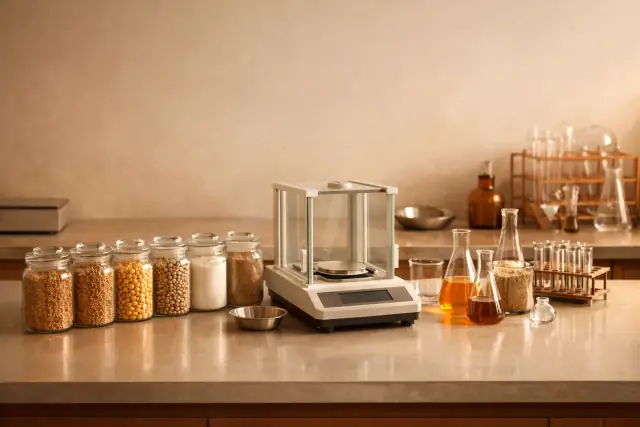
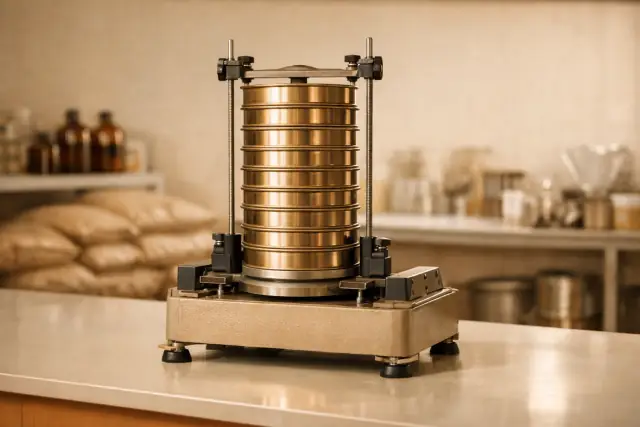
The composite is usually mixed and reduced by dividing it into smaller portions using clean equipment, such as a riffle divider. Dividing by eye, or scooping a handful from the top of the pile of increments, reintroduces bias. Fine and coarse particles must be reduced together. For size analysis, preparation changes the result, so the laboratory should follow the standard method.
Moisture-sensitive products
Fertilisers such as urea absorb moisture from humid air quickly, so a sample left in an open container may gain weight and appear wetter. Seal each increment as it is taken, work fast and keep records of conditions. Our urea storage and caking guide explains why moisture is so important for that product.
Sampling bagged goods
Answer first: for bagged cargo, choose bags at random from across the lot and take material from within each bag, not from the surface.
Choosing bags
Pick bags from different pallets, different layers and different positions, not just the ones nearest to hand. The number of bags is set by the sampling plan. A common approach in the trade is to take a number related to the square root of the total number of bags, with a minimum, but the actual plan should come from the agreed standard or the inspector. Do not rely on a figure remembered from elsewhere.
Taking the sample from a bag
A probe or sampling spear that reaches the full depth of the bag, or a bag that is emptied and divided, gives a better picture than a handful from the top. For products that settle, the bottom of a bag differs from the top. After sampling, reseal or repair the bag, so product is not exposed.
Inspecting the bags
While sampling, inspectors can also note the condition of bags, labelling, weights, marks and any signs of damp, damage or contamination. These observations belong in the report and are often as useful as the test results. For polymer pellets and resin, see our guide to polymer resin quality checks for what else to look at.

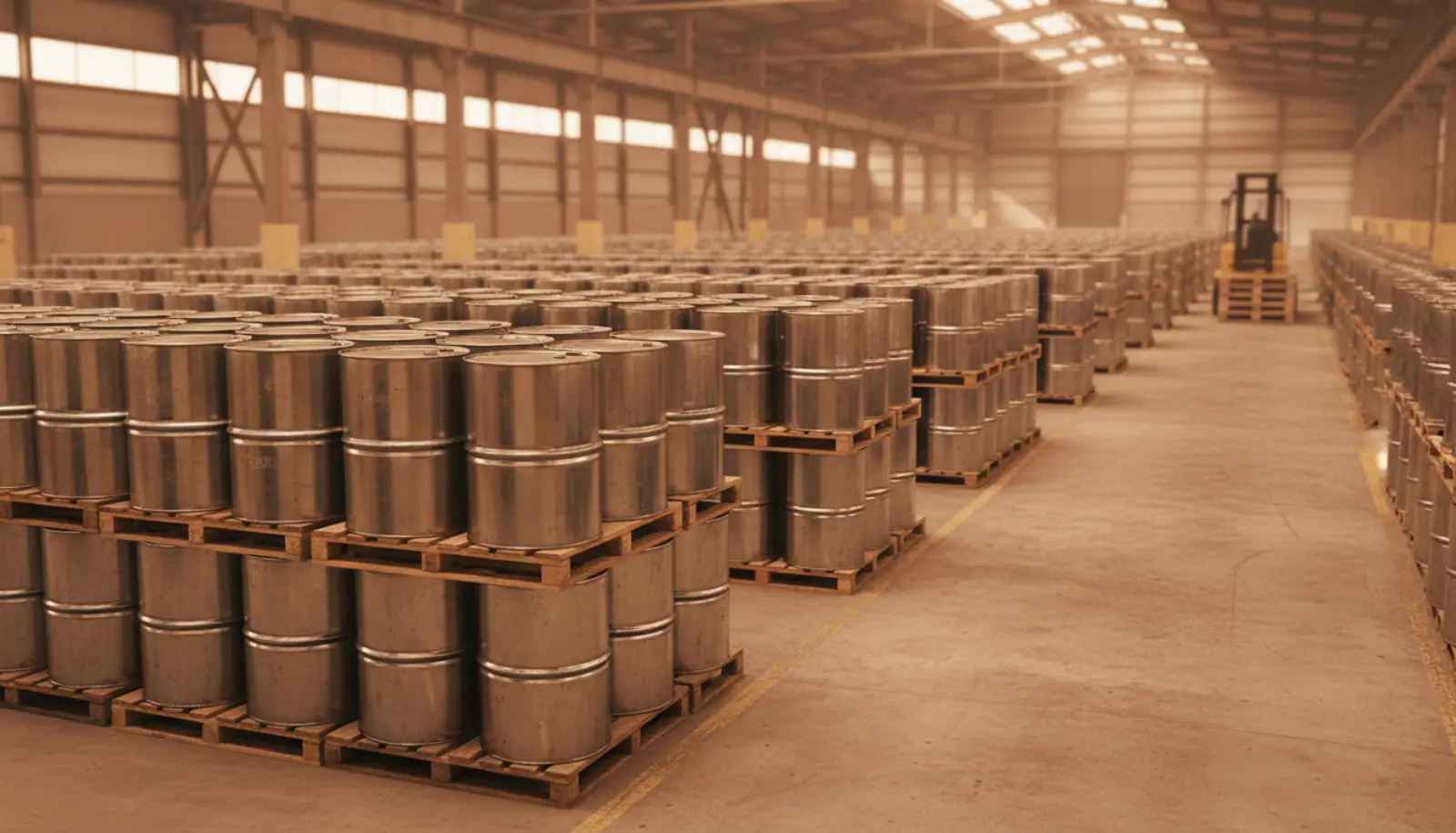
Sampling drums
Answer first: for drummed products, select a number of drums at random, open them carefully, sample with a clean tool that reaches the full depth, and reseal.
How many drums
As with bags, the number depends on the plan. In practice, sampling every drum is rare for large lots. A fraction chosen at random, in proportion to the size of the lot, is the norm.
Liquids in drums
Liquids in drums may have separated or have sediment at the bottom. A tube-type sampler (sometimes called a thief) that draws a column of liquid from top to bottom, or thorough mixing before sampling where safe, gives a better picture than dipping a cup at the top. Bitumen and other hot or viscous products need special procedures and safety precautions, and heated product must never be sampled without appropriate equipment and training. Our guide to bitumen quality tests lists the common tests that these samples support.
Resealing and tracking
After sampling, drums should be resealed and marked as sampled. Record the drum numbers, so they can be traced later.
Sampling liquid tanks and pipelines
Answer first: for liquid cargoes, sample from the flowing line during loading where possible, or use a defined method such as an all-levels or composite tank sample, and avoid dipping at only one depth.
From the line
A sampler fitted to the pipeline that takes small amounts in proportion to the flow gives the most representative composite for the whole parcel. Such systems are common at proper terminals.
From a tank
When a line sampler is not available, the standard methods take samples at several levels, such as top, middle and bottom, and combine them in a defined proportion, or take an all-levels sample by lowering a container through the full depth. Recognised standards for manual sampling of petroleum and related liquids exist, such as those issued by ASTM and ISO, and an inspector will follow the one that applies. Water and sediment at the bottom must be checked separately.
From ISO tanks and flexitanks
Liquid in an ISO tank or a flexitank should be sampled through the proper valve or port, following the carrier's and inspector's procedure, and after the product has settled or been mixed as appropriate. For base oil and similar products, contamination from sampling equipment is a risk, so clean tools are essential. Our guide to base oil storage and contamination explains what can go wrong.
Safety
Liquid chemicals, vapours and heat bring risks. Follow the safety data sheet, wear the specified protective equipment and observe terminal and vessel rules, including for sampling in hazardous areas.
Splitting, sealing and keeping samples
Answer first: divide the final sample into identical sealed portions, give one to each party, keep one retained, and label everything so it can be traced.
Splitting
After the composite is prepared, it is divided into at least three equal portions, often four:
- One for the laboratory test now.
- One for the seller.
- One for the buyer.
- One retained by the inspector or an agreed neutral party for disputes.
Each portion should be as alike as possible. Splitting by the same method, for example with a riffle divider, keeps them equivalent.
Containers
Use clean, dry, airtight containers suited to the product. Glass, plastic or metal may be appropriate, depending on the material. Fill them to a defined level and close them tightly.
Seals and labels
Fit tamper-evident seals with unique numbers, and record the numbers on the sampling report. Labels should show the product, lot, vessel or container, date, place, sampler, sample type and seal number. A sample with no seal, or a broken seal, is hard to rely on.
Storage and retention time
Keep retained samples in a cool, dry place away from light and heat. Agree the retention period in the contract, long enough to cover the claims period. If a claim is raised, the retained samples are the neutral evidence, so everyone should know where they are and who may open them.
Chain of custody
Record each hand-over, with date, names and seal numbers. Courier receipts and signed forms make it easy to show that the sample was not altered between the cargo and the laboratory.
What to write in the contract
Answer first: agree the sampling method, the person and the moment of sampling in advance, because the argument is much harder to settle afterwards.
A short clause can cover:
- Who samples. An independent inspector appointed jointly or by one party with the other's consent.
- When and where. For example, during loading at the load port, and at discharge.
- Method and standard. The sampling plan, the number of increments and the method of preparation.
- Splitting. The number of portions and who keeps each.
- Sealing and labelling. Seal numbers recorded on the report.
- Testing. The laboratory, the test methods and the point at which the result is final.
- Retention. How long retained samples are kept and where.
- Cost. Who pays for sampling, testing and storage.
- Disputes. How an umpire laboratory is chosen and whose retained sample is tested.
Our guide to key clauses in a bulk chemicals sale contract shows where these points sit in a contract, and the SGS certification guide describes what an inspection normally includes. Chemineral can arrange SGS or Intertek pre-shipment inspection on request.
Common sampling mistakes
- Sampling only the top of a pile, a bag or a tank.
- Taking all increments at one moment instead of across the whole loading.
- Using dirty tools or containers.
- Leaving samples open so hygroscopic products pick up moisture.
- Dividing a sample by eye rather than with a proper divider.
- No seals, labels or records, so nobody can show where the sample came from.
- Different methods at load and discharge, so results cannot be compared.
- No retained sample, leaving no neutral evidence in a dispute.
- Letting one party sample alone without the other's agreement.
- Ignoring safety when handling hot, hazardous or volatile product.
A short checklist before loading
- Agree the sampling plan, standard and inspector in writing.
- Confirm the sampling point and whether sampling will be during loading.
- Check that clean tools and suitable containers are available.
- Agree how many portions are made, who receives them and who keeps the retained sample.
- Agree sealing, labelling and record-keeping.
- Agree the laboratory, test methods and tolerances.
- Agree how long retained samples are kept.
- Brief the inspector on safety requirements for the product.
- Plan courier arrangements and chain of custody.
- Decide who pays for each step.
Frequently asked questions
What makes a sample representative?
Every part of the lot had an equal chance of being included. That usually means taking many increments across the whole lot, ideally from a moving stream during loading, and mixing and dividing them with clean equipment.
Can I sample from the top of a pile or hold?
You can, but the result is only indicative, because fine and coarse material and moisture are not evenly distributed. A sample taken during loading is much more reliable.
How many bags or drums should be sampled?
It depends on the lot size, the variability of the product and the sampling plan or standard used. Do not rely on a remembered rule. Agree the plan with your inspector and write it into the contract.
Why are samples split into several portions?
So each party has an identical portion for its own testing, and one sealed portion stays neutral for disputes. Without a retained sample, there is no agreed reference if results differ.
How long should retained samples be kept?
At least as long as the claims period in the contract, and often somewhat longer. Agree the period in advance and the conditions of storage.
Next step
If you plan a shipment and want to agree sampling, inspection and retained samples before loading, send the trade desk your product, quantity and destination through the contact page. We quote Suez and Cape routing side by side for shipments from Sohar and Salalah, and firm offers are valid for 72 hours.
Our trade desk can turn the views in this report into firm offers on today's indicative prices — valid 72 hours, with complete documentation.
Request a quote