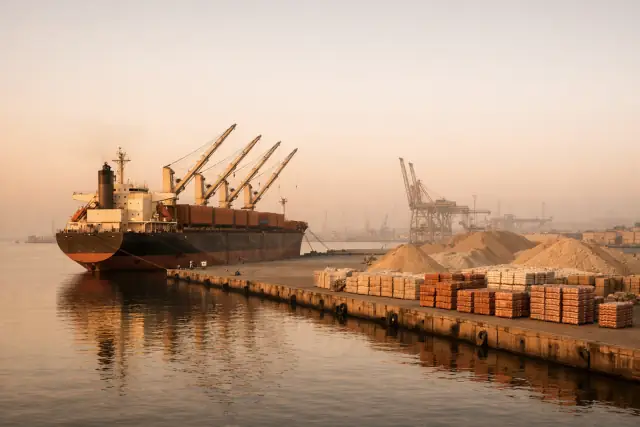
How Bulk Freight Is Quoted: Rates per Tonne, Parcel Size, Surcharges and Terms
What is inside a freight quote for bulk and part-cargo shipments, why parcel size and route change the rate per tonne, how load and discharge terms alter the real cost, and how to compare two quotes fairly.
Two freight quotes for the same cargo and the same route can be hundreds of dollars a tonne apart on paper and almost identical in practice, or the other way round. The headline figure is only one part of the price. What is included, what is excluded, how fast the ship loads and discharges, what happens when it is late and how much cargo you are actually shipping all change the true cost per tonne.
This guide explains how freight is normally quoted for bulk and part-cargo shipments of petrochemicals and fertilisers, which terms matter most, and how to compare quotes on an equal footing. It gives no rates, because freight markets move constantly, and it is general guidance, not a substitute for advice from your broker or forwarder. For how Incoterms allocate freight between buyer and seller, see our guides to FOB versus CIF and Incoterms 2020 for petrochemicals.
What the freight rate actually pays for
Answer first: freight pays the shipowner to carry your cargo from the load port to the discharge port. Whether anything else is included depends on the terms. The number is meaningless until you know the terms.
A bulk freight rate is usually quoted as an amount per metric tonne of cargo carried. A quote of that kind normally covers the sea voyage itself and the use of the vessel for an agreed period at the load and discharge ports. It may or may not include:
- Loading and discharging costs on the vessel side (stevedoring, lashing, trimming).
- Port charges and canal fees.
- Bunker fuel costs and any fuel adjustment.
- Cargo insurance (almost never included in the freight itself).
- Time the vessel waits beyond the agreed laytime.
Treat each of these as a question to ask, not a detail to assume.

Cargo size changes the rate per tonne
Answer first: bigger parcels usually carry lower rates per tonne, because the voyage costs are spread over more tonnes, but only up to the size of vessel that fits both ports.
Vessel size categories
Bulk ships come in broad size bands, often described by names such as handysize, supramax and panamax. Smaller vessels can enter shallower or more restricted ports, and larger vessels carry more cargo at a lower cost per tonne but need deeper berths and bigger stockpiles. Exact tonnages vary by definition, so ask the broker what size range they are quoting. What matters to you is the intake the port can accept and whether the parcel you want to ship fills enough of the vessel.
Full cargo and part cargo
- Full cargo. You or your buyer take the vessel's capacity, or a fixed large lot. The vessel is fixed for your cargo and the rate reflects a single voyage.
- Part cargo or parcel. You ship a smaller lot alongside other cargoes, or on a vessel that has space. The rate per tonne tends to be higher, because the owner's costs are shared among fewer tonnes, and there may be more ports and more complexity.
If your volume sits between a part cargo and a full vessel, ask your broker whether a slightly bigger shipment would bring the rate per tonne down by more than the cost of carrying extra stock. Our guide to choosing between bulk, container and breakbulk helps decide which mode suits the volume.
Minimum quantities and dead freight
Owners often quote with a minimum quantity. If you load less than the agreed amount, you may still pay freight on the minimum. That unused space is called dead freight. A forecast that is too optimistic costs real money, so set the shipment quantity honestly and discuss tolerances such as a "more or less" margin that lets the final quantity vary a little.
Route, canal and time
Answer first: the route changes the distance, the days at sea and the fees. The rate follows.
Voyage cost is driven by days at sea, fuel burned, port and canal charges and the chance of the vessel finding cargo for its next leg. A longer or more complicated routing raises the rate. Where there is a choice between a shorter route through a canal or strait and a longer one round a cape, brokers can quote both, and the difference includes tolls and fuel as well as time. Chemineral quotes Suez and Cape routing side by side for shipments from Sohar and Salalah, so the buyer sees what each route does to the price and the transit time. Our Red Sea shipping guide explains how routing choices and risk assessments feed into this decision.
Cargo that is carried for the owner's return voyage also affects the price. A vessel travelling toward a region where cargo is plentiful may offer a better rate than one heading to a region where it must go in ballast (empty) afterwards. Brokers see this and price accordingly.
Load and discharge terms: where the quote hides its cost
Answer first: the terms that decide who pays for loading and discharging, and how fast they must happen, change the true cost as much as the rate.
Liner terms and free-in terms
In a liner terms quote, the owner pays for loading and discharging, and the freight rate includes those costs. In a free in quote, the shipper pays for loading, and in a free out quote the receiver pays for discharging. Terms that combine them, such as free in and out, put both on the cargo side. Abbreviations like FIO or FIOS are common in the trade, and you should always ask for the full wording. A lower rate under free in and out terms may be more expensive overall once you add stevedoring and trimming.
Load and discharge rates
The quote assumes the vessel can load and discharge at certain rates, for example a stated number of tonnes per day. If the port or the cargo equipment is slower, the vessel stays longer, and the delay is charged to the cargo side. Ask what rates are assumed, and check them against the real capability of your berth. Our guide to laytime and demurrage explains the clock and the charges that follow when it runs over.
Laytime, demurrage and despatch
Laytime is the time allowed for loading or discharging. If you use more, you pay demurrage at an agreed daily rate. If you use less, you may earn despatch, depending on the terms. A cheap freight rate with tight laytime and high demurrage can cost more than a higher rate with a generous allowance.
Address commission and other deductions
Some quotes show an address commission, a small percentage that the charterer keeps. Brokerage fees and other deductions may also apply. These do not change what the owner receives, but they affect your net comparison, so ask for the quote on a clear net basis, or make sure you compare like with like.

Fuel, surcharges and adjustments
Answer first: fuel and certain surcharges can be built into the rate or added separately. A quote that says "all in" and a quote that says "plus bunker adjustment" are not the same thing.
Bunker costs
Fuel is a large share of voyage cost. Some quotes fix the rate for the whole voyage and the owner carries the fuel price risk. Others include a fuel adjustment tied to a published price index, so the final freight moves with the fuel market. Ask which applies and over what dates it is measured.
Other possible surcharges
Depending on the cargo, port and carrier, you may see:
- Additional charges for cargoes classed as dangerous goods. See our guide to dangerous goods in shipping chemicals.
- Port congestion or waiting charges.
- Security or war risk additions, where a route or port requires them.
- Cleaning charges for tanks or holds.
- Heating charges for cargoes such as bitumen that must be kept hot. See our guide to bitumen heating, storage and handling.
A good quote lists these, or says clearly that none apply. If the quote is silent, ask.
Container and part-cargo quotes are structured differently
Answer first: container freight is quoted per container, often with separate lines for the base freight, terminal handling, fuel and other surcharges. The total is what counts.
For cargo that moves in containers, such as polymers in bags or drummed products, the quote is usually per container (a twenty-foot or forty-foot box) rather than per tonne. Check:
- Whether the figure is all-in or a base rate with separate surcharges.
- The free time at the port for the container, and the charges when it is exceeded.
- Whether origin and destination handling are included.
- The weight limit of the container, so you load the right quantity.
Our guide to container shipping for polymers covers the container side in more detail, and the principles of comparing totals rather than headlines apply equally.
How freight fits into the delivered price
Answer first: under CFR and CIF terms the seller arranges and pays freight and builds it into the price. Under FOB the buyer arranges it. Know which you are doing before you compare.
When you compare a CIF offer with a FOB offer plus your own freight and insurance, line them up on the same basis. Add the freight, the insurance and any extra costs under the FOB option, and compare the total with the CIF price. Our guide to marine cargo insurance explains how cover is priced and why it should not be skipped. A seller who quotes both ways lets you see what the freight element contributes. Chemineral quotes Suez and Cape routing side by side, so you can see it directly.
If you arrange your own freight, think about who bears the risk of delay at the load port and what the contract says about nomination of the vessel. Our guide to key clauses in a bulk chemicals sale contract lists the clauses that connect the sale to the shipping arrangements.
Comparing two freight quotes fairly
Use the same questions for every quote:
- Quantity and tolerance. How many tonnes, and how much more or less?
- Vessel and port limits. Can the vessel enter both ports, and what is the maximum draft or length?
- Route. Which route is assumed, and what happens if it changes?
- Terms. Liner terms, free in, free out or free in and out?
- Rates and laytime. What loading and discharge rates and how much time is allowed?
- Demurrage and despatch. Daily rate and how it is calculated.
- Fuel. Fixed or adjusted, and to what index?
- Surcharges. Which are included and which are extra?
- Commissions. Are quotes gross or net of address commission and brokerage?
- Payment. When is freight due, and in what currency?
- Validity. How long does the quote stand, and what are the conditions to confirm it?
Write the answers in a simple table and compute a delivered cost per tonne for each quote under the same assumptions, including a realistic delay allowance. The cheapest quote on paper is not always the cheapest in practice.
A worked comparison, for illustration only
The figures below are invented to show the method. They are not market rates.
Suppose two brokers quote the same parcel on the same route. Quote A is a lower rate per tonne on free in and out terms, with a fuel adjustment and a modest laytime allowance. Quote B is a higher rate per tonne on liner terms, with a fixed fuel element and a generous laytime allowance.
To compare them, build a delivered cost per tonne for each:
- Start with the freight rate.
- Add the loading and discharging costs that Quote A leaves to you, using quotes from your port agents.
- Add a realistic fuel adjustment to Quote A based on the index, and note that Quote B has none.
- Add expected demurrage. If your discharge port is slow, Quote A's tight laytime may produce a charge, while Quote B's allowance may absorb the delay.
- Subtract any despatch you might earn.
- Divide by the tonnes actually shipped, not the tonnes you hoped to ship.
In a case like this, the lower headline rate can easily become the higher delivered cost, or the reverse, depending on how fast your port really works. The exercise takes an hour and often settles the question. Repeat it with a pessimistic delay assumption as well as an optimistic one, and see whether the ranking changes. If it does, the decision depends on your port, not on the freight market.
Timing and aligning the sale contract
Answer first: freight is easier to price and fix when the shipment window, quantity and documents in the sale contract match what the shipping market can deliver.
Shipment windows
A narrow shipment window gives the broker less room to find a suitable vessel and may raise the price. A window of a few weeks, rather than a few days, often improves the options. If your buyer needs the cargo by a certain date, work back from it with realistic transit time, port delays and document preparation.
Nomination and notice
Under FOB terms, the buyer normally nominates the vessel and gives notice to the seller within a set period. Late nomination can cause waiting time and cost. Agree in the contract how much notice is needed and what happens if the vessel is delayed. Our guide to how to write a petrochemical RFQ lists the details that help a seller quote accurately, including the window and port information.
Documents and release
Freight delays often come from paper. A vessel that arrives before the documents can lead to waiting time and storage cost. Plan how the bill of lading will reach the receiver, and whether a telex release or waybill is appropriate. Our guide to bills of lading explains the options, and the export shipping documents guide lists the rest of the document set.
Quality and quantity checks
Weight and quality are normally checked at loading, and sometimes at discharge. A draft survey measures the quantity on board, and independent inspection checks quality. Agree who pays, when results are final and what tolerance applies, because quantity differences feed straight into freight and payment calculations.
Currency and payment of freight
Freight is usually priced in US dollars. If your costs or your customers' prices are in another currency, the exchange rate adds risk. Confirm when freight is due, for example on completion of loading or on delivery of the bills, and how it is paid. Our guide to payment terms for bulk commodities explains how payment timing interacts with shipment.
Common buyer mistakes
- Comparing headline rates without comparing terms.
- Ignoring discharge capability at the destination port.
- Overstating quantity, then paying dead freight.
- Forgetting fuel adjustments and surcharges.
- Underestimating demurrage risk from slow unloading or documents that arrive late.
- Not asking how long the quote is valid, and finding the rate has moved.
- Treating freight as separate from the contract instead of aligning laytime, nomination and shipment windows with the sale terms.
- Skipping insurance on the assumption that the carrier covers cargo loss.
Frequently asked questions
Why is freight per tonne higher for a small parcel?
The owner's voyage costs, such as fuel, port charges and crew, are shared among fewer tonnes, and the ship may need extra port calls. A full cargo spreads those costs more widely, so the rate per tonne is usually lower.
What does "free in and out" mean?
The shipper pays for loading and the receiver pays for discharging, so those costs are not in the freight rate. Compare it with liner terms, where the owner pays them and the rate is higher.
What is dead freight?
It is freight you pay for cargo space you booked but did not use, usually when you load less than the agreed minimum. Set a realistic quantity and discuss tolerance in advance.
Is the freight rate fixed once agreed?
It depends on the quote. Some rates are fixed for the voyage. Others carry a fuel adjustment or other surcharges that move with the market. Ask for this in writing.
How can I tell if a freight quote is fair?
Compare it with at least one other quote on identical terms, quantity and route, and calculate the delivered cost per tonne including expected delays. Your broker or forwarder can also give a view of current market levels.
Next step
If you want a delivered price for a bulk or part-cargo shipment, send the trade desk your product, quantity, destination port and receiving capacity through the contact page. We quote Suez and Cape routing side by side for shipments from Sohar and Salalah, and firm offers are valid for 72 hours.
Our trade desk can turn the views in this report into firm offers on today's indicative prices — valid 72 hours, with complete documentation.
Request a quote