Virgin or Recycled Resin? A Buyer's Guide for HDPE, LDPE and Polypropylene
How virgin and recycled polyolefin resin differ in consistency, properties, contamination, colour, odour and compliance, where each fits, how blends behave, and what to check before buying either.
Converters are asked more and more often to use recycled plastic, by customers, by regulations and by their own cost pressures. At the same time, many products still need the consistency that only virgin resin gives. The practical question is rarely "which is better" in the abstract. It is which resin, or which blend, suits this product, this machine and this market, and what you need to check before you commit to a cargo.
This guide compares virgin and recycled HDPE, LDPE and polypropylene from the buyer's side: where the material comes from, how the two differ, where each fits, how blends behave and what to ask a supplier. It makes no claims about market sizes or regulations in specific countries, which change frequently, and it is general guidance, not a substitute for your own trials or regulatory advice. For grade basics, see our guides to HDPE, LDPE and LLDPE differences and polypropylene grades. For the related question of off-specification virgin material, see prime versus off-grade polymers.
First, the terms
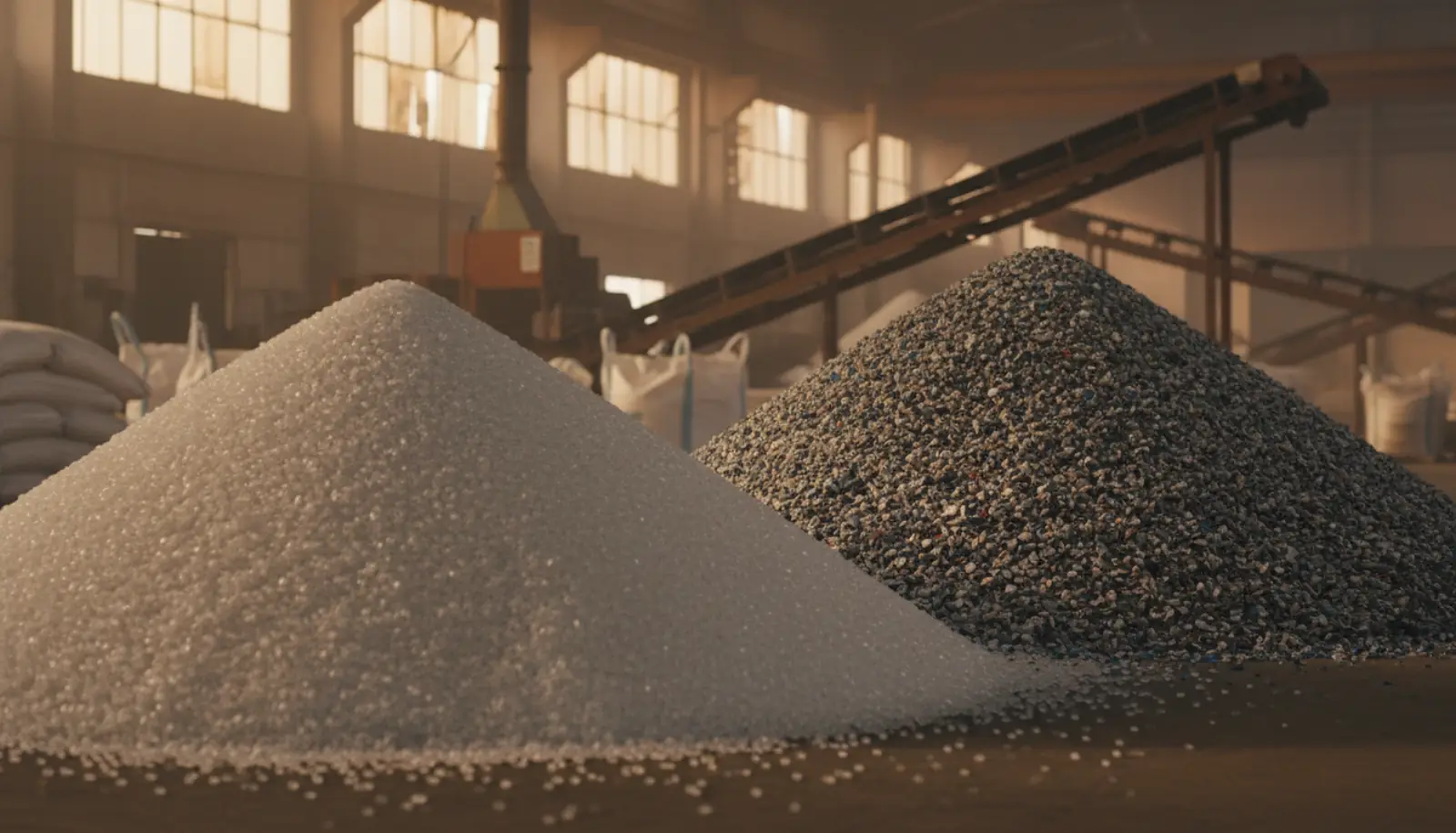
Answer first: virgin resin is made from petrochemical feedstock and has not been processed into a product before. Recycled resin has been recovered from plastic that was already made into something, then reprocessed into pellets or flakes.
Within those two headings there are several categories, and sellers do not always use the words in the same way:
- Virgin prime. New resin that meets the producer's full specification, with a certificate of analysis.
- Virgin off-grade. New resin that missed part of the specification or was made during a transition. It is still virgin, but not prime. See our prime versus off-grade guide.
- Post-industrial recycled (also called pre-consumer). Scrap from manufacturing, such as trimmings, start-up waste or rejected parts, reprocessed without having been used by a consumer. The source is usually known and fairly clean.
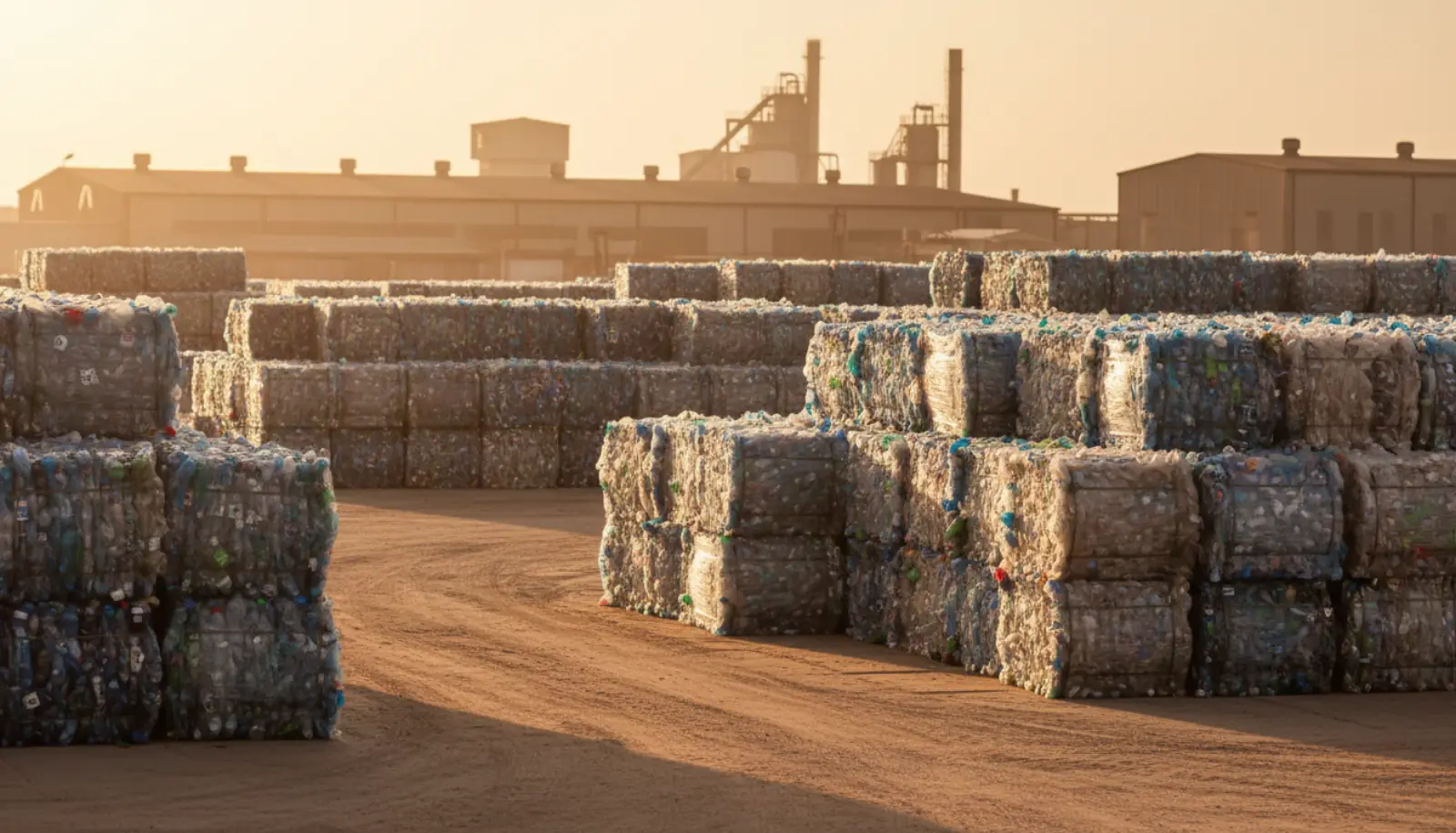
- Post-consumer recycled. Material recovered from used products, such as bottles, film and crates, after collection, sorting, washing and reprocessing. The source is mixed and the history is unknown.
- Regrind. Scrap that has been ground into flakes but not melted and pelletised again.
- Reprocessed or repelletised. Scrap that has been melted, filtered and pelletised.
When you receive an offer for "recycled" resin, ask which of these it is. They behave very differently.
How the two differ in practice
Consistency
Answer first: virgin prime resin is consistent from lot to lot. Recycled resin varies, because its input varies.
A virgin grade is made to a narrow specification in a controlled process, so melt flow, density and additive content are stable. Recycled resin is a mixture of whatever went into the recycling stream: different grades, different producers, sometimes different polymers. A good recycler narrows that variation by careful sorting and blending, but it rarely disappears. Lot-to-lot variation in melt flow is the most common complaint, because it changes how the material runs.
Mechanical properties
Every time a polymer is melted and processed, its chains are stressed by heat and shear. Polymers respond differently. Some lose molecular weight and become easier flowing and weaker, while others can cross-link and form gels. Mixed grades and contamination also reduce strength, impact resistance and elongation. Recycled material often performs well enough for many uses, but it should not be assumed to match the virgin grade it came from. Long-term properties, such as resistance to slow crack growth in pipe or to environmental stress cracking in containers, are particularly sensitive.
Contamination
Recycled streams can contain other plastics, paper, metal, adhesives, inks, fillers and residues of what the packaging once held. Even small amounts of an incompatible polymer cause weak points, gels, holes in film and surface defects. Good recyclers remove most of it by sorting, washing and melt filtration, and the fineness of that filtration matters to anyone making thin film or fibre. Ask what filtration was used and what contamination limits the recycler works to.
Colour and appearance
Virgin natural resin is translucent or white and takes any colour. Recycled resin is usually grey, off-white, mixed colour or black, depending on the feedstock, and it may carry specks. That limits its use in clear or light-coloured products and makes consistent colour matching harder. Dark colours hide the variation.
Odour
Post-consumer material can carry smells from previous contents, from degradation or from washing residues. Odour matters for packaging, household goods and anything used indoors. It is difficult to specify by number, so samples and trials matter.
Additives
Virgin resin contains a designed additive package. Recycled resin contains whatever remains of the original stabilisers, plus anything added in previous lives, plus what the recycler adds. Stabilisers may be partly consumed, so re-stabilisation during reprocessing is common. See our guide to polymer additives and masterbatch.
Documentation and traceability
A virgin prime lot comes with a producer's certificate of analysis, a data sheet and compliance declarations. Recycled material may come with a recycler's test report, which covers fewer properties, and its traceability back to source varies. Where recycled content must be proven to a customer or a regulator, documentation and third-party certification schemes become important.
Compliance and regulated uses
Answer first: for food contact, drinking water, medical, toys and pressure pipe, the rules on recycled content are strict and specific. Do not use recycled resin in these applications without clear evidence that it is permitted.
Regulated uses raise two questions: whether recycled material is allowed at all, and what proof is needed.
- Food contact. Many jurisdictions restrict the use of recycled plastics in contact with food, or allow it only from approved processes or behind a functional barrier. The rules differ between countries and between polymers, and they have been changing.
- Drinking water and pressure pipe. Standards for pressure pipe generally require specific, tested compounds. Recycled material may be excluded or limited to non-pressure applications. See our HDPE grades guide.
- Medical, toys and childcare. Specific rules on substances apply, and unknown history is a problem.
- Chemical restrictions. Older plastics may contain additives or substances that are now restricted. A recycled stream can carry them forward.
- Recycled content claims. Where you claim a percentage of recycled content, or where a law requires or taxes by it, you need auditable evidence.
Check the current rules in your market with your regulatory adviser before you buy, and get the supplier's declarations in writing.
Where each fits
Where virgin is normally the choice
- Regulated applications, as above, unless recycled is clearly permitted.
- Thin film and fibre, where gels and contamination cause breaks.
- Clear, white or brightly coloured products.
- Products with demanding long-term mechanical performance.
- High-speed lines where consistency decides output and scrap rate.
- Any product where a failure in service is costly.
Where recycled often works well
- Thick-walled, dark-coloured or non-critical products, such as pallets, crates, bins, some drainage and conduit products, garden goods and construction items.
- Refuse sacks and similar film where appearance is less important.
- Middle layers in multi-layer structures, where a virgin skin covers the recycled core.
- Products where the customer specifically wants recycled content and accepts the appearance.
Blends
Many converters blend recycled with virgin to balance cost, content targets and performance. A blend dilutes variation and contamination, and the virgin part carries most of the mechanical load. Points to manage:
- Match the polymers and melt flow as closely as possible, or the blend may not mix well.
- Start with a low percentage and increase in steps while measuring properties and scrap.
- Dry or condition the recycled part if it carries moisture.
- Re-stabilise if the recycled part has lost protection.
- Keep the ratio controlled by accurate dosing, and record it for each batch.
- Re-qualify when the recycled source changes.
How recycled resin is made, and why it explains the differences
Answer first: the steps in recycling decide the quality. Knowing them tells you what to ask a recycler.
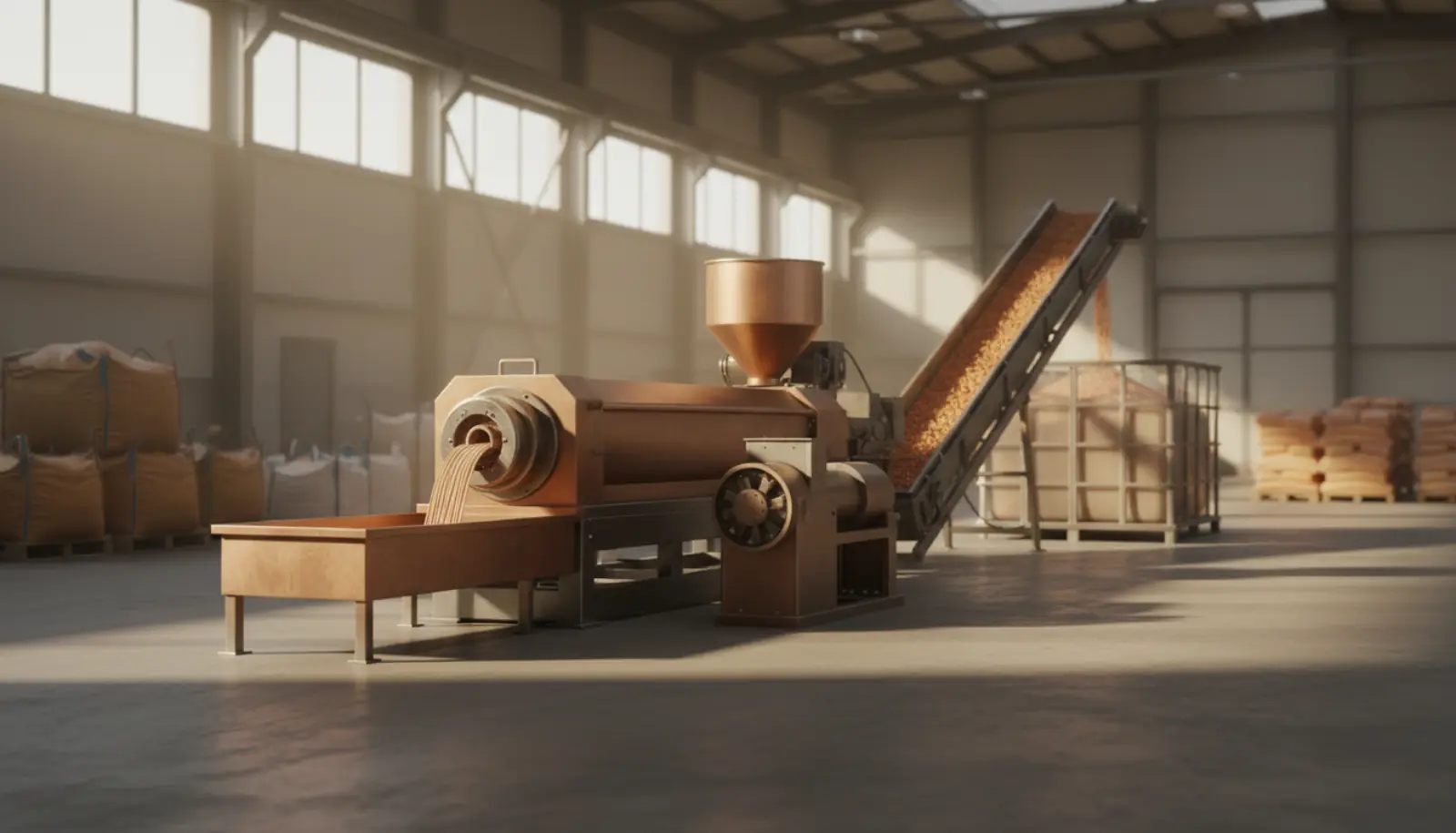
Most mechanical recycling follows the same broad sequence:
- Collection. Material comes from factories, commercial sites or household collection. The cleaner and more uniform the source, the better the result.
- Sorting. Items are separated by polymer type and often by colour, by hand, by machine or both. Sorting accuracy sets the level of cross-contamination between polymers.
- Size reduction. Material is shredded or ground into flakes.
- Washing. Labels, dirt, residues and adhesives are removed. Hot washing removes more than cold washing. Film is harder to wash than rigid items.
- Separation. Density separation and other methods remove some unwanted materials, but polymers of similar density are hard to separate from each other this way.
- Drying. Moisture left in the flakes causes defects when melted.
- Extrusion and filtration. Flakes are melted, passed through screens to remove solid contaminants, sometimes degassed to remove volatiles and odour, and re-stabilised.
- Pelletising and blending. Pellets from many batches may be blended to even out variation.
Each step can be done well or cheaply. A recycler who can describe its sorting accuracy, washing method, filtration fineness, degassing and batch blending is giving you real information about quality. One who cannot may be reselling material it does not control.
Other routes exist, including chemical recycling processes that break plastics down into feedstock, and approaches that attribute recycled content through accounting methods. How such material is described and credited is a matter of evolving regulation and certification rules, so ask for a clear explanation of what any claim means.
A stepwise trial plan
Answer first: introduce recycled content in measured steps, with the same tests at each step, so you can see exactly where performance begins to fall.
A simple plan a converter can adapt:
- Baseline. Run virgin only and record line settings, output rate, scrap and the product tests that matter.
- Low blend. Add a small percentage of recycled resin with accurate dosing. Repeat the measurements.
- Step up. Increase in stages, repeating the measurements each time, until a property or the scrap rate moves outside your limits.
- Step back to the highest ratio that passed comfortably, leaving a margin for lot-to-lot variation.
- Repeat with a second lot of recycled resin, because one lot does not show the range.
- Run longer at the chosen ratio to see filter life, die build-up and stability over a full shift.
- Check the product over time, especially for odour, colour and any long-term performance requirement.
- Document the result as an approved recipe, with the recycled source named, and repeat the checks if the source changes.
Keep retained samples of the virgin resin, the recycled resin and the finished product from each stage. They are what let you find the cause if something changes later.
Cost: look beyond the price per tonne
Answer first: recycled resin is not always cheaper, and when it is, the saving can be lost in scrap, slower output and complaints. Compare the cost of good finished product.
Things that change the real cost:
- Price. Recycled prices move with collection, sorting and demand for recycled content, and can be above virgin for good grades.
- Yield. More scrap and more start-up waste reduce the saving.
- Output rate. Variable melt flow or contamination may force you to slow the line.
- Filter changes and downtime. Contamination blocks screens.
- Downgauging. Weaker material may need thicker walls, using more resin.
- Quality costs. Rejects, returns and reputation.
- Incentives. Taxes, fees or customer premiums linked to recycled content can change the balance in either direction.
Run a trial and calculate the cost per good unit. Our guide to landed cost shows how to build the delivered cost of the resin itself.
What to check before buying recycled resin
- Type. Post-industrial or post-consumer, regrind or repelletised.
- Source. What products it came from and how they were collected.
- Polymer and purity. The main polymer, and the limit for other polymers.
- Melt flow and density, with the range between lots, not only a typical value.
- Filtration. The fineness used in reprocessing.
- Contamination limits. Moisture, ash or filler content, and visible specks.
- Colour and odour, agreed against a reference sample.
- Additives. Whether it has been re-stabilised.
- Compliance statements relevant to your product and market.
- Evidence of recycled content, if you need to prove it.
- Lot size and consistency, and whether lots are blended to even out variation.
- Samples from several lots, not one.
Then run a trial on your own line. Our guide to qualifying a new supplier sets out a sequence that works for both recycled and virgin sources.
What to check before buying virgin resin
Virgin resin is more predictable, but it still needs checking:
- Prime or off-grade. Make sure the offer says which.
- Producer and grade, with the technical data sheet.
- Certificate of analysis for the lot.
- Additive package suited to your process and product.
- Packing in sound, sealed bags on pallets, and a clean container. See container shipping for polymers.
- Compliance declarations for regulated uses.
- Independent inspection where the value justifies it. Chemineral can arrange SGS or Intertek pre-shipment inspection.
Our guide to polymer resin quality checks explains the tests and the visual checks, and our guide to representative sampling shows how to take samples that mean something.
Trade and shipping points
- Classification and controls. Recycled plastic pellets, flakes and plastic scrap may fall under different tariff codes and different import controls from virgin resin. Some countries restrict or license imports of plastic waste and scrap, and the line between "waste" and "product" can be a regulatory question. Check with your customs broker and see our guides to HS codes and import permits.
- Description on documents. The goods must be described accurately. Declaring recycled material as virgin, or the reverse, creates customs and contract problems.
- Storage. Both types need dry, covered storage away from sunlight. See shelf life and storage.
- Contract terms. Put the type, specification, ranges and reference sample into the contract, with a clear claims process. See quality claims and disputes.
Common buyer mistakes
- Treating "recycled" as one thing, when post-industrial and post-consumer differ greatly.
- Buying on one good sample.
- Accepting a typical melt flow with no stated range.
- Using recycled resin in regulated products without checking the rules.
- Comparing price per tonne instead of cost per good unit.
- Jumping to a high blend ratio without stepwise trials.
- Confusing off-grade virgin with recycled, or accepting either described vaguely.
- Ignoring import rules for recycled material and scrap.
- Making recycled content claims without evidence.
Frequently asked questions
Is recycled resin always cheaper than virgin?
No. Prices depend on collection and sorting costs and on demand for recycled content, and good recycled grades can cost as much as or more than virgin. Compare the cost of good finished product, not the price per tonne.
Can I use recycled resin for food packaging?
Only where the rules in your market allow it and the material comes with the required approvals and declarations. Many jurisdictions restrict it. Check with a regulatory adviser first.
What is the difference between post-industrial and post-consumer recycled resin?
Post-industrial comes from manufacturing scrap and is usually cleaner and more consistent. Post-consumer comes from used products and varies more, with greater contamination and odour risk.
How much recycled resin can I blend with virgin?
It depends on the product, the process and the quality of the recycled material. Start low, increase in steps and measure properties and scrap at each step.
Is off-grade resin the same as recycled?
No. Off-grade is virgin resin that missed part of its specification. Recycled resin has been made into a product or scrap and reprocessed. They carry different risks and should be described accurately.
Next step
If you buy HDPE, LDPE or polypropylene and want to discuss the right grade for your product, send the trade desk your application, process, target properties, packing and quantity through the contact page. We quote Suez and Cape routing side by side for shipments from Sohar and Salalah, and firm offers are valid for 72 hours.
Our trade desk can turn the views in this report into firm offers on today's indicative prices — valid 72 hours, with complete documentation.
Request a quote